. 2010 Dec 23;5(12):e14417.
doi: 10.1371/journal.pone.0014417.

Critical role of macrophages and their activation via MyD88-NFκB signaling in lung innate immunity to Mycoplasma pneumoniae

Affiliations

Critical role of macrophages and their activation via MyD88-NFκB signaling in lung innate immunity to Mycoplasma pneumoniae

Jen-Feng Lai et al. PLoS One. .

Abstract

Mycoplasma pneumoniae (Mp), a common cause of pneumonia, is associated with asthma; however, the mechanisms underlying this association remain unclear. We investigated the cellular immune response to Mp in mice. Intranasal inoculation with Mp elicited infiltration of the lungs with neutrophils, monocytes and macrophages. Systemic depletion of macrophages, but not neutrophils, resulted in impaired clearance of Mp from the lungs. Accumulation and activation of macrophages were decreased in the lungs of MyD88(-/-) mice and clearance of Mp was impaired, indicating that MyD88 is a key signaling protein in the anti-Mp response. MyD88-dependent signaling was also required for the Mp-induced activation of NFκB, which was essential for macrophages to eliminate the microbe in vitro. Thus, MyD88-NFκB signaling in macrophages is essential for clearance of Mp from the lungs.


Conflict of interest statement

Competing Interests: The authors have declared that no competing interests exist.

Figures

Figure 1
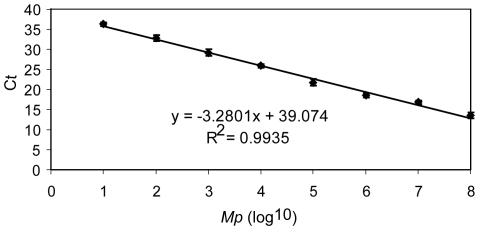
Figure 1. Quantitative detection of Mp in mouse lung by real-time PCR.
A portion of the 16S rRNA (from nucleotides 201 to 265) that is specific for Mp was chosen as the molecular target for detection. Total RNA was purified from the lungs of one mouse, and RNA from the indicated number of Mp was added. 100 ng of total RNA was used for each real-time PCR reaction. Ct, cycle threshold. The sensitivity and linearity of the assay were confirmed in one additional experiment. Data shown are means ± SEM.
Figure 2
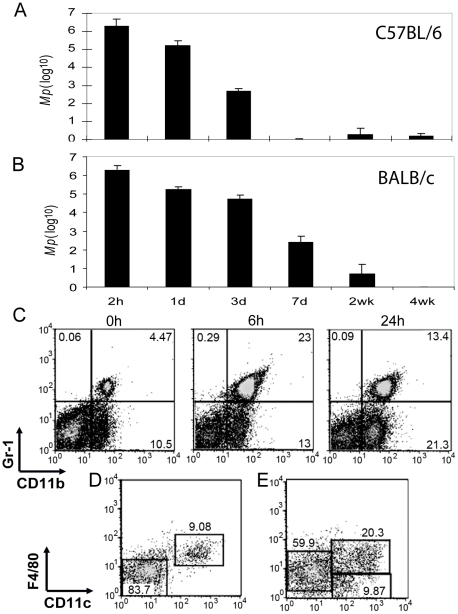
Figure 2. Host responses to Mp.
Mice were inoculated intranasally with 4×10⁶ Mp. At the indicated times, total lung RNA was harvested and the numbers of Mp were measured by real-time PCR. Time course of Mp clearance from lungs of C57BL/6 mice (A) and BALB/c mice (B). For examining the cellular host response to respiratory Mp, whole lungs were digested into single cell suspensions and stained with Abs for FACS analysis. (C) At 6 h and 24 h after infection with Mp, CD11b+Gr-1hi and CD11b+Gr-1lo/− cell populations were recruited in the lungs. (D) Within the CD11b+Gr-1hi population of cells analyzed 24 h post-Mp infection, the major cell types were neutrophils (CD11cF4/80) and a small subset of pulmonary macrophages (CD11c+F4/80+). (E) The CD11b+Gr-1lo/− cell population includes pulmonary macrophages (CD11c+F4/80+), macrophage/monocytes (CD11cF4/80lo/−) and DC (CD11c+F4/80 ). Each experiment was replicated at least two times. Data shown are means ± SEM (n = 6).
Figure 3
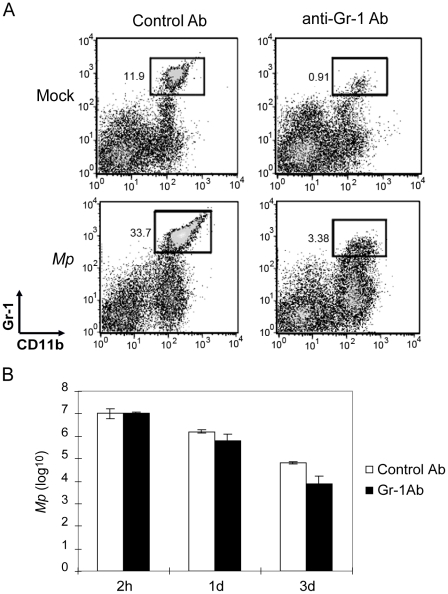
Figure 3. Neutrophils are not required for clearance of Mp from mouse lung.
(A) Greater than 90% of the CD11b+Gr-1hi cells (mainly neutrophils) in mouse lung were depleted by i.v. injection with anti-Gr-1 Ab (RB6-8C5) with or without Mp infection. Data shown were collected 3 d after injection of the anti-Gr-1 Ab, and 1 d after inoculation i.n. with Mp. (B) Neutrophil depleted mice (filled bars) showed no significant difference in clearance of Mp from the lungs at all indicated times post-Mp inoculation, compared to control mice (open bars). At least three similar experiments were performed with comparable results. Data shown are means ± SEM (n = 4 or 5). P>0.05, comparing control and Gr-1 Ab injected mice at each of the time points.
Figure 4
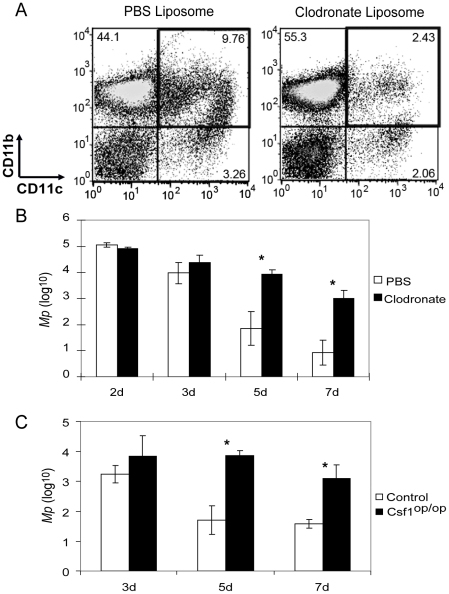
Figure 4. Macrophages play an essential role in the elimination of Mp from the lungs of mice.
(A) Greater than 70% of the pool of CD11c+CD11b+ cells (mainly macrophages) in the lungs of Mp-challenged mice was depleted by injection (i.p. + i.n.) with clodronate-containing liposomes (3 d after injection with liposomes, 1 d after inoculation with Mp). (B) and (C) Macrophage-depleted mice (filled bars) (B) and CSF1op/op mice (filled bars) (C) showed impaired clearance of Mp from the lungs at the indicated times post-Mp inoculation, compared to control mice (open bars). For clodronate depletion of macrophages, at least 5 experiments were performed with similar results. For CSF1op/op mice, the experiment was repeated once with similar results. Data shown are means ± SEM (n = 3 or 5). * p<0.05.
Figure 5
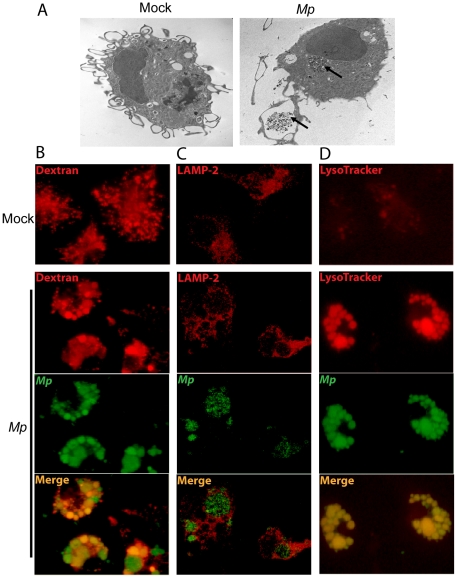
Figure 5. Macrophage phagocytosis of Mp in vitro.
(A) BMM were infected with Mp for 1 h, and the cells were fixed with 2% paraformaldehyde and 2% glutaraldehyde prior to embedding for TEM. Internalized Mp are highlighted by the black arrows. BMM were pre-loaded with dextran to label endosomes (B), and stained with anti-LAMP-2 antibody to visualize lysosomes (C) or LysoTracker dye to visualize acidified compartments (D). (B-D) cultures were infected with Mp (MOI 100∶1) or mock infected with medium alone as indicated. All portions of these experiments were repeated at least two times, always with similar results.
Figure 6
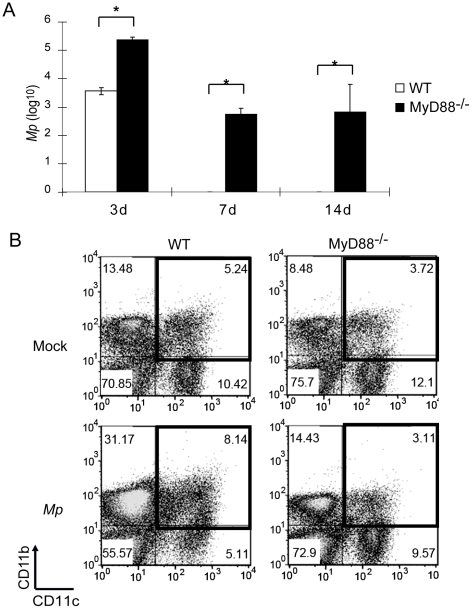
Figure 6. The macrophage response to Mp in mouse lung is MyD88-dependent.
WT and MyD88−/− mice were inoculated with Mp, and (A) the survival of Mp in the lungs was determined at the indicated times. (*p<0.05) (B) Total leukocytes were recovered from collagenase-digested lungs, and cells were stained with anti-CD11c and anti-CD11b prior to analysis by flow cytometry. Three independent experiments showed similar results. Data shown are means ± SEM (n = 4 or 5). *p<0.05.
Figure 7
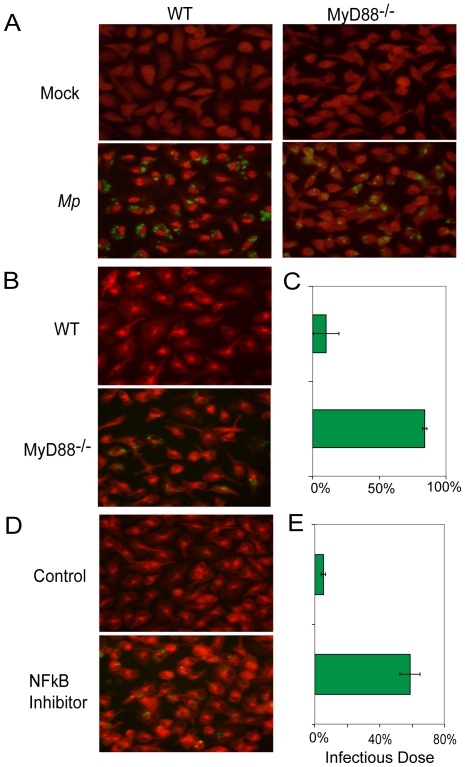
Figure 7. MyD88-NFκB signaling is essential for macrophages to eliminate Mp.
(A), (B) and (C), WT and MyD88−/− BMM were infected with EYFP-Mp or mock infected. (A) One hour after infection with EYFP-Mp (green), BMM were stained with anti-NFκB (p65) (red) to determine the subcellular location of this transcription factor. (B) BMM were stained with anti-α-tubulin (red) to highlight cell morphology. The survival of EYFP-Mp (green) was estimated by microscopy, and (C) the survival of EYFP-Mp was analyzed quantitatively by real-time PCR. (D) and (E), WT BMM were pretreated with the inhibitor of NFκB activation or with the diluent control (DMSO) for 1 h prior Mp infection. Eight hours after infection, BMM were stained with anti-α–tubulin (red) to show cell morphology and surviving EYFP-Mp (green) (D). The survival of EYFP-Mp in the cultures shown in (D) was determined by real-time PCR (E). Data shown are representative of two replicate experiments and are means ± SEM (n = 3).

References

    1. Galli SJ, Tsai M, Piliponsky AM. The development of allergic inflammation. Nature. 2008;454:445–454. - PMC - PubMed
    1. Sleiman PM, Hakonarson H. Recent advances in the genetics and genomics of asthma and related traits. Curr Opin Pediatr. 2010;22:307–312. - PubMed
    1. Vercelli D. Discovering susceptibility genes for asthma and allergy. Nat Rev Immunol. 2008;8:169–182. - PubMed
    1. Martin RJ. Infections and asthma. Clin Chest Med. 2006;27:87–98. - PubMed
    1. Seggev JS, Lis I, Siman-Tov R, Gutman R, Abu-Samara H, et al. Mycoplasma pneumoniae is a frequent cause of exacerbation of bronchial asthma in adults. Ann Allergy. 1986;57:263–265. - PubMed

Publication types

LinkOut - more resources