Copy number variation and susceptibility to complex traits
- PMID: 21204264
- PMCID: PMC3401997
- DOI: 10.1002/emmm.201000111
Copy number variation and susceptibility to complex traits
Abstract
Copy number variations (CNV) within the genome are extremely abundant. In this closeup, Canales and Walz discuss how CNV are associated with normal variation, genomic disorders, genome evolution, adaptive traits and how the use of a novel screen described by Ermakova et al in this issue that is designed to identify human diseaserelevant phenotypes associated with CNV in the mouse can help elucidating susceptibility or predisposition to diseases loci.
Figures
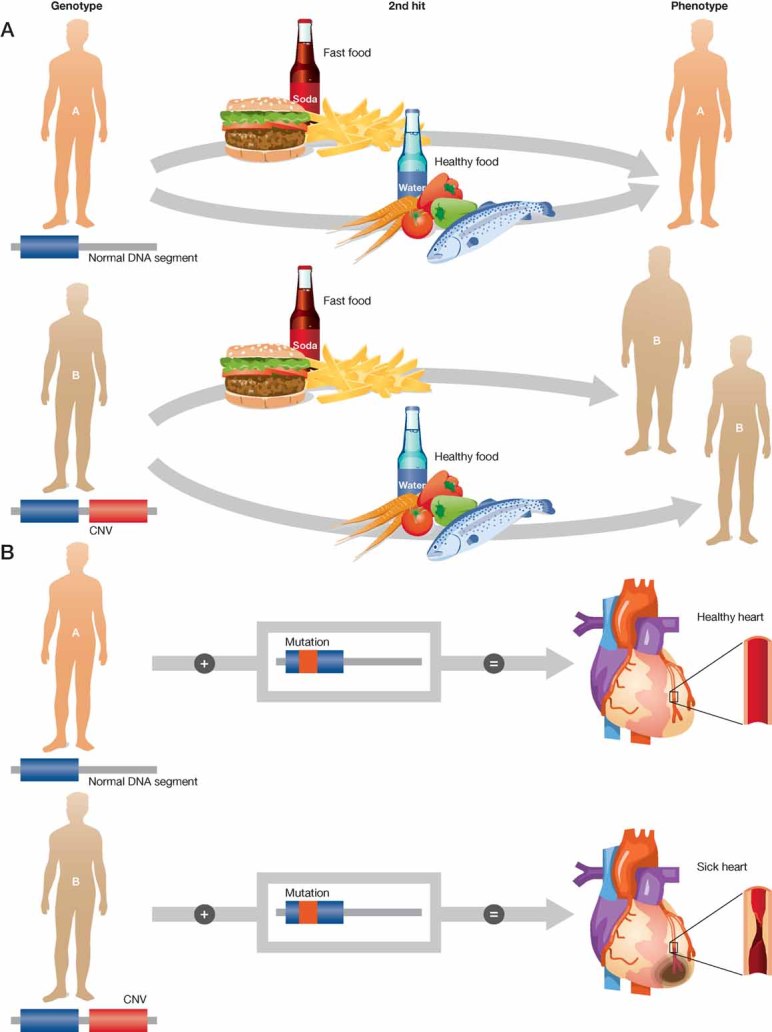
Environmental second hit: an individual carries a CNV, which predisposes to obesity under certain environmental conditions. The phenotype is only revealed after challenge (high fat diet).
Genetic second hit: an individual carries a CNV, which predisposes for the development of a cardiovascular disease. Both individuals have a mutated allele for a gene that predisposes them to a cardiovascular disease, but only the one with the two genetic modifications will develop a cardiovascular phenotype.
Comment on
-
Sensitized phenotypic screening identifies gene dosage sensitive region on chromosome 11 that predisposes to disease in mice.EMBO Mol Med. 2011 Jan;3(1):50-66. doi: 10.1002/emmm.201000112. EMBO Mol Med. 2011. PMID: 21204268 Free PMC article.
References
-
- Lupski JR, et al. Cell. 1991;66:219–232. - PubMed
Publication types
MeSH terms
Substances
LinkOut - more resources
Full Text Sources