


Tempo rubato : animacy speeds up time in the brain
- PMID: 21206749
- PMCID: PMC3012081
- DOI: 10.1371/journal.pone.0015638
Tempo rubato : animacy speeds up time in the brain
Abstract
Background: How do we estimate time when watching an action? The idea that events are timed by a centralized clock has recently been called into question in favour of distributed, specialized mechanisms. Here we provide evidence for a critical specialization: animate and inanimate events are separately timed by humans.
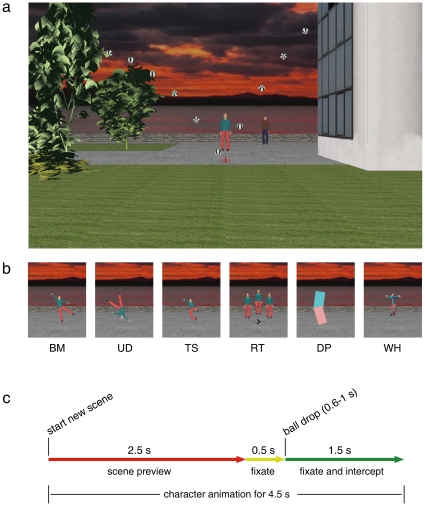
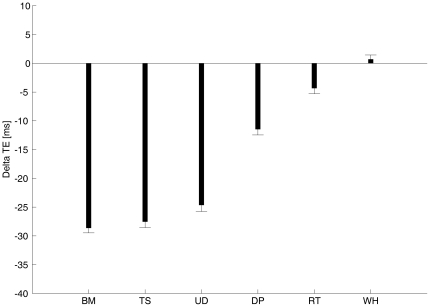
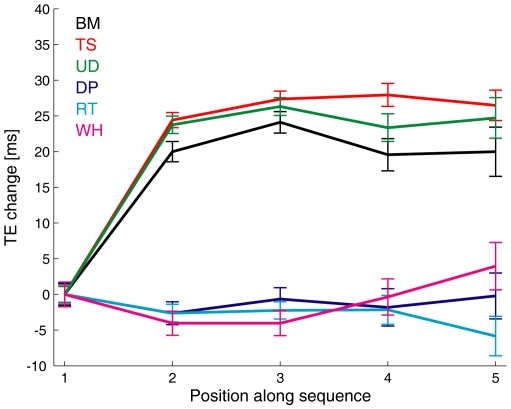
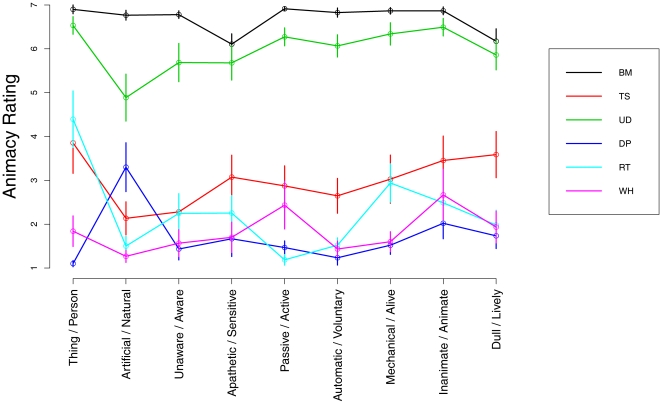
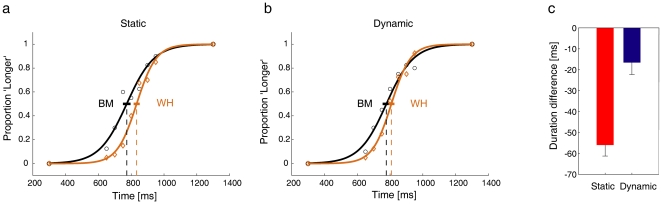
Methodology/principal findings: In different experiments, observers were asked to intercept a moving target or to discriminate the duration of a stationary flash while viewing different scenes. Time estimates were systematically shorter in the sessions involving human characters moving in the scene than in those involving inanimate moving characters. Remarkably, the animate/inanimate context also affected randomly intermingled trials which always depicted the same still character.
Conclusions/significance: The existence of distinct time bases for animate and inanimate events might be related to the partial segregation of the neural networks processing these two categories of objects, and could enhance our ability to predict critically timed actions.
Conflict of interest statement
Figures



References
-
- Georgopoulos AP. Cognitive motor control: spatial and temporal aspects. Curr Opin Neurobiol. 2002;12:678–83. - PubMed
-
- Mauk MD, Buonomano DV. The neural basis of temporal processing. Annu Rev Neurosci. 2004;27:307–40. - PubMed
-
- Buhusi CV, Meck WH. What makes us tick? Functional and neural mechanisms of interval timing. Nat Rev Neurosci. 2005;6:755–65. - PubMed
-
- Nobre A, Correa A, Coull J. The hazards of time. Curr Opin Neurobiol. 2007;17:465–70. - PubMed
Publication types
MeSH terms
LinkOut - more resources
Full Text Sources
