


Long-term weekly iron-folic acid and de-worming is associated with stabilised haemoglobin and increasing iron stores in non-pregnant women in Vietnam
- PMID: 21209902
- PMCID: PMC3012714
- DOI: 10.1371/journal.pone.0015691
Long-term weekly iron-folic acid and de-worming is associated with stabilised haemoglobin and increasing iron stores in non-pregnant women in Vietnam
Abstract
Background: The prevalence of anaemia and iron deficiency in women remains high worldwide. WHO recommends weekly iron-folic acid supplementation where anaemia rates in non-pregnant women of reproductive age are higher than 20%. In 2006, a demonstration project consisting of weekly iron-folic acid supplementation and regular de-worming was set up in two districts in a northern province in Vietnam where anaemia and hookworm rates were 38% and 76% respectively. In 2008 the project was expanded to all districts in the province, targeting some 250,000 women. The objectives of this study were to: 1) examine changes in haemoglobin, iron stores and soil transmitted helminth infection prevalence over three years and 2) assess women's access to and compliance with the intervention.
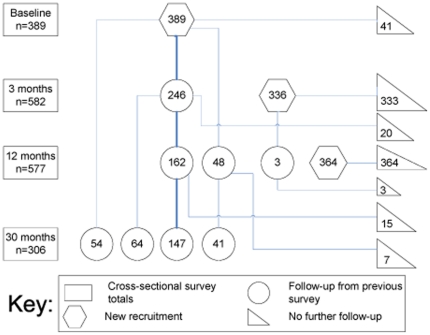
Methods and findings: The study was a semi-cross-sectional, semi-longitudinal panel design with a baseline survey, three impact surveys at three-, twelve- and thirty months after commencement of the intervention, and three compliance surveys after ten weeks, eighteen and thirty six months.
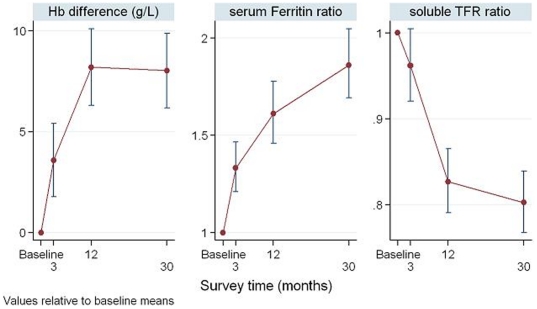
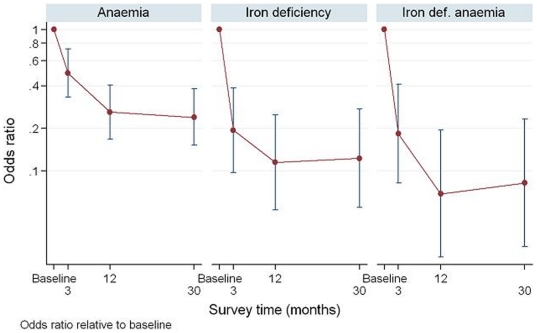
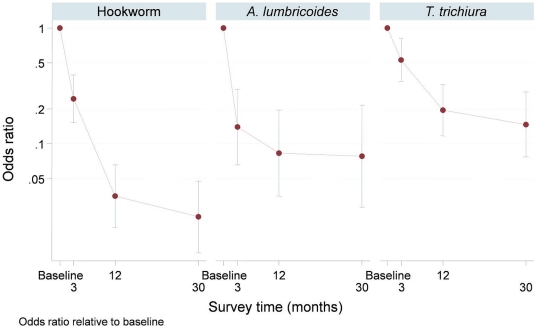
Results: After thirty months, mean haemoglobin stabilised at 130.3 g/L, an increase of 8.2 g/L from baseline, and mean serum ferritin rose from 23.9 µg/L to 52 µg/L. Hookworm prevalence fell from 76% to 22% over the same period. After thirty six months, 81% of the target population were receiving supplements and 87% were taking 75% or more of the supplements they received.
Conclusions: Weekly iron-folic acid supplementation and regular de-worming was effective in significantly and sustainably reducing the prevalence of anaemia and soil transmitted helminth infections and high compliance rates were maintained over three years.
Conflict of interest statement
Figures

References
-
- McLean E, Cogswell M, Egli I, Wojdyla D, de Benoist B. Worldwide prevalence of anaemia, WHO Vitamin and Mineral Nutrition Information System, 1993-2005. Public Health Nutr. 2009;12:444–454. - PubMed
-
- WHO/CDC . Geneva: World Health Organization; 2005. Assessing the iron status of populations: Report of a joint World Health Organization/Centers for Disease Control and Prevention technical consultation on the assessment of iron status at the population level.
-
- WHO Iron deficiency anaemia - assessment, prevention and control. A Guide for Programme Managers. Geneva: World Health Organization. WHO/NHD/01.3 2001
-
- Trinh LT, Dibley M. Anaemia in pregnant, postpartum and non pregnant women in Lak district, Daklak province of Vietnam. Asia Pac J Clin Nutr. 2007;16:310–315. - PubMed
Publication types
MeSH terms
Substances
LinkOut - more resources
Full Text Sources
Medical
