


Physiological effects of manipulating the level of insulin-degrading enzyme in insulin-producing cells of Drosophila
- PMID: 21212741
- PMCID: PMC3052873
- DOI: 10.4161/fly.5.1.14080
Physiological effects of manipulating the level of insulin-degrading enzyme in insulin-producing cells of Drosophila
Abstract
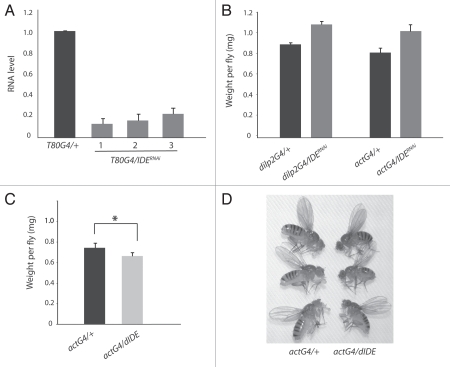
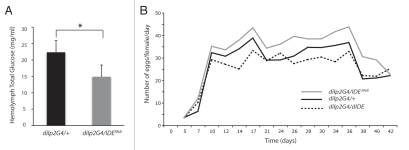
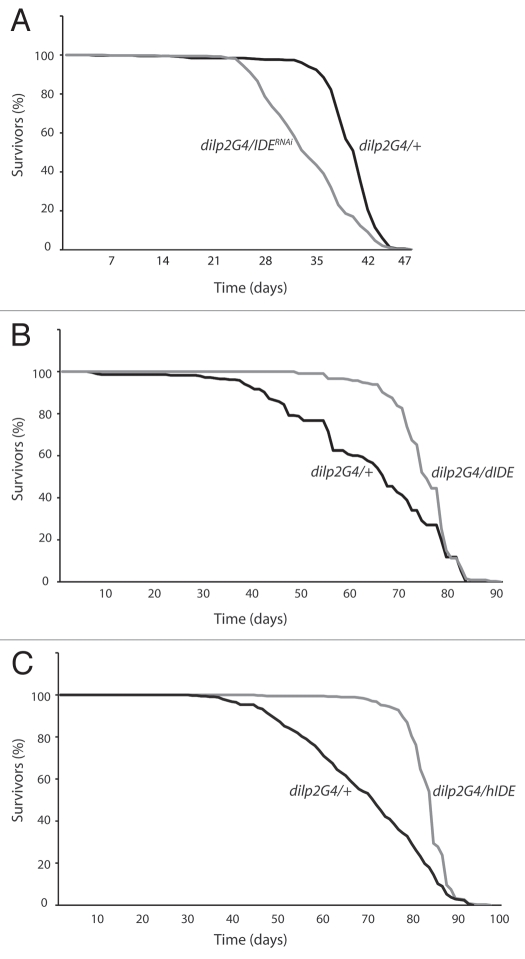
Insulin-degrading enzyme (IDE) degrades insulin and other peptides, including the Aβ peptide of Alzheimer's disease. However, the mechanism by which IDE acts on its substrates in vivo is unclear, and its role in pathogenesis of type 2 diabetes and Alzheimer's disease is controversial. Here, we show that in Drosophila knocking down IDE in insulin-producing cells (IPCs) of the brain results in increased body weight and fecundity, decreased circulating sugar levels, and reduced lifespan. Moreover, knocking down and over-expressing IDE in IPCs have opposite physiological effects. As mis-regulated insulin signaling in peripheral tissues is known to cause similar phenotypes, our data suggest a role for Drosophila IDE in determining the level of insulin-like peptides made by IPCs that systemically activate insulin signaling.
Figures
References
-
- Saltiel AR, Kahn CR. Insulin signalling and the regulation of glucose and lipid metabolism. Nature. 2001;414:799–806. - PubMed
-
- Taguchi A, White MF. Insulin-like signaling, nutrient homeostasis and life span. Annu Rev Physiol. 2008;70:191–212. - PubMed
-
- Duckworth WC, Bennett RG, Hamel FG. Insulin degradation: progress and potential. Endocr Rev. 1998;19:608–624. - PubMed
-
- Qiu WQ, Folstein MF. Insulin, insulin-degrading enzyme and amyloid-β peptide in Alzheimer's disease: review and hypothesis. Neurobiol Aging. 2006;27:190–198. - PubMed
Publication types
MeSH terms
Substances
Grants and funding
LinkOut - more resources
Full Text Sources
Molecular Biology Databases
Research Materials
