


Update on therapy of chronic lymphocytic leukemia
- PMID: 21220603
- PMCID: PMC5321080
- DOI: 10.1200/JCO.2010.32.3865
Update on therapy of chronic lymphocytic leukemia
Abstract
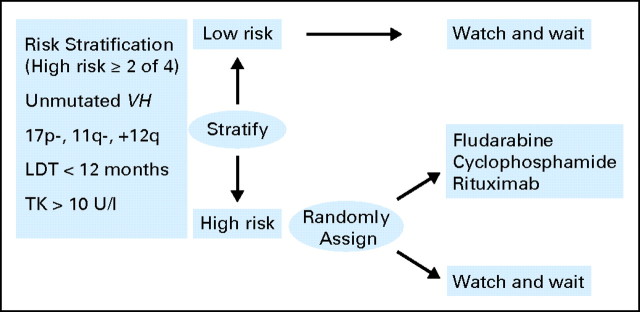
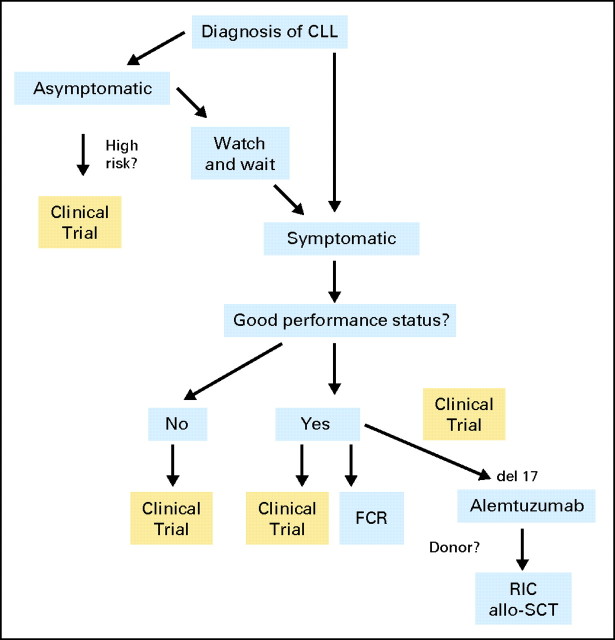
There have been tremendous advances in the treatment of chronic lymphocytic leukemia (CLL) over the past decade, with the goal of therapy no longer being just to palliate symptoms but now to achieve complete remission, eradicate minimal residual disease, and improve survival. During this period, there have also been major advances in identification of molecular factors associated with increased risk of progression. The clinical utility of these factors is being explored to determine whether we can identify groups of patients who should be treated earlier in their disease course and whether we can tailor therapy for groups of patients with specific molecular markers of disease. First-line chemoimmunotherapy approaches now offer prolonged survival, and there is a need to identify patients who are suitable candidates for allogeneic stem-cell transplantation that uses reduced-intensity conditioning regimens. The vast majority of CLL patients are either too old or do not have sufficiently high-risk disease to warrant these approaches, and effective therapies that can be tolerated by the more frail elderly patients with this disease are urgently needed. Numerous novel agents are being developed, and their role in the first-line treatment of frail patients or those who relapse after previous treatment is being explored in clinical trials.
Conflict of interest statement
Authors' disclosures of potential conflicts of interest and author contributions are found at the end of this article.
Figures
References
-
- Hallek M, Cheson BD, Catovsky D, et al. Guidelines for the diagnosis and treatment of chronic lymphocytic leukemia: A report from the International Workshop on Chronic Lymphocytic Leukemia updating the National Cancer Institute-Working Group 1996 guidelines. Blood. 2008;111:5446–5456. - PMC - PubMed
-
- Rawstron AC, Bennett FL, O'Connor SJ, et al. Monoclonal B-cell lymphocytosis and chronic lymphocytic leukemia. N Engl J Med. 2008;359:575–583. - PubMed
-
- Wierda WG, O'Brien S, Wang X, et al. Prognostic nomogram and index for overall survival in previously untreated patients with chronic lymphocytic leukemia. Blood. 2007;109:4679–4685. - PubMed
-
- Döhner H, Stilgenbauer S, Benner A, et al. Genomic aberrations and survival in chronic lymphocytic leukemia. N Engl J Med. 2000;343:1910–1916. - PubMed
Publication types
MeSH terms
Substances
LinkOut - more resources
Full Text Sources
Other Literature Sources
Medical
Miscellaneous
