


Effect of the thymidylate synthase inhibitors on dUTP and TTP pool levels and the activities of DNA repair glycosylases on uracil and 5-fluorouracil in DNA
- PMID: 21222484
- PMCID: PMC3074591
- DOI: 10.1021/bi102046h
Effect of the thymidylate synthase inhibitors on dUTP and TTP pool levels and the activities of DNA repair glycosylases on uracil and 5-fluorouracil in DNA
Abstract
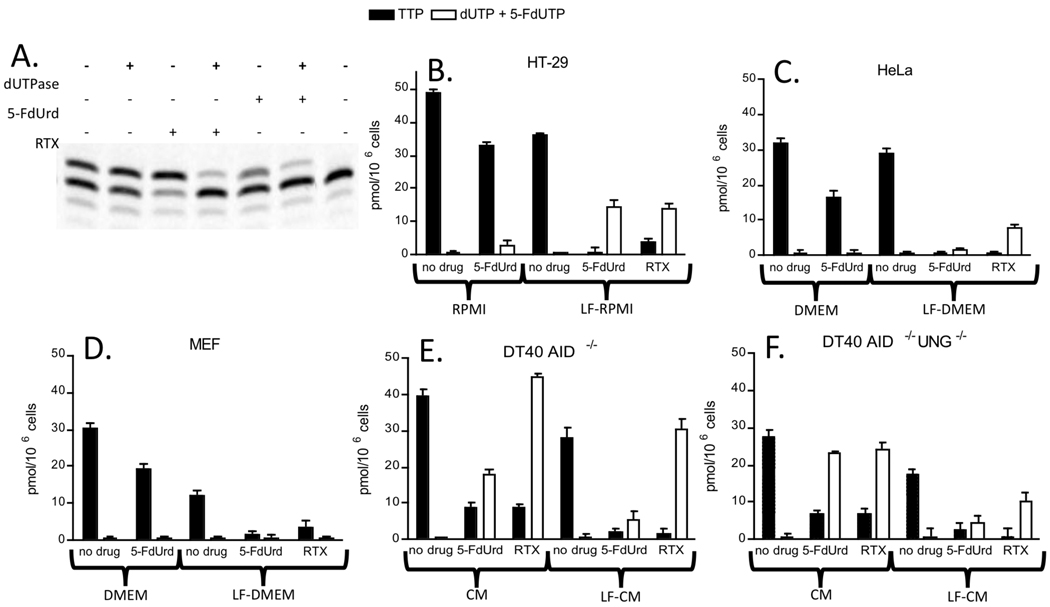
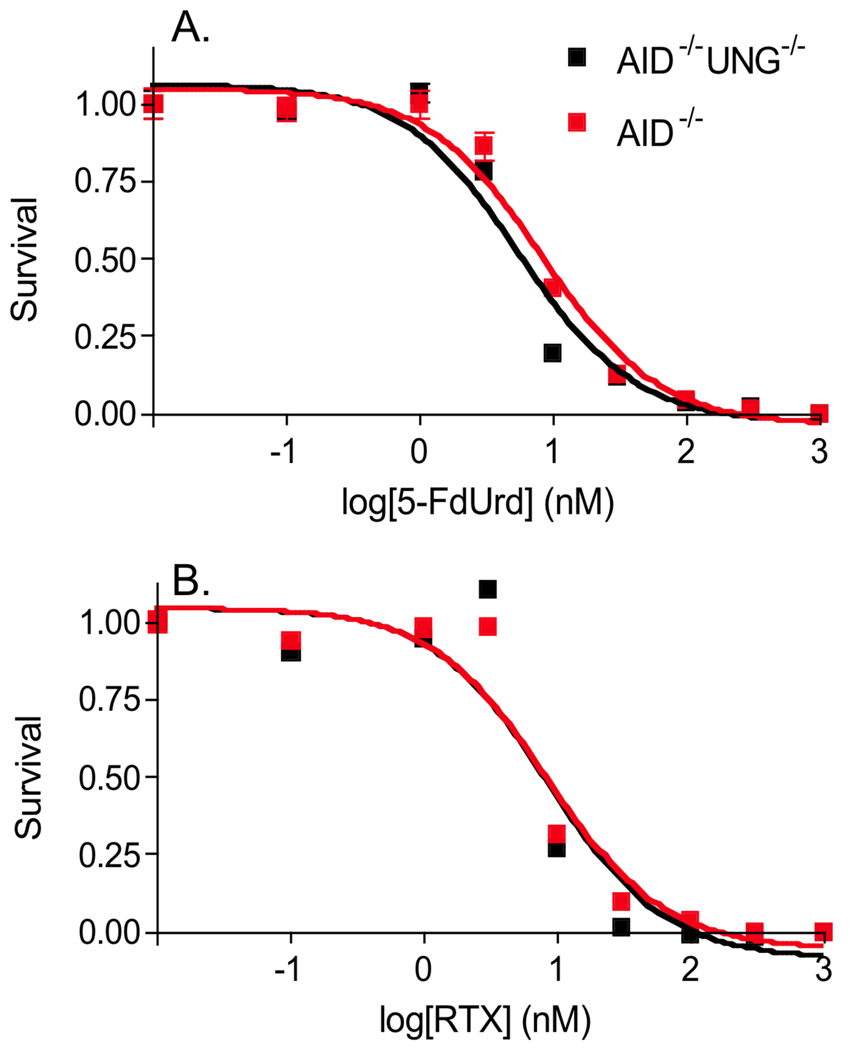
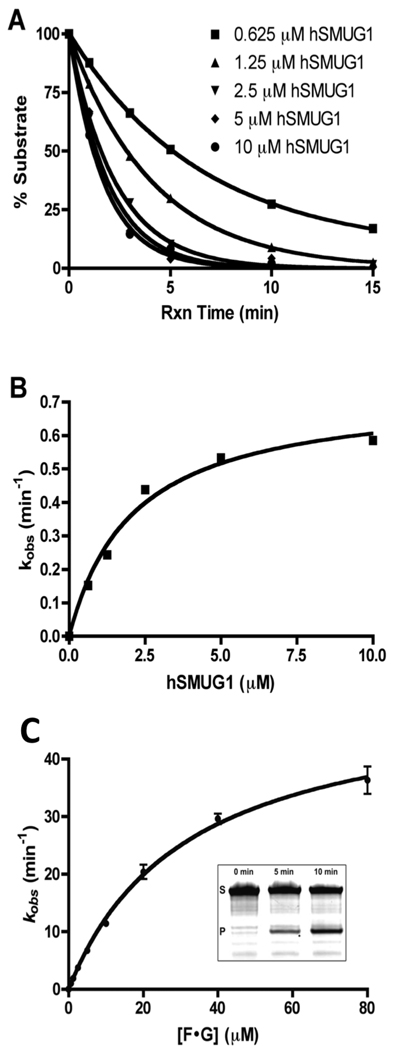
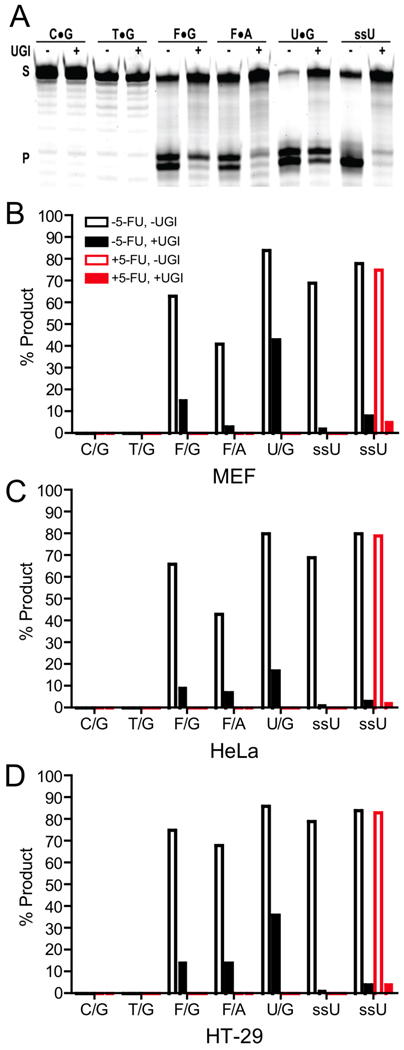
5-Fluorouracil (5-FU), 5-fluorodeoxyuridine (5-dUrd), and raltitrixed (RTX) are anticancer agents that target thymidylate synthase (TS), thereby blocking the conversion of dUMP into dTMP. In budding yeast, 5-FU promotes a large increase in the dUMP/dTMP ratio leading to massive polymerase-catalyzed incorporation of uracil (U) into genomic DNA, and to a lesser extent 5-FU, which are both excised by yeast uracil DNA glycosylase (UNG), leading to DNA fragmentation and cell death. In contrast, the toxicity of 5-FU and RTX in human and mouse cell lines does not involve UNG, but, instead, other DNA glycosylases that can excise uracil derivatives. To elucidate the basis for these divergent findings in yeast and human cells, we have investigated how these drugs perturb cellular dUTP and TTP pool levels and the relative abilities of three human DNA glycosylases (hUNG2, hSMUG1, and hTDG) to excise various TS drug-induced lesions in DNA. We found that 5-dUrd only modestly increases the dUTP and dTTP pool levels in asynchronous MEF, HeLa, and HT-29 human cell lines when growth occurs in standard culture media. In contrast, treatment of chicken DT40 B cells with 5-dUrd or RTX resulted in large increases in the dUTP/TTP ratio. Surprisingly, even though UNG is the only DNA glycosylase in DT40 cells that can act on U·A base pairs derived from dUTP incorporation, an isogenic ung(-/-) DT40 cell line showed little change in its sensitivity to RTX as compared to control cells. In vitro kinetic analyses of the purified human enzymes show that hUNG2 is the most powerful catalyst for excision of 5-FU and U regardless of whether it is found in base pairs with A or G or present in single-stranded DNA. Fully consistent with the in vitro activity assays, nuclear extracts isolated from human and chicken cell cultures show that hUNG2 is the overwhelming activity for removal of both U and 5-FU, despite its bystander status with respect to drug toxicity in these cell lines. The diverse outcomes of TS inhibition with respect to nucleotide pool levels, the nature of the resulting DNA lesion, and the DNA repair response are discussed.
Figures


References
-
- Longley DB, Harkin DP, Johnston PG. 5-Fluorouracil: Mechanisms of Action and Clinical Strategies. Nat Rev Cancer. 2003;3:330–338. - PubMed
-
- Van Triest B, Pinedo HM, Giaccone G, Peters GJ. Downstream Molecular Determinants of Response to 5-Fluorouracil and Antifolate Thymidylate Synthase Inhibitors. Ann. Oncol. 2000;11:385–391. - PubMed
-
- Cohen SS. On the Nature of Thymineless Death. Ann. N. Y. Acad. Sci. 1971;186:292–301. - PubMed
-
- Houghton JA, Tillman DM, Harwood FG. Ratio of 2'-Deoxyadenosine-5'-triphosphate/thymidine-5'-Triphosphate Influences the Commitment of Human Colon Carcinoma Cells to Thymineless Death. Clin. Cancer Res. 1995;1:723–730. - PubMed
Publication types
MeSH terms
Substances
Grants and funding
LinkOut - more resources
Full Text Sources
