


Attitudes toward opioid substitution therapy and pre-incarceration HIV transmission behaviors among HIV-infected prisoners in Malaysia: implications for secondary prevention
- PMID: 21232882
- PMCID: PMC3084892
- DOI: 10.1016/j.drugalcdep.2010.12.001
Attitudes toward opioid substitution therapy and pre-incarceration HIV transmission behaviors among HIV-infected prisoners in Malaysia: implications for secondary prevention
Abstract
Background: Pre-incarceration HIV transmission behaviors and current attitudes toward opioid substitution therapy (OST) among HIV-infected male prisoners in Malaysia have important implications for secondary HIV prevention efforts.
Methods: In June 2007, 102 HIV-infected male prisoners within 6 months of community-release were anonymously surveyed in Kota Bharu, Malaysia.
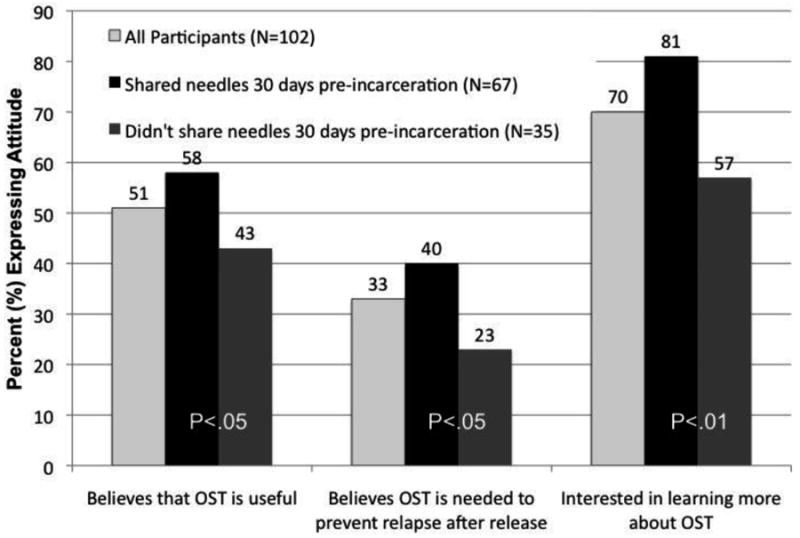
Results: Nearly all subjects (95%) met criteria for opioid dependence. Overall, 66% of participants reported sharing needles, and 37% reported unprotected sex in the 30 days prior to incarceration. During this period, 77% reported injection drug use, with 71% injecting daily and 65% injecting more than one substance. Injection of buprenorphine (28%), benzodiazepines (28%) and methamphetamines (49%) was reported. Nearly all (97%) of those reporting unprotected sex did so with someone not known to be HIV-infected. While 51% believed that opioid substitution therapy (OST) would be helpful, only 33% believed they needed it to prevent relapse after prison release. Most participants (70%) expressed interest in learning more about OST. Those reporting the highest injection risks were more likely to believe OST would be helpful (p<0.05), to believe that it was needed to prevent relapse post-release (p<0.05), and to express interest in learning more about OST (p<0.01).
Conclusions: Secondary HIV prevention among prisoners in Malaysia is crucial to reduce community HIV transmission after release. Effectively reducing HIV risk associated with opioid injection will require OST expansion, including social marketing to improve its acceptability and careful monitoring. Access to sterile injection equipment, particularly for non-opioid injectors, and behavioral interventions that reduce sexual risk will also be required.
Copyright © 2010 Elsevier Ireland Ltd. All rights reserved.
Figures
References
-
- AIDS/STD Section Disease Control Division, M.M.o H., Government of Malaysia . UNGASS Country Progress Report: Malaysia. Petaling Jaya: 2010.
-
- Bergenstrom A, Kamarulzaman A, Khalib AM. Malaysia Country Advocacy Brief: Injecting Drug Use and HIV. UNODC, UNAIDS; 2009.
Publication types
MeSH terms
Grants and funding
LinkOut - more resources
Full Text Sources
Medical
Miscellaneous
