


T cell-tumor interaction directs the development of immunotherapies in head and neck cancer
- PMID: 21234340
- PMCID: PMC3017942
- DOI: 10.1155/2010/236378
T cell-tumor interaction directs the development of immunotherapies in head and neck cancer
Abstract
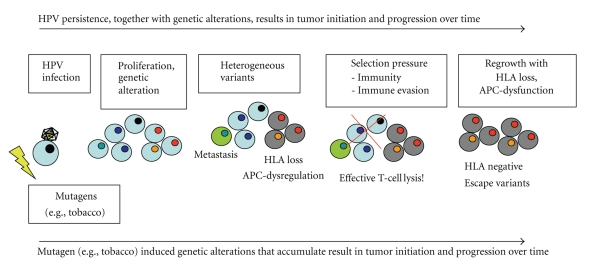
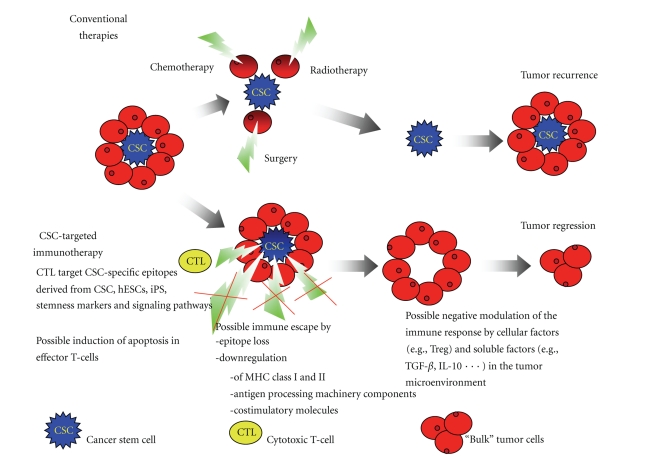
The competent immune system controls disease effectively due to induction, function, and regulation of effector lymphocytes. Immunosurveillance is exerted mostly by cytotoxic T-lymphocytes (CTLs) while specific immune suppression is associated with tumor malignancy and progression. In squamous cell carcinoma of the head and neck, the presence, activity, but also suppression of tumor-specific CTL have been demonstrated. Functional CTL may exert a selection pressure on the tumor cells that consecutively escape by a combination of molecular and cellular evasion mechanisms. Certain of these mechanisms target antitumor effector cells directly or indirectly by affecting cells that regulate CTL function. This results in the dysfunction or apoptosis of lymphocytes and dysregulated lymphocyte homeostasis. Another important tumor-escape mechanism is to avoid recognition by dysregulation of antigen processing and presentation. Thus, both induction of functional CTL and susceptibility of the tumor and its microenvironment to become T cell targets should be considered in CTL-based immunotherapy.
Figures
References
-
- Mashberg A, Russell NS, Bartelink H, et al. Head and neck cancer. The New England Journal of Medicine. 1993;328(24):1783–1784. - PubMed
-
- Vokes EE, Weichselbaum RR, Lippman SM, Hong WK. Medical progress: head and neck cancer. The New England Journal of Medicine. 1993;328(3):184–194. - PubMed
-
- Parkin DM, Bray F, Ferlay J, Pisani P. Global cancer statistics, 2002. Ca: A Cancer Journal for Clinicians. 2005;55(2):74–108. - PubMed
-
- Greenlee RT, Hill-Harmon MB, Murray T, Thun M. Cancer statistics, 2001. Ca: A Cancer Journal for Clinicians. 2001;51(1):15–36. - PubMed
-
- Jones AS, Morar P, Phillips DE, Field JK, Husband D, Helliwell TR. Second primary tumors in patients with head and neck squamous cell carcinoma. Cancer. 1995;75(6):1343–1353. - PubMed
Publication types
MeSH terms
LinkOut - more resources
Full Text Sources
Medical
