


doi: 10.1155/2011/381564.
Epub 2010 Dec 30.
Surmounting chemotherapy and radioresistance in chondrosarcoma: molecular mechanisms and therapeutic targets
Affiliations
- PMID: 21234363
- PMCID: PMC3018623
- DOI: 10.1155/2011/381564
Item in Clipboard
Surmounting chemotherapy and radioresistance in chondrosarcoma: molecular mechanisms and therapeutic targets
Sarcoma.
2011.
Abstract
Chondrosarcoma, a primary malignancy of bone, has eluded successful treatment with modern chemotherapeutic and radiation regimens. To date, surgical resection of these tumors remains the only curative treatment offered to patients with this diagnosis. Understanding and exploring the nature of chemotherapy and radiation resistance in chondrosarcoma could lead to new molecular targets and more directed therapy for these notoriously difficult-to-treat tumors. Here we review the most current hypotheses regarding the molecular mechanisms mediating chemotherapy and radiation resistance and the future direction of chondrosarcoma therapy research.
Figures
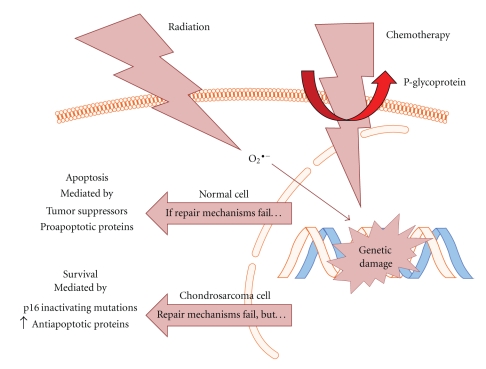
An overview of how chondrosarcoma cells evade the cytotoxic effects of chemotherapy and radiation. In normal cells, radiation and chemotherapy cause cell death by inducing genetic damage either directly, or in the case of radiation, through a reactive oxygen species (ROS) intermediate. For example, the drug doxorubicin intercalates with DNA, preventing replication, while ROS cause strand breaks. This damage is sensed by the cell, and then through the actions of tumor suppressor proteins such as p16 or p53 and the proapoptotic proteins including Bax, Bak, and Bim, the cell undergoes apoptosis, becomes senescent, or necroses. The chondrosarcoma cell's main defense against chemotherapeutic agents is P-glycoprotein, a membrane-bound pump that extrudes small, hydrophobic molecules from within the cell [10]. The action of P-glycoprotein can lower intracellular concentrations of chemotherapeutic agents beyond a point at which they exact their cytotoxic effects. Though radiation treatment still induces genetic damage in chondrosarcoma cells, several mutations allow them to survive. These mutations include inactivation of the gene encoding the important tumor suppressor p16 via methylation or deletion [11], and upregulation of the antiapoptotic proteins Bcl-2 and XIAP [12]. Figure adapted from Motifolio Cell and Nucleic Acid Toolkit.
References
-
- Tzu S. The Art of War. El Paso, Tex, USA: El Paso Norte Press; 2005.
-
- Sung SW, Fabrizio R, Lee FY. Chondrosarcoma. In: Herbert S, Schwartz MD, editors. Orthopedic Knowledge Update Musculoskeletal Tumors 2. American Academy of Orthopedic Surgeons; 2007. pp. 185–195.
-
- Lee FY, Mankin HJ, Fondren G, et al. Chondrosarcoma of bone: an assessment of outcome. Journal of Bone and Joint Surgery A. 1999;81(3):326–338. - PubMed
-
- Garzino-Demo P, Tanteri G, Boffano P, et al. Chondrosarcoma of the temporomandibular joint: a case report and review of the literature. Journal of Oral and Maxillofacial Surgery. 2010;68(8):2005–2011. - PubMed
Grants and funding
LinkOut - more resources
Full Text Sources
Other Literature Sources
