


Autoshaping in adolescence enhances sign-tracking behavior in adulthood: impact on ethanol consumption
- PMID: 21238477
- PMCID: PMC3056113
- DOI: 10.1016/j.pbb.2011.01.004
Autoshaping in adolescence enhances sign-tracking behavior in adulthood: impact on ethanol consumption
Abstract
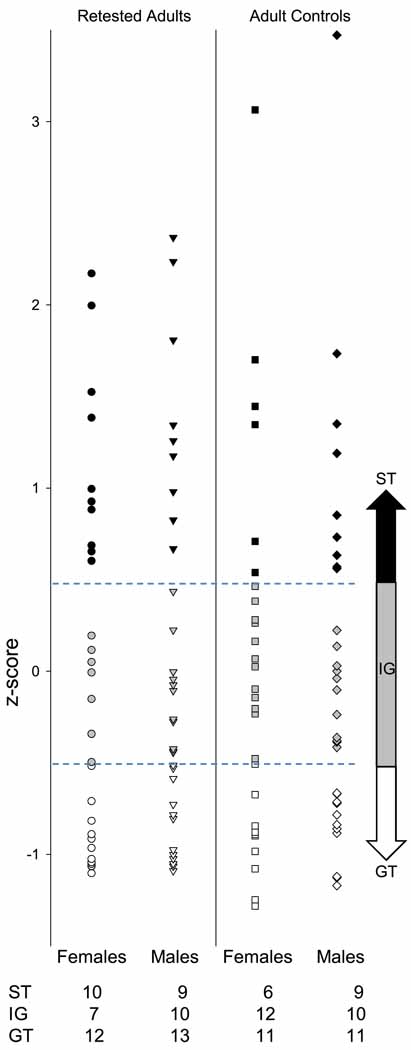
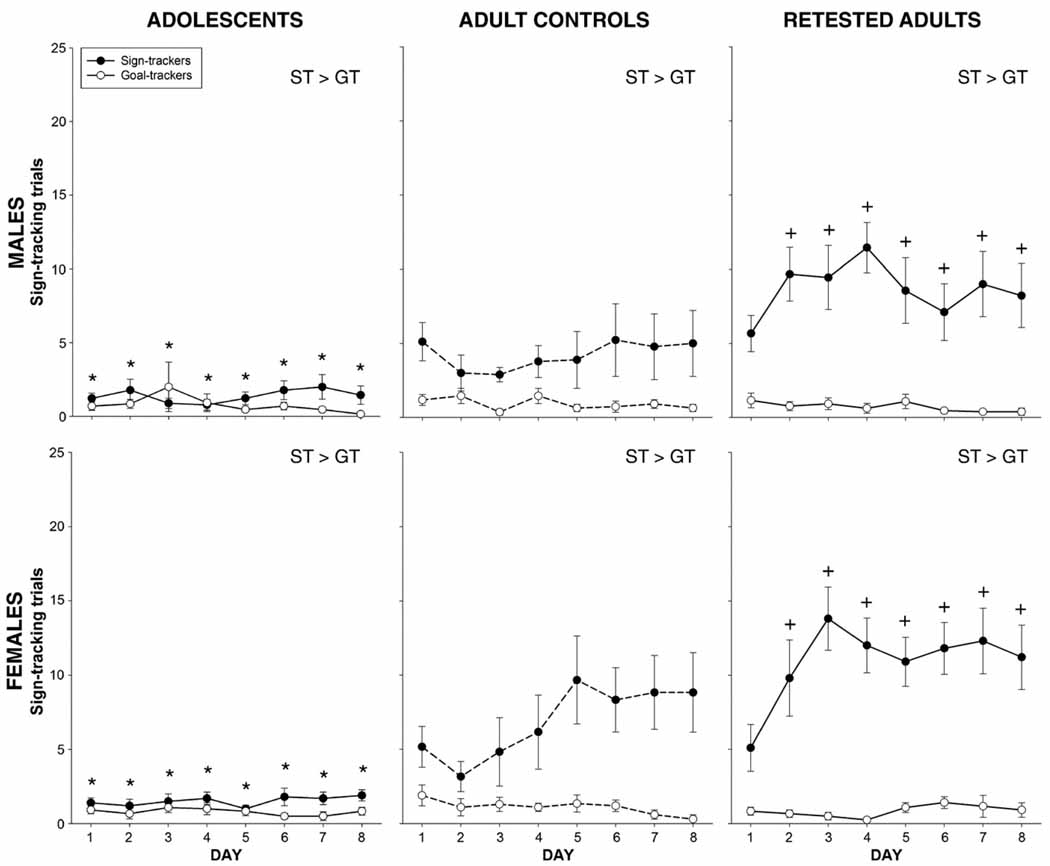
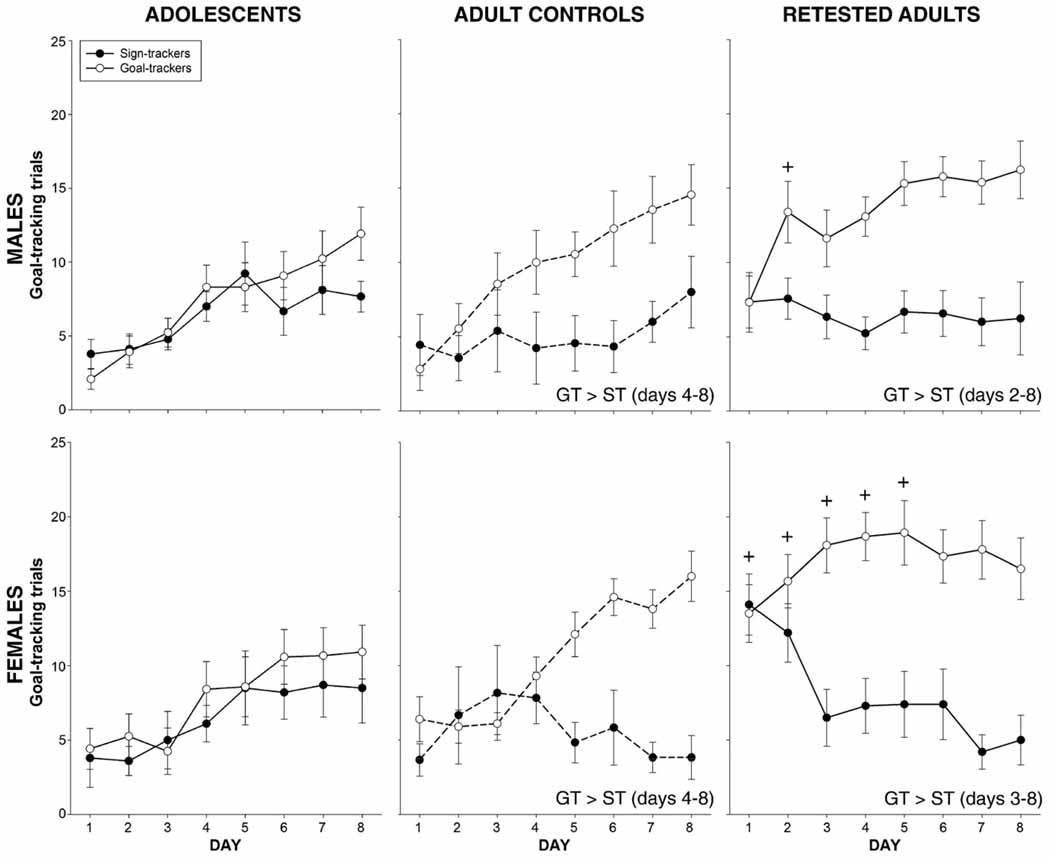
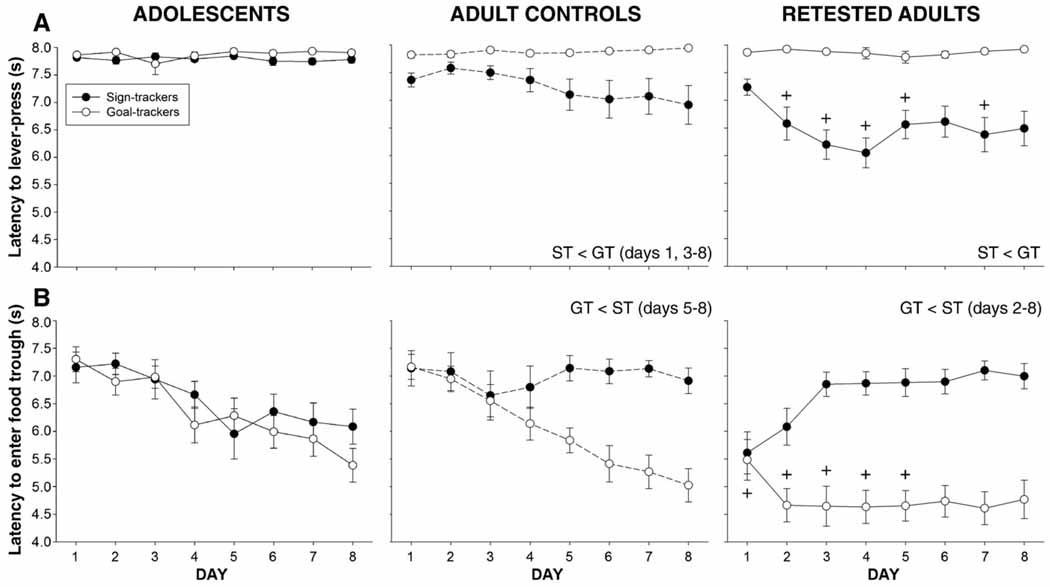
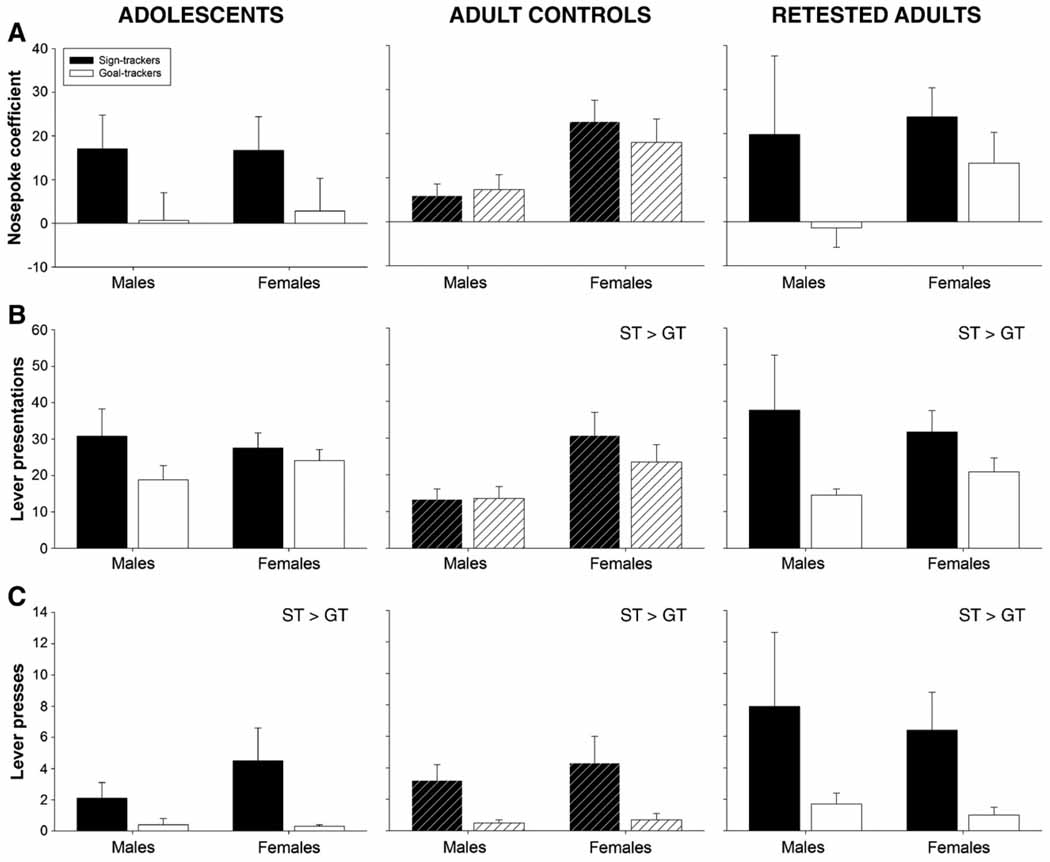
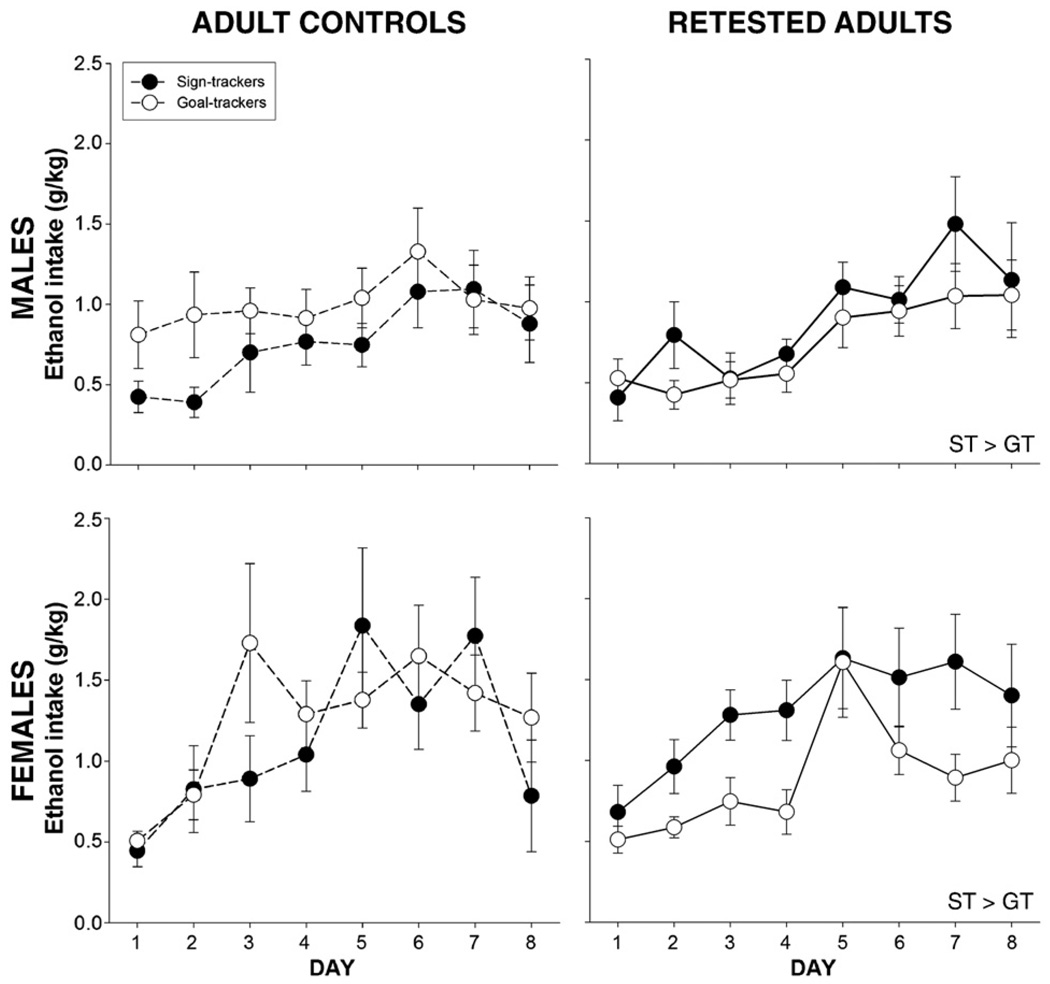
Autoshaping refers to a procedure during which a cue repeatedly paired with a reward elicits a conditioned response directed at either the reward delivery location ("goal-tracking") or the cue itself ("sign- tracking"). Individual differences in expression of sign-tracking behavior may be predictive of voluntary ethanol intake. The present study was designed to explore the development of differences in sign-tracking behavior in adolescent and adult male and female rats in an 8-day autoshaping procedure. Consistency of sign-tracking and goal-tracking across age was examined by retesting adolescents again in adulthood and comparing their adult data with animals tested only as adults to explore pre-exposure effects on adult responding. In order to assess the relationship between sign-tracking and ethanol intake, voluntary ethanol consumption was measured in an 8-day, 2-hr limited access drinking paradigm following the 8-day autoshaping procedure in adulthood. Animals tested as adolescents showed notably less sign-tracking behavior than animals tested as adults, and sign-tracking behavior was not correlated across age. Animals exposed to the autoshaping procedure as adolescents demonstrated greater sign-tracking behavior as adults when compared to control animals tested only in adulthood. When examining the relationship in adulthood between sign-tracking and ethanol intake, an increase in ethanol intake among sign-trackers was found only in animals pre-exposed to autoshaping as adolescents. Whether or not these results reflect an adolescent-specific experience effect is unclear without further work to determine whether comparable pre-exposure effects are seen if the initial autoshaping sessions are delayed into adulthood.
Copyright © 2011 Elsevier Inc. All rights reserved.
Figures
References
-
- Adriani W, Laviola G. Elevated levels of impulsivity and reduced place conditioning with d-amphetamine: two behavioral features of adolescence in mice. Behav Neurosci. 2003 Aug;117(4):695–703. - PubMed
-
- Badanich KA, Adler KJ, Kirstein CL. Adolescents differ from adults in cocaine conditioned place preference and cocaine-induced dopamine in the nucleus accumbens septi. Eur J Pharmacol. 2006 Nov 21;550(1–3):95–106. - PubMed
-
- Berridge KC, Robinson TE. Parsing reward. Trends Neurosci. 2003 Sep;26(9):507–513. - PubMed
-
- Boakes RA. Performance on learning to associate a stimulus with positive reinforcement. In: Davis H, Hurvitz HMB, editors. Operant Pavlovian Interactions. Hillsdale, NJ: Erlbaum Associates; 1977. pp. 67–97.
Publication types
MeSH terms
Substances
Grants and funding
LinkOut - more resources
Full Text Sources
Medical
