


Population-based study to estimate prevalence and determine risk factors of gallbladder diseases in the rural Gangetic basin of North India
- PMID: 21241429
- PMCID: PMC3044346
- DOI: 10.1111/j.1477-2574.2010.00255.x
Population-based study to estimate prevalence and determine risk factors of gallbladder diseases in the rural Gangetic basin of North India
Abstract
Background: A high prevalence of gallbladder diseases (GBD) in Northern India warranted a population survey into environmental risk factors.
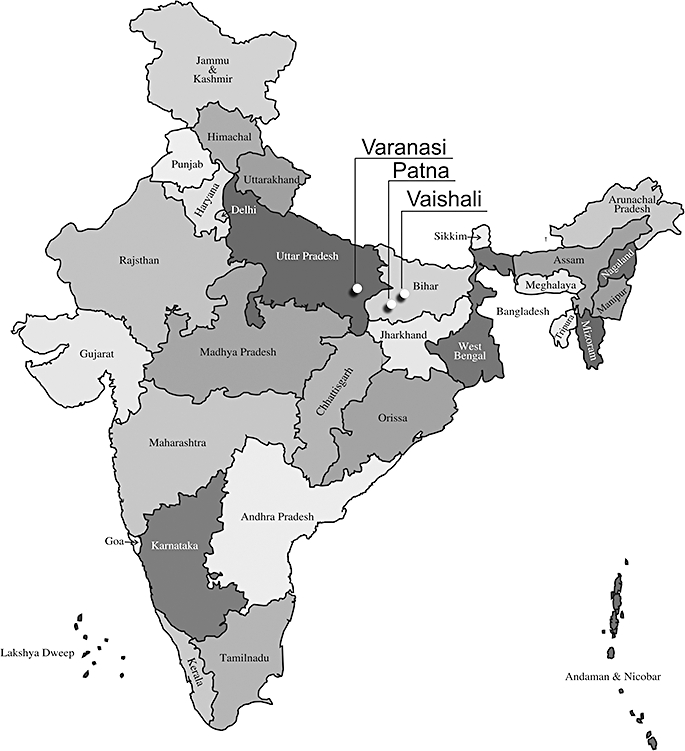
Methods: In 60 villages of Uttar Pradesh and Bihar from 13 334 households, 22 861 persons aged >30 years were interviewed for symptoms of GBD, diet and environmental factors. Subsequently ultrasonography (US) was performed in 5100 and 1448 people with and without symptoms, respectively. Heavy metal and pesticide content in soil and water were estimated.
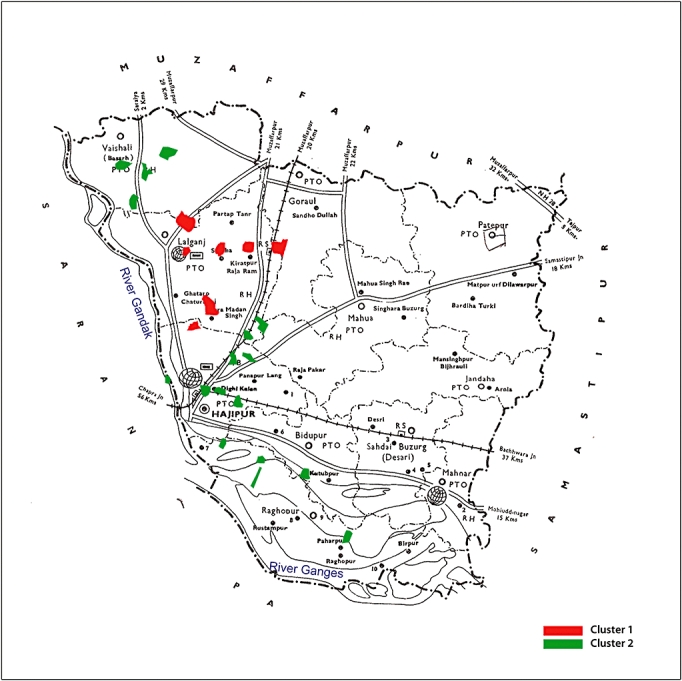
Results: US revealed a prevalence of GBD of 6.20%. GBD was more common in 5100 persons with symptoms (7.12%) compared with 1448 without (2.99%) (P < 0.05). Adjusted odds ratio (ORs) [95% confidence interval (CI)] revealed a significantly increased risk of GBD in females >50, 1.703 (CI 1.292-2.245); multiparity 1.862 (CI 1.306-2.655) and a genetic history 1.564 (CI 1.049-2.334). An increased risk noted in males with diabetes was 4.271 (CI 2.130-8.566), chickpea consumption 2.546 (CI 1.563-4.146) and drinking unsafe water 3.835 (CI 2.368-6.209). Prevalence of gallstones was 4.15%; more in females 5.59% than males 1.99% (P < 0.05). Cluster analysis identified a positive correlation of nickel, cadmium and chromium in water with a high prevalence of GBD in adjacent villages in Vaishali district, Bihar.
Conclusion: A high risk of GBD was observed in older, multiparous women and men with diabetes, intake of chickpeas, unsafe water and villages with heavy metal water pollution.
© 2010 International Hepato-Pancreato-Biliary Association.
Figures
References
-
- Randi G, Franceschi S, La Vecchia C. Gallbladder cancer worldwide: geographical distribution and risk factors. Int J Cancer. 2006;118:1591–1602. - PubMed
-
- Zatonski WA, Lowenfels AB, Boyle P, Maisonneuve P, Bueno de Mesquita HB, Ghadirian P, et al. Epidemiologic aspects of gallbladder cancer: a case-control study of the SEARCH Program of the International Agency for Research on Cancer. J Natl Cancer Inst. 1997;89:1132–1138. - PubMed
-
- Nandakumar A, Gupta PC, Gangadharan P, Visweswara RN, Parkin DM. Geographic pathology revisited: development of an atlas of cancer in India. Int J Cancer. 2005;116:740–754. - PubMed
-
- Dhir V, Mohandas KM. Epidemiology of digestive tract cancers in India IV. Gall bladder and pancreas. Indian J Gastroenterol. 1999;18:24–28. - PubMed
-
- National Cancer Registry Programme. Consolidated Report of the Population Based Cancer Registries 1990–96. New Delhi: Indian Council of Medical Research; 2001.
Publication types
MeSH terms
Substances
LinkOut - more resources
Full Text Sources
Medical
