


Biliverdin reductase--a protein levels and activity in the brains of subjects with Alzheimer disease and mild cognitive impairment
- PMID: 21241799
- PMCID: PMC3042515
- DOI: 10.1016/j.bbadis.2011.01.005
Biliverdin reductase--a protein levels and activity in the brains of subjects with Alzheimer disease and mild cognitive impairment
Abstract
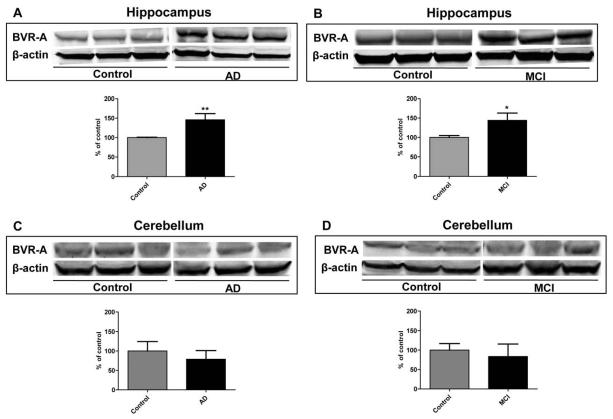
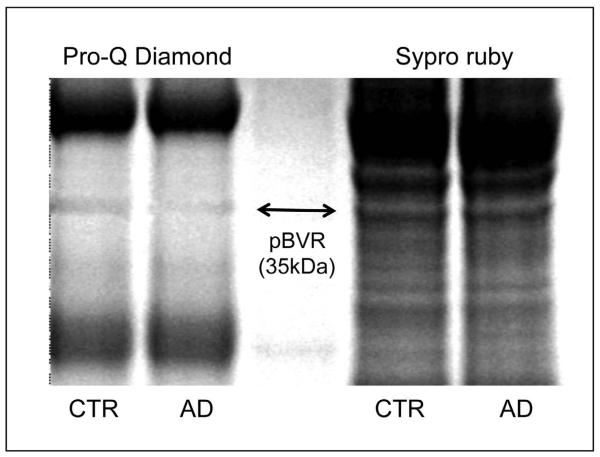
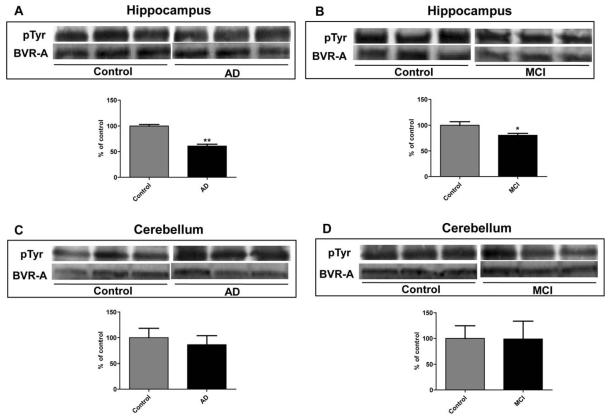
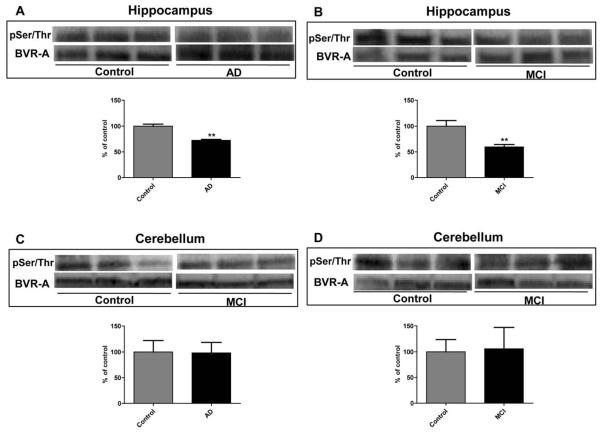
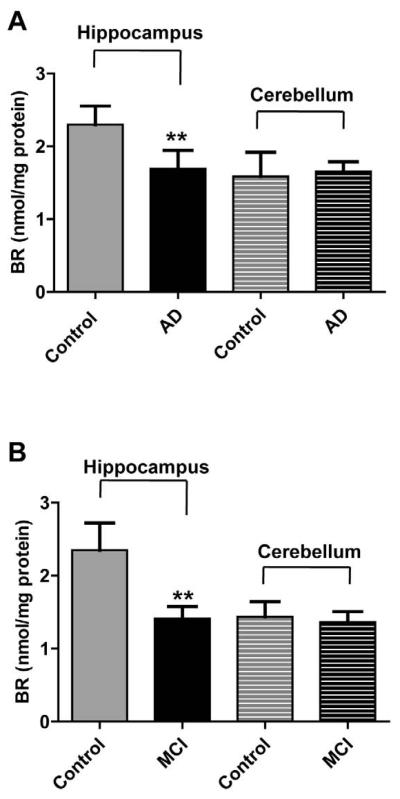
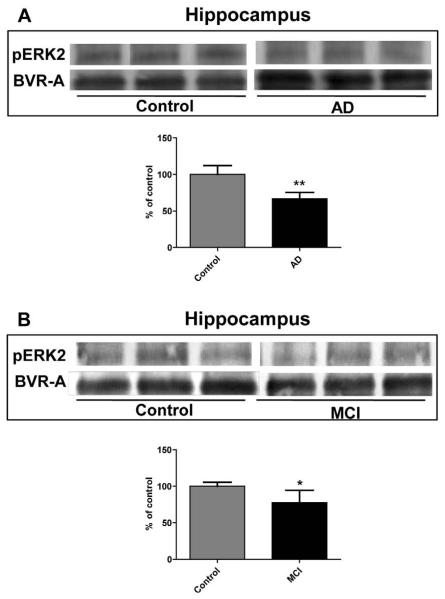
Biliverdin reductase-A is a pleiotropic enzyme involved not only in the reduction of biliverdin-IX-alpha into bilirubin-IX-alpha, but also in the regulation of glucose metabolism and cell growth secondary to its serine/threonine/tyrosine kinase activity. Together with heme oxygenase, whose metabolic role is to degrade heme into biliverdin-IX-alpha, it forms a powerful system involved in the cell stress response during neurodegenerative disorders. In this paper, an up-regulation of the biliverdin reductase-A protein levels was found in the hippocampus of the subjects with Alzheimer disease and arguably its earliest form, mild cognitive impairment. Moreover a significant reduction in the phosphorylation of serine, threonine and tyrosine residues of biliverdin reductase-A was found, and this was paralleled by a marked reduction in its reductase activity. Interestingly, the levels of both total and phosphorylated biliverdin reductase-A were unchanged as well as its enzymatic activity in the cerebella. These results demonstrated a dichotomy between biliverdin reductase-A protein levels and activity in the hippocampus of subjects affected by Alzheimer disease and mild cognitive impairment, and this effect likely is attributable to a reduction in the phosphorylation of serine, threonine and tyrosine residues of biliverdin reductase-A. Consequently, not just the increased levels of biliverdin reductase-A, but also its changed activity and phosphorylation state, should be taken into account when considering potential biomarkers for Alzheimer disease and mild cognitive impairment.
Copyright © 2011 Elsevier B.V. All rights reserved.
Figures
References
-
- Butterfield DA, Stadtman ER. Paula ST, Bittar EE, editors. Protein Oxidation Processes in Aging Brain. Advances in Cell Aging and Gerontology. 1997:161–191.
-
- Calabrese V, Cornelius C, Mancuso C, Barone E, Calafato S, Bates T, Rizzarelli E, Kostova AT. Vitagenes, dietary antioxidants and neuroprotection in neurodegenerative diseases. Front. Biosci. 2009;14:376–397. - PubMed
-
- Mancuso C, Scapagini G, Curro D, Giuffrida Stella AM, De Marco C, Butterfield DA, Calabrese V. Mitochondrial dysfunction, free radical generation and cellular stress response in neurodegenerative disorders. Front. Biosci. 2007;12:1107–1123. - PubMed
-
- Poon HF, Calabrese V, Scapagnini G, Butterfield DA. Free radicals: key to brain aging and heme oxygenase as a cellular response to oxidative stress. J. Gerontol. A Biol. Sci. Med. Sci. 2004;59:478–493. - PubMed
-
- Maines MD. The heme oxygenase system: a regulator of second messenger gases. Annu. Rev. Pharmacol. Toxicol. 1997;37:517–554. - PubMed
Publication types
MeSH terms
Substances
Grants and funding
LinkOut - more resources
Full Text Sources
Medical
