


A case report of the symptom-relieving action of an anterior flat plane bite plate for temporomandibular disorder
- PMID: 21243070
- PMCID: PMC3020490
- DOI: 10.2174/1874210601004010218
A case report of the symptom-relieving action of an anterior flat plane bite plate for temporomandibular disorder
Abstract
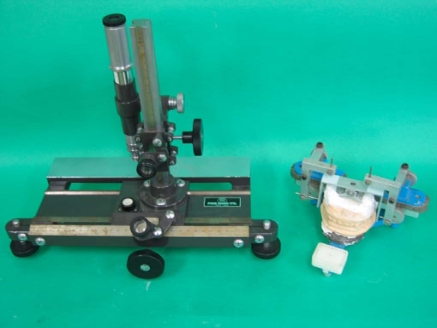
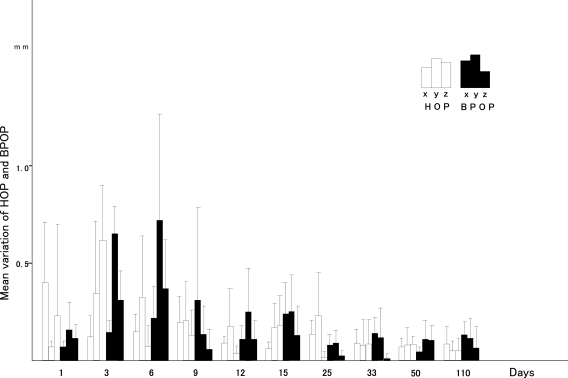
Splint therapy is a widely used modality for temporomandibular disorders (TMDs). However, questions remain regarding the mechanism of symptom relief. Recently, a relation between TMD and a discrepancy between the habitual occlusal position (HOP) and the anterior flat plane bite plate-induced occlusal position (BPOP) has been reported. Therefore, to understand the mechanism of the symptom relief associated with the use of a bite plate, the changes in both the HOP and BPOP values were observed during anterior bite plate treatment in a patient with TMD.
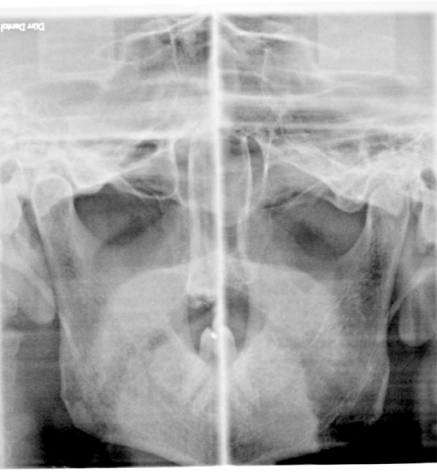
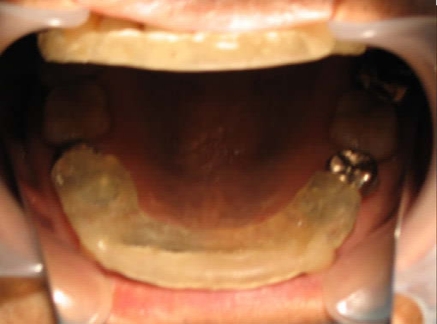
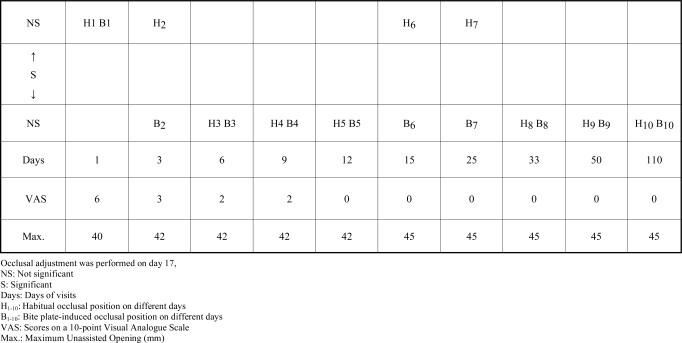
Case presentation: Anterior bite plate treatment was started in a patient complaining of arthralgia. A discrepancy between the HOP and BPOP values was recorded three days after the first visit; this discrepancy disappeared on day 6, and the disappearance was maintained between days 6 and 12. The disappearance was associated with a decrease in the severity of the patient's symptoms; however, the discrepancy reappeared after 15 days, coinciding with the complete disappearance of the patient's symptoms. Therefore, the effect of the bite plate on the resolution of the discrepancy between the HOP and BPOP values was interpreted as being unsustainable and occlusal equilibration for the BPOP was performed at 17 days. Thereafter, neither a discrepancy in the HOP and BPOP values nor any symptoms of TMD (right temporomandibular joint pain or limited jaw opening) reoccurred during a two-year follow-up period.
Conclusion: Within the limitations of the present study, the symptom-relieving action of an anterior flat plane bite plate on the resolution of occlusal discrepancy appeared to be temporary. This outcome supports previously reported conclusions that the effectiveness of stabilization splint therapy for reducing symptoms in patients with pain dysfunction syndrome does not differ significantly from that of other conservative therapies or of no treatment at all.
Keywords: Anterior flat plane bite plate; bite plate-induced occlusal position; occlusal discrepancy..
Figures
References
-
- McNeil C, editor. Craniomandibular disorders. guidelines for evaluation, diagnosis, and management. Chicago: Quintessence Publishing; 1990.
-
- Manns A, Miralles R, Guerrero F. The changes in electrical activity of the postural muscles of the mandible upon varying the vertical dimension. J Prosthet Dent. 1981;45:438–45. - PubMed
-
- Manns A, Rocabado M, Cadenasso P, Miralles R, Cumsille MA. The immediate effect of the variation of anteroposterior laterotrusive contact on the elevator EMG activity. J Craniomandib Pract. 1993;11:184–91. - PubMed
-
- Williamson EH, Lundquist DO. Anterior guidance: its effect on electromyographic activity of the temporal and masseter muscles. J Prosthet Dent. 1983;49:816–23. - PubMed
-
- Clark GT, Beemsterboer PL, Solberg WK, Rugh JD. Nocturnal electromyographic evaluation of myofascial pain dysfunction in patients undergoing occlusal splint therapy. J Am Dent Assoc. 1979;99:607–11. - PubMed
LinkOut - more resources
Full Text Sources