


Tumor necrosis factor alpha inhibits olfactory regeneration in a transgenic model of chronic rhinosinusitis-associated olfactory loss
- PMID: 21243089
- PMCID: PMC3021182
- DOI: 10.2500/ajra.2010.24.3498
Tumor necrosis factor alpha inhibits olfactory regeneration in a transgenic model of chronic rhinosinusitis-associated olfactory loss
Abstract
Background: Olfactory loss is a debilitating symptom of chronic rhinosinusitis (CRS). Although olfactory sensory neurons (OSNs) are normally regenerated constantly in the olfactory epithelium (OE), a transgenic model of CRS-associated olfactory loss (inducible olfactory inflammation [IOI] mouse) shows that inflammation causes widespread OSN loss without progenitor cell proliferation. In this study, we further examine whether the inflammatory cytokine tumor necrosis factor alpha (TNF-alpha) inhibits olfactory regeneration.
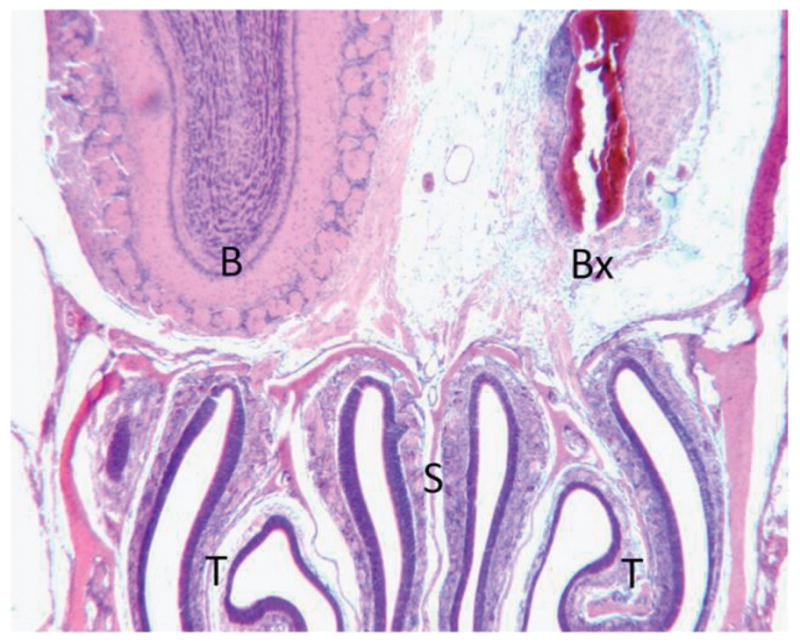
Methods: IOI mice underwent either unilateral bulbectomy or sham surgery and then were induced to express TNF-alpha in the OE for 1 week. After death, the mice were assessed histologically and with bromodeoxyuridine staining to determine the effect of TNF-alpha on olfactory regeneration.
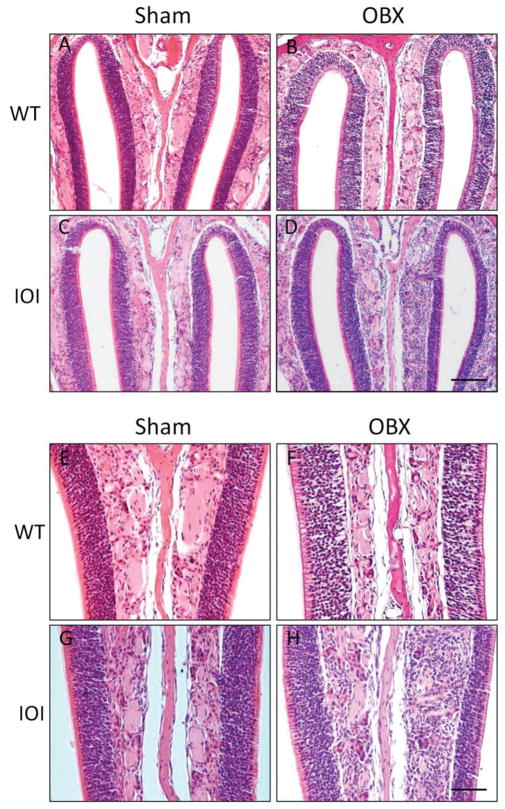
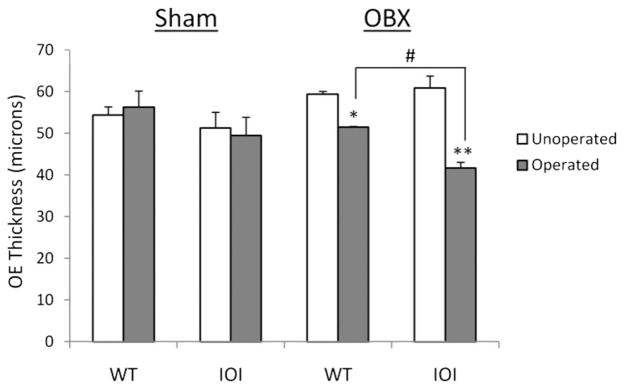
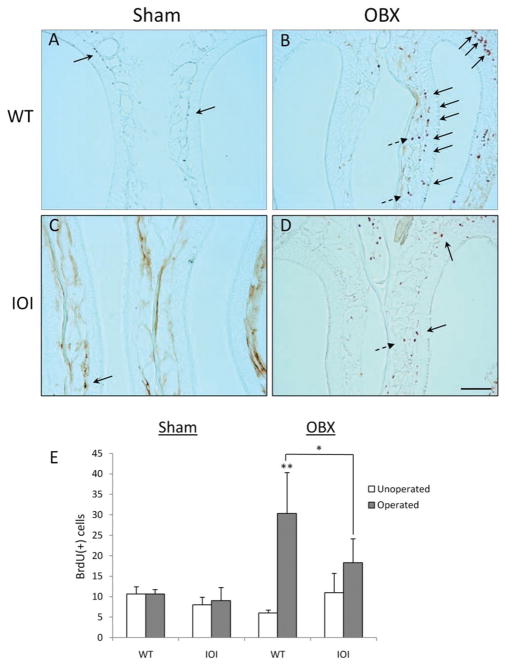
Results: In the absence of TNF-alpha, bulbectomy was associated with death of OSNs, followed by robust proliferation of neural progenitors and regrowth of the OE. At 12 days postbulbectomy, OE thickness on the operated side had recovered to >80% of the unoperated side. In mice in which TNF-alpha expression was induced, significantly reduced proliferation was observed, associated with failure of normal reconstitution of OE thickness.
Conclusion: The mechanism of olfactory dysfunction in CRS remains incompletely understood. Previous studies with a transgenic mouse model suggested that inflammation inhibits progenitor cell proliferation and olfactory regeneration. Here, the role of the CRS-associated cytokine TNF-alpha was investigated using surgical ablation of the olfactory bulb to stimulate synchronous OSN turnover. We find that TNF-alpha expression prevents normal OE recovery, supporting the role of suppressed olfactory regeneration in the pathophysiology of CRS-associated olfactory loss.
Figures
References
-
- Loury KM. Chronic sinusitis and nasal polyposis. In: Getchell TV, Bartoshuk LM, Doty RL, Snow JB, editors. Smell and Taste in Health and Disease. New York: Raven Press; 1991. pp. 711–730.
-
- Kern RC. Chronic sinusitis and anosmia: Pathologic changes in the olfactory mucosa. Laryngoscope. 2000;110:1071–1077. - PubMed
-
- Kuehnemund M, Ismail C, Brieger J, et al. Untreated chronic rhinosinusitis: A comparison of symptoms and mediator profiles. Laryngoscope. 2004;114:561–565. - PubMed
-
- Lennard CM, Mann EA, Sun LL, et al. Interleukin-1 beta, interleukin-5, interleukin-6, interleukin-8, and tumor necrosis factor-alpha in chronic sinusitis: Response to systemic corticosteroids. Am J Rhinol. 2000;14:367–373. - PubMed
-
- Samanen DW, Forbes WB. Replication and differentiation of olfactory receptor neurons following axotomy in the adult hamster: A morphometric analysis of postnatal neurogenesis. J Compar Neurol. 1984;225:201–211. - PubMed
Publication types
MeSH terms
Substances
Grants and funding
LinkOut - more resources
Full Text Sources
Medical
