OX40/OX40L in systemic lupus erythematosus: association with disease activity and lupus nephritis
- PMID: 21245596
- PMCID: PMC3101721
- DOI: 10.4103/0256-4947.75775
OX40/OX40L in systemic lupus erythematosus: association with disease activity and lupus nephritis
Abstract
Background and objectives: OX40-OX40L interaction is implicated in the pathogenesis of systemic lupus erythematosus (SLE). We evaluated the role of OX40/OX40L as markers of disease activity and nephritis in SLE patients.
Design and setting: Case-control study conducted in 2009 on SLE patients attending the outpatient clinics of Ain Shams University Hospital, Egypt.
Patients and methods: We assessed the percentage of CD4+ T-lymphocytes expressing OX40 by flowcytometry, and serum OX40 ligand (OX40L) levels in 40 patients with SLE (20 with lupus nephritis and 20 without) and in 20 healthy controls. Disease activity was assessed by the University of Toronto SLE disease activity index (SLEDAI).
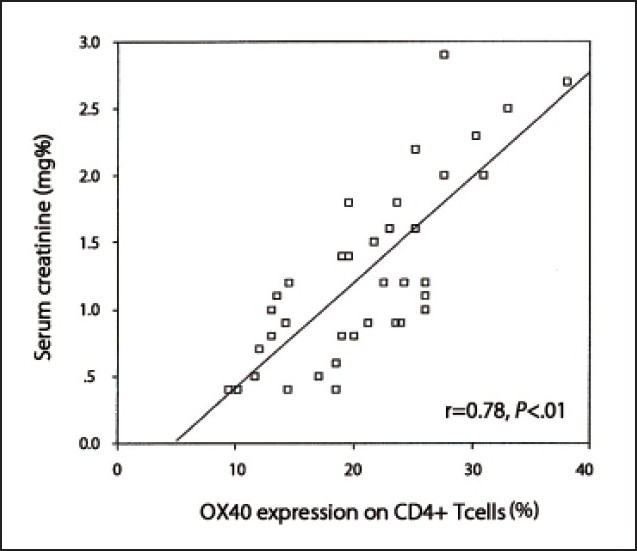
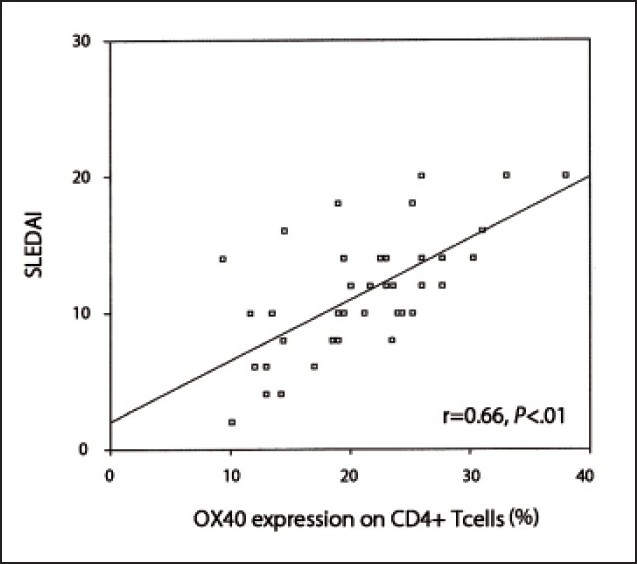
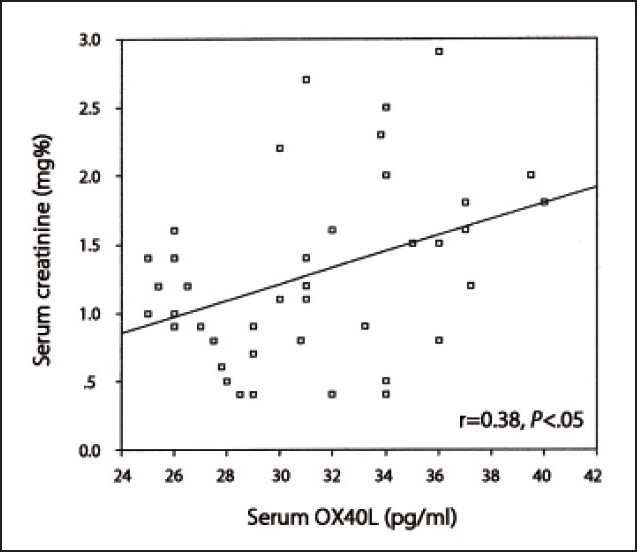
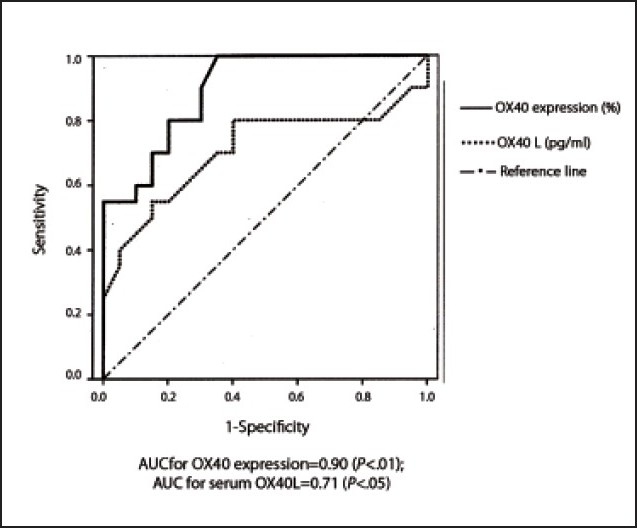
Results: The percentage of CD4+ T-lymphocytes expressing OX40 was significantly higher in SLE patients than in controls, and in patients with lupus nephritis than in those without. OX40 expression correlated positively with both serum creatinine levels and SLEDAI. OX40 expression was the highest in patients with class V lupus nephritis and lowest in class II. Serum OX40L levels were significantly higher in SLE patients than in controls, and in patients with nephritis than in those without. Serum OX40L levels correlated with serum creatinine levels but not with SLEDAI. OX40 expression on CD4+ T-cells had a higher sensitivity and specificity in diagnosing lupus nephritis than both OX40L and anti-double-stranded DNA levels.
Conclusion: OX40-OX40L interaction plays a role in the pathogenesis of SLE. The expression of OX40 on CD4+ T-lymphocytes and the serum level of OX40L may act as markers of lupus nephritis. Measurements of percentages of CD4+ T-lymphocytes expressing OX40 may serve as an indicator of disease activity in SLE.
Figures
References
-
- Weinberg AD. OX40: Targeted immunotherapy--implications for tempering autoimmunity and enhancing vaccines. Trends Immunol. 2002;23:102–9. - PubMed
-
- Weinberg AD, Evans DE, Thalhofer C, Shi T, Prell RA. The generation of T cell memory: A review describing the molecular and cellular events following OX40 (CD134) engagement. J Leukoc Biol. 2004;75:962–72. - PubMed
-
- Manku H, Graham DS, Vyse TJ. Association of the co-stimulator OX40L with systemic lupus erythematosus. J Mol Med. 2009;87:229–34. - PubMed
-
- Tucci M, Calvani N, Richards HB, Quatraro C, Silvestris F. The interplay of chemokines and dendritic cells in the pathogenesis of lupus nephritis. Ann N Y Acad Sci. 2005;1051:421–32. - PubMed
MeSH terms
Substances
LinkOut - more resources
Full Text Sources
Medical
Research Materials