


A phase 2 trial of bortezomib followed by the addition of doxorubicin at progression in patients with recurrent or metastatic adenoid cystic carcinoma of the head and neck: a trial of the Eastern Cooperative Oncology Group (E1303)
- PMID: 21246525
- PMCID: PMC3135694
- DOI: 10.1002/cncr.25852
A phase 2 trial of bortezomib followed by the addition of doxorubicin at progression in patients with recurrent or metastatic adenoid cystic carcinoma of the head and neck: a trial of the Eastern Cooperative Oncology Group (E1303)
Abstract
Background: Bortezomib, an inhibitor of the 26S proteasome and NF-κB, may have antitumor activity in adenoid cystic carcinoma (ACC). Preclinical studies have shown synergy between bortezomib and doxorubicin.
Methods: Eligibility criteria included incurable ACC, any number of prior therapies but without an anthracycline, unidimensionally measurable disease, Eastern Cooperative Oncology Group performance status 0-2, and ejection fraction within normal limits. Patients with stable disease for ≥9 months were excluded. Patients received bortezomib 1.3 mg/m(2) by intravenous (IV) push on Days 1, 4, 8, and 11, every 21 days until progression. Doxorubicin 20 mg/m(2) IV on Days 1 and 8 was added at the time of progression.
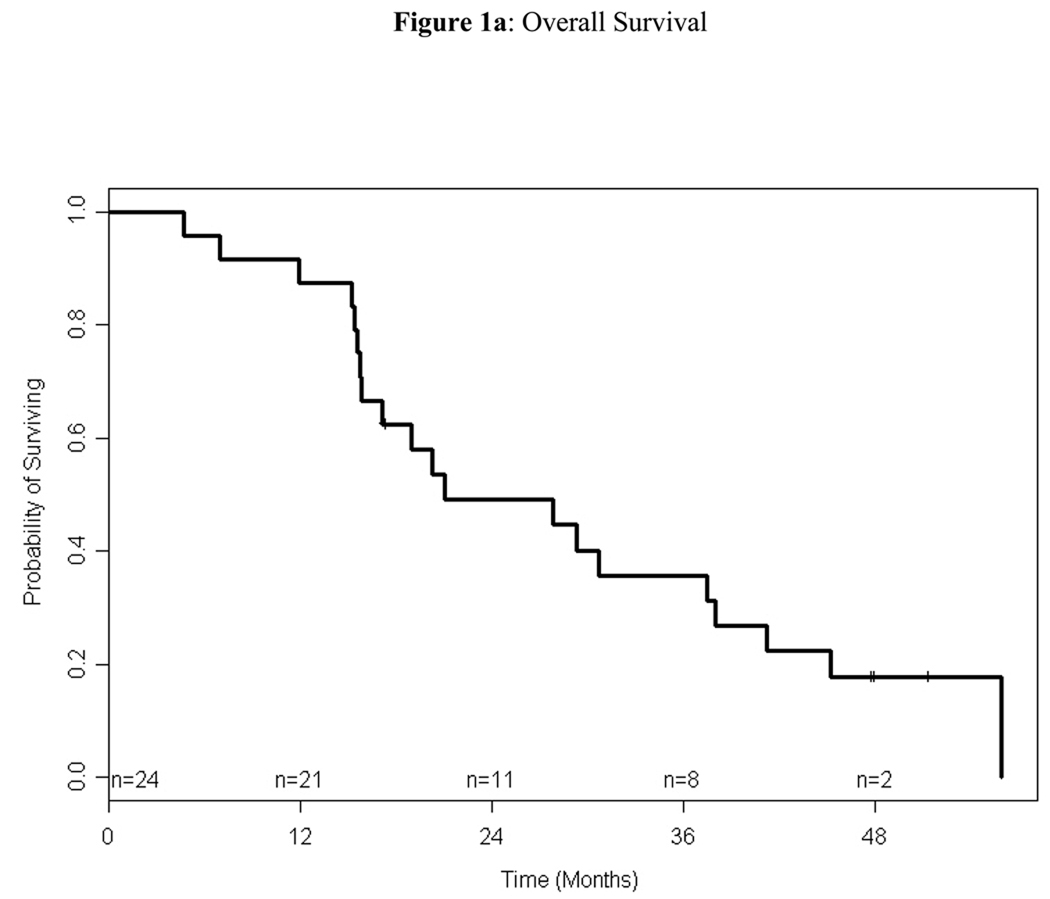
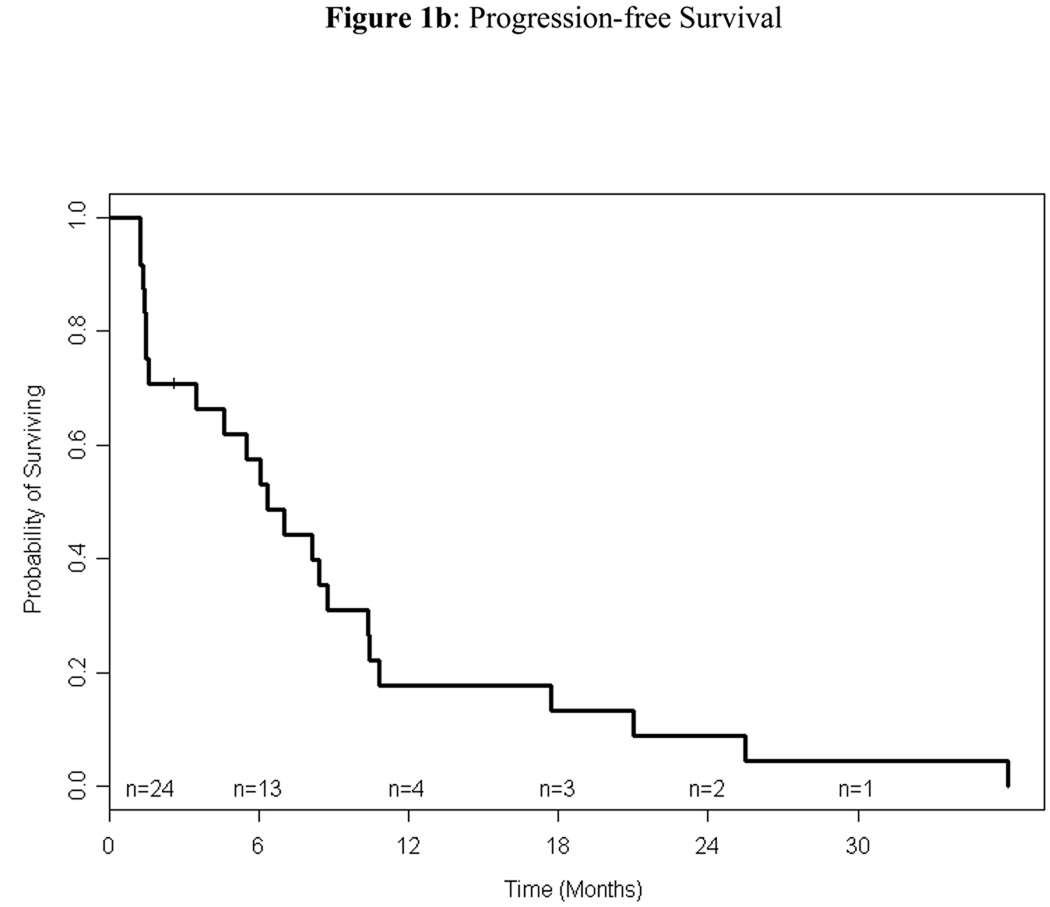
Results: Twenty-five patients were enrolled, of whom 24 were eligible; the most common distant metastatic sites were the lung (n = 22) and the liver (n = 7). There was no objective response with single-agent bortezomib; best response was stable disease in 15 (71%) of 21 evaluable patients. The median progression-free survival and overall survival were 6.4 months and 21 months, respectively. Of 10 evaluable patients who received bortezomib plus doxorubicin, 1 had a partial response, and 6 had stable disease. The most frequent toxicity with bortezomib was grade 3 sensory neuropathy (16%). With bortezomib plus doxorubicin, serious toxicities seen more than once were grade 3-4 neutropenia (n = 3) and grade 3 anorexia (n = 2).
Conclusions: Bortezomib was well tolerated and resulted in disease stabilization in a high percentage of patients but no objective responses. The combination of bortezomib and doxorubicin was also well tolerated and may warrant further investigation in ACC.
Copyright © 2011 American Cancer Society.
Figures
References
-
- Jones AS, Hamilton JW, Rowley H, Husband D, Helliwell TR. Adenoid cystic carcinoma of the head and neck. Clin Otolaryngol Allied Sci. 1997;22:434–443. - PubMed
-
- Spiro RH. Distant metastasis in adenoid cystic carcinoma of salivary origin. Am J Surg. 1997;174:495–498. - PubMed
-
- Laurie SA, Licitra L. Systemic therapy in the palliative management of advanced salivary gland cancers. J Clin Oncol. 2006;24:2673–2678. - PubMed
-
- Vermorken JB, Verweij J, de Mulder PH, et al. Epirubicin in patients with advanced or recurrent adenoid cystic carcinoma of the head and neck: a phase II study of the EORTC Head and Neck Cancer Cooperative Group. Ann Oncol. 1993;4:785–788. - PubMed
-
- Verweij J, de Mulder PH, de Graeff A, et al. Phase II study on mitoxantrone in adenoid cystic carcinomas of the head and neck. EORTC Head and Neck Cancer Cooperative Group. Ann Oncol. 1996;7:867–869. - PubMed
Publication types
MeSH terms
Substances
Grants and funding
- U10 CA027525/CA/NCI NIH HHS/United States
- U10 CA013650/CA/NCI NIH HHS/United States
- CA66636/CA/NCI NIH HHS/United States
- U10 CA021115/CA/NCI NIH HHS/United States
- CA27525/CA/NCI NIH HHS/United States
- CA13650/CA/NCI NIH HHS/United States
- U10 CA017145/CA/NCI NIH HHS/United States
- U10 CA066636/CA/NCI NIH HHS/United States
- U10 CA016116/CA/NCI NIH HHS/United States
- U10 CA023318/CA/NCI NIH HHS/United States
- CA16116/CA/NCI NIH HHS/United States
- U10 CA039229/CA/NCI NIH HHS/United States
- CA39229/CA/NCI NIH HHS/United States
- CA17145/CA/NCI NIH HHS/United States
- CA21115/CA/NCI NIH HHS/United States
- CA23318/CA/NCI NIH HHS/United States
LinkOut - more resources
Full Text Sources
Other Literature Sources
Medical
