


Uterine serous papillary carcinomas overexpress human trophoblast-cell-surface marker (Trop-2) and are highly sensitive to immunotherapy with hRS7, a humanized anti-Trop-2 monoclonal antibody
- PMID: 21246534
- PMCID: PMC3128671
- DOI: 10.1002/cncr.25891
Uterine serous papillary carcinomas overexpress human trophoblast-cell-surface marker (Trop-2) and are highly sensitive to immunotherapy with hRS7, a humanized anti-Trop-2 monoclonal antibody
Abstract
Background: Uterine serous papillary carcinoma (USPC) was an aggressive and chemotherapy resistant variant of endometrial cancer. The authors evaluated the expression of human trophoblast-cell-surface-marker (Trop-2) and the potential of hRS7, a humanized anti-Trop-2 monoclonal antibody, as a novel therapeutic strategy against USPC.
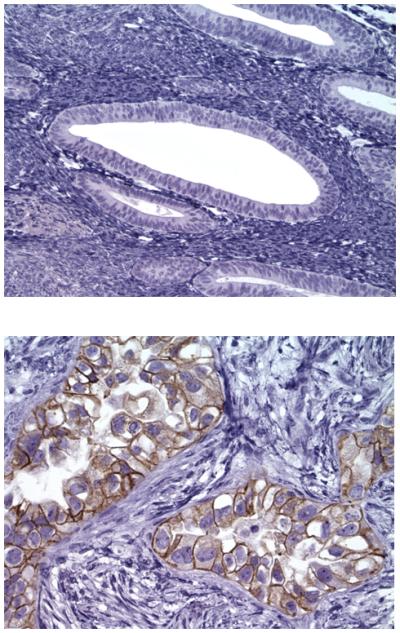
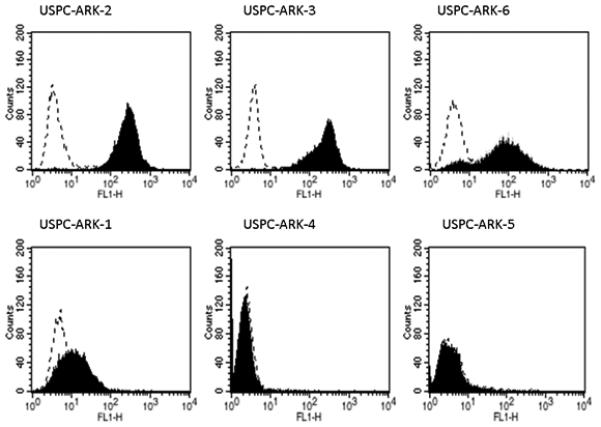
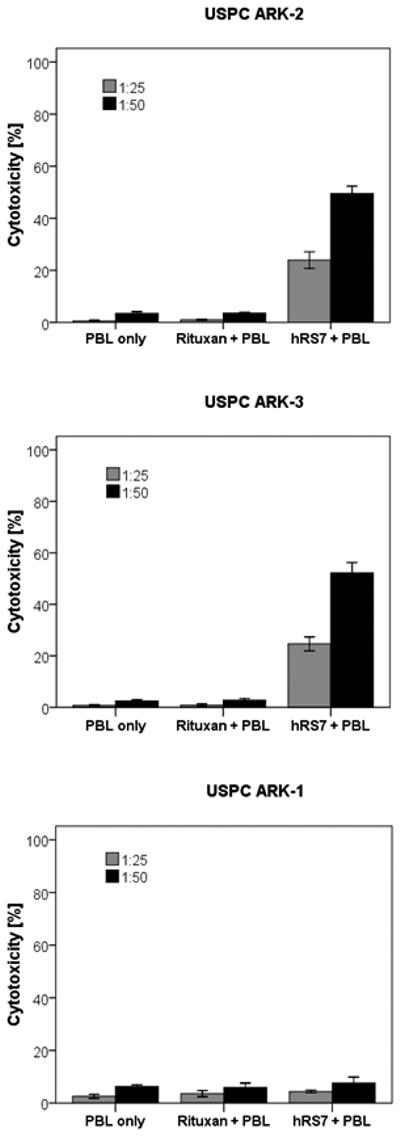
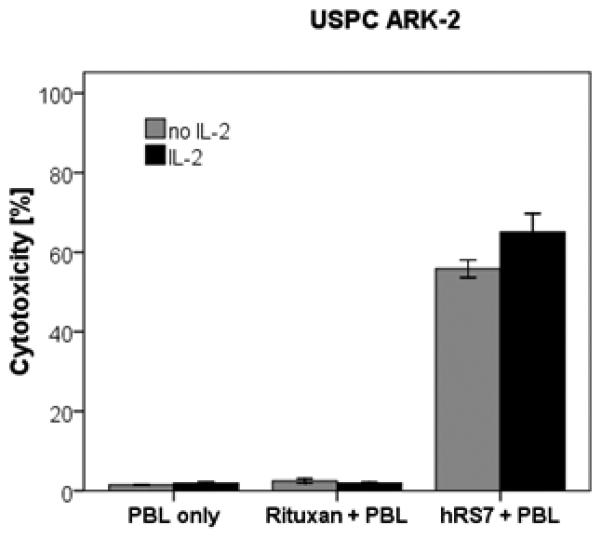
Methods: Trop-2 expression was evaluated by immunohistochemistry (IHC) in a total of 23 USPC. Six primary USPC cell lines were assessed by flow cytometry and real-time polymerase chain reaction (PCR) for Trop-2 expression. Sensitivity to hRS7 (Immunomedics, Inc.) antibody-dependent cellular cytotoxicity (ADCC) and complement-dependent cytotoxicity was tested in standard 5-hour ⁵¹Cr-release assays against primary USPC cell lines.
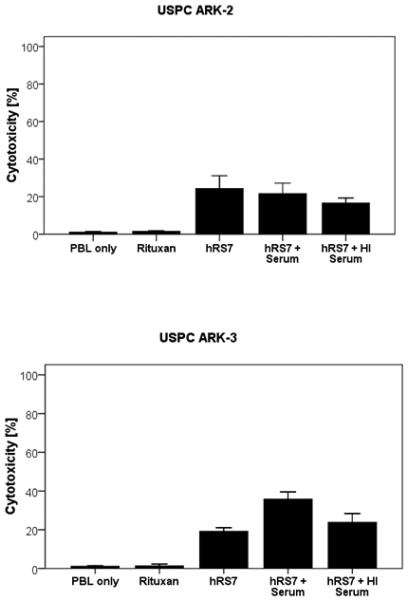
Results: Expression of Trop-2 was found in 15 of 23 (65%) of the tumor tissues tested by IHC and in 50% (3 of 6) of the USPC cell lines tested by real-time PCR and flow-cytometry (Trop-2 expression in USPC versus normal endometrial cells; P < .005). USPC cell lines overexpressing Trop-2, regardless of their intrinsic resistance to natural killer cytotoxicity, were highly sensitive to hRS7-mediated ADCC in vitro (range of killing, 28.2% to 64.4%) (P < .001). Negligible cytotoxicity against USPC was seen in the absence of hRS7 or in the presence of rituximab control antibody (range of killing, 1.1% to 12.4%). Incubation with interleukin-2 (50 IU/mL) in addition to hRS7 further increased the cytotoxic activity against USPC cell lines overexpressing Trop-2 (P = .008).
Conclusions: Trop-2 was highly expressed in uterine serous carcinoma at mRNA and protein levels. Primary USPC cell lines are highly sensitivity to hRS7-mediated cytotoxicity in vitro. hRS7 may represent a novel therapeutic agent for USPC refractory to standard treatment modalities.
Copyright © 2011 American Cancer Society.
Figures
References
-
- Jemal A, Siegel R, Xu J, Ward E. Cancer statistics, 2010. CA Cancer J Clin. 2010;60:277–300. - PubMed
-
- Hendrickson M, Ross J, Eifel P, Martinez A, Kempson R. Uterine papillary serous carcinoma: a highly malignant form of endometrial adenocarcinoma. Am J Surg Pathol. 1982;6:93–108. - PubMed
-
- Creasman W, Kohler M, Odicino F, et al. Prognosis of papillary serous, clear cell, and Grade 3 Stage I carcinoma of the endometrium. Gynecol Oncol. 2004;95:593–596. - PubMed
-
- Schwartz PE. The management of serous papillary uterine cancer. Curr Opin Oncol. 2006;18(5):494–9. Schwartz PE. - PubMed
-
- Carcangiu ML, Chambers JT. Uterine papillary serous carcinoma: a study on 108 cases with emphasis on prognostic significance of associated endometrioid carcinoma, absence of invasion, and concomitant ovarian cancer. Gynecol Oncol. 1992;47:298–305. - PubMed
Publication types
MeSH terms
Substances
Grants and funding
LinkOut - more resources
Full Text Sources
Other Literature Sources
Medical
Research Materials
Miscellaneous
