


Biomechanics of far cortical locking
- PMID: 21248556
- PMCID: PMC3062510
- DOI: 10.1097/BOT.0b013e318207885b
Biomechanics of far cortical locking
Abstract
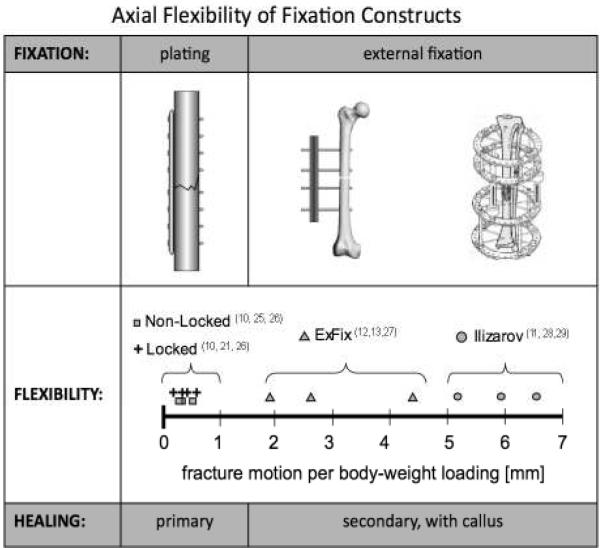
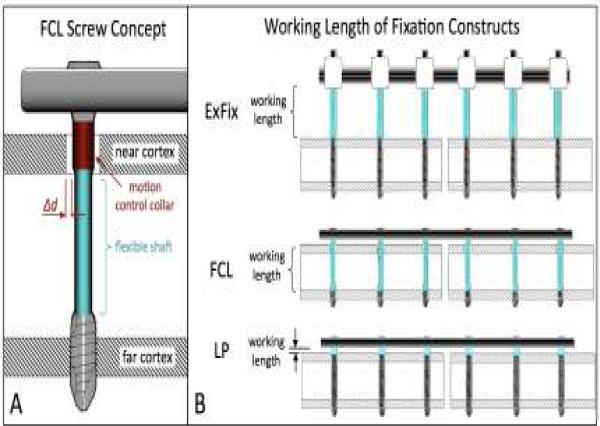
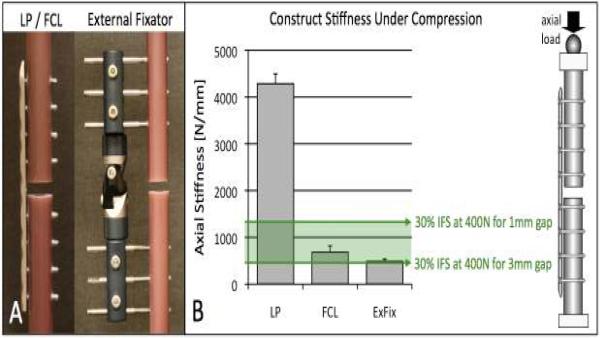
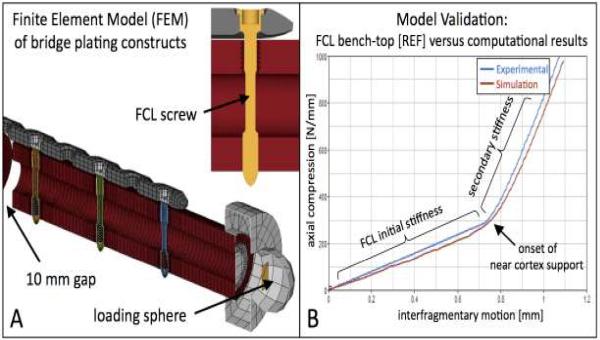
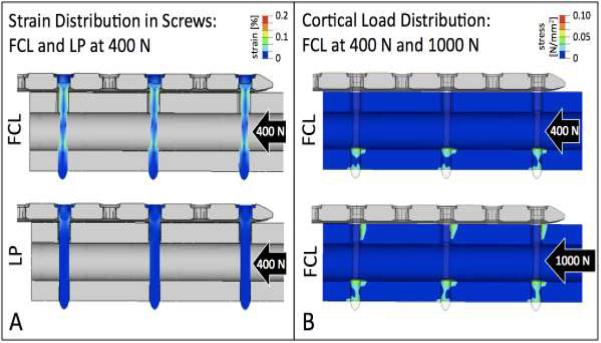
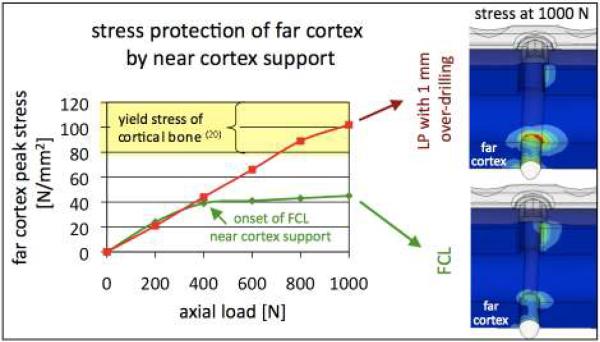
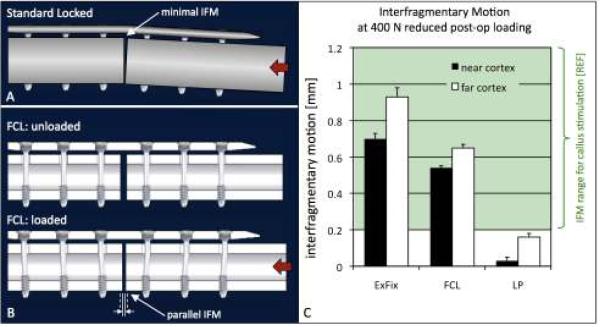
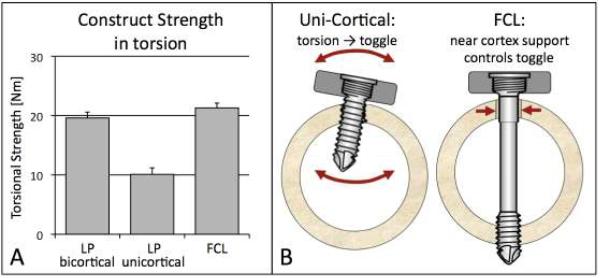
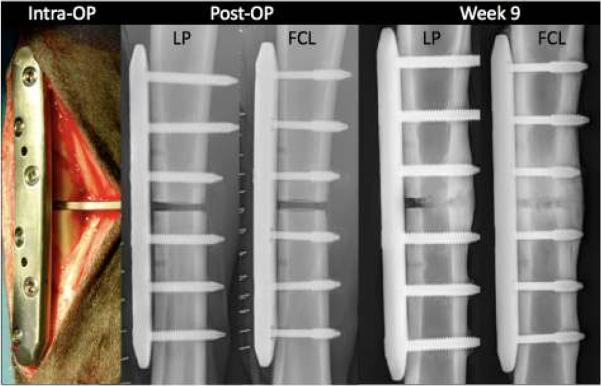
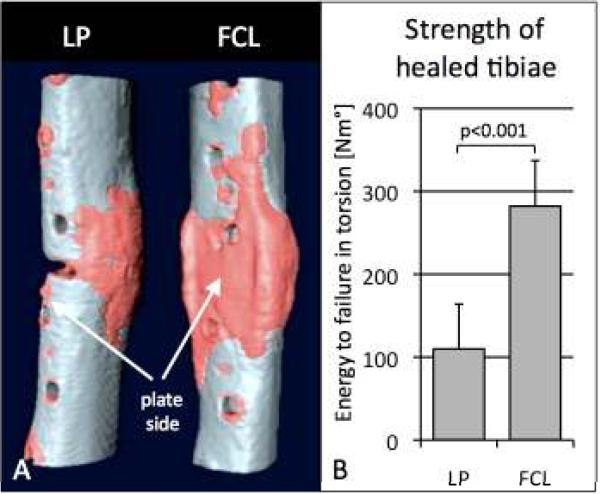
The development of far cortical locking (FCL) was motivated by a conundrum: locked plating constructs provide inherently rigid stabilization, yet they should facilitate biologic fixation and secondary bone healing that relies on flexible fixation to stimulate callus formation. Recent studies have confirmed that the high stiffness of standard locked plating constructs can suppress interfragmentary motion to a level that is insufficient to reliably promote secondary fracture healing by callus formation. Furthermore, rigid locking screws cause an uneven stress distribution that may lead to stress fracture at the end screw and stress shielding under the plate. This review summarizes four key features of FCL constructs that have been shown to enhance fixation and healing of fractures: flexible fixation, load distribution, progressive stiffening, and parallel interfragmentary motion. Specifically, flexible fixation provided by FCL reduces the stiffness of a locked plating construct by 80% to 88% to actively promote callus proliferation similar to an external fixator. Load is evenly distributed between FCL screws to mitigate stress risers at the end screw. Progressive stiffening occurs by near cortex support of FCL screws and provides additional support under elevated loading. Finally, parallel interfragmentary motion by the S-shaped flexion of FCL screws promotes symmetric callus formation. In combination, these features of FCL constructs have been shown to induce more callus and to yield significantly stronger and more consistent healing compared with standard locked plating constructs. As such, FCL constructs function as true internal fixators by replicating the biomechanical behavior and biologic healing response of external fixators.
Figures
References
-
- Bottlang M, Doornink J, Byrd GD, et al. A nonlocking end screw can decrease fracture risk caused by locked plating in the osteoporotic diaphysis. The Journal of bone and joint surgery. 2009;91:620–627. - PubMed
-
- Kubiak EN, Fulkerson E, Strauss E, et al. The evolution of locked plates. The Journal of bone and joint surgery. 2006;88(Suppl 4):189–200. - PubMed
-
- Perren SM. Evolution of the internal fixation of long bone fractures. The scientific basis of biological internal fixation: choosing a new balance between stability and biology. J Bone Joint Surg Br. 2002;84:1093–1110. - PubMed
Publication types
MeSH terms
Grants and funding
LinkOut - more resources
Full Text Sources
Research Materials
