


Does cytokine signaling link sphingolipid metabolism to host defense and immunity against virus infections?
- PMID: 21251870
- PMCID: PMC3053577
- DOI: 10.1016/j.cytogfr.2010.12.001
Does cytokine signaling link sphingolipid metabolism to host defense and immunity against virus infections?
Abstract
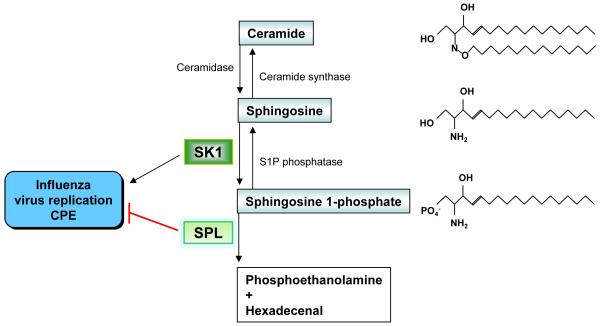
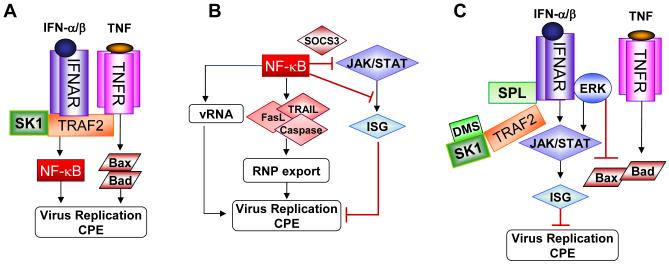
Sphingosine 1-phosphate (S1P)-metabolizing enzymes regulate the level of bioactive sphingolipids that have curative potential. Recently, S1P-metabolizing enzymes such as sphingosine kinase 1 and S1P lyase were shown to regulate influenza virus replication and the virus-induced cytopathogenicity. The mechanism appeared to employ a JAK/STAT type I interferon signaling pathway that induces anti-viral status. Further, sphingosine analogs altered cytokine responses upon influenza virus infection. This article focuses on recent discoveries about the sphingolipid system that influences on host protection from viral virulence and the involvement of cytokine signaling in its underlying mechanisms. Deciphering the steps of this pathway could help us envision how the modulation of sphingolipid metabolism can be applied as a therapeutic approach to overcome infectious diseases.
Copyright © 2011 Elsevier Ltd. All rights reserved.
Figures
References
-
- Cyster JG. Chemokines, sphingosine-1-phosphate, and cell migration in secondary lymphoid organs. Annu Rev Immunol. 2005;23:127–59. - PubMed
-
- Rosen H, Goetzl EJ. Sphingosine 1-phosphate and its receptors: an autocrine and paracrine network. Nat Rev Immunol. 2005;5:560–70. - PubMed
-
- Taha TA, Hannun YA, Obeid LM. Sphingosine kinase: biochemical and cellular regulation and role in disease. J Biochem Mol Biol. 2006;39:113–31. - PubMed
-
- Matloubian M, Lo CG, Cinamon G, Lesneski MJ, Xu Y, Brinkmann V, et al. Lymphocyte egress from thymus and peripheral lymphoid organs is dependent on S1P receptor 1. Nature. 2004;427:355–60. - PubMed
Publication types
MeSH terms
Substances
Grants and funding
LinkOut - more resources
Full Text Sources
Medical
