


Endothelins and their receptors in cancer: identification of therapeutic targets
- PMID: 21251982
- PMCID: PMC3109221
- DOI: 10.1016/j.phrs.2011.01.002
Endothelins and their receptors in cancer: identification of therapeutic targets
Abstract
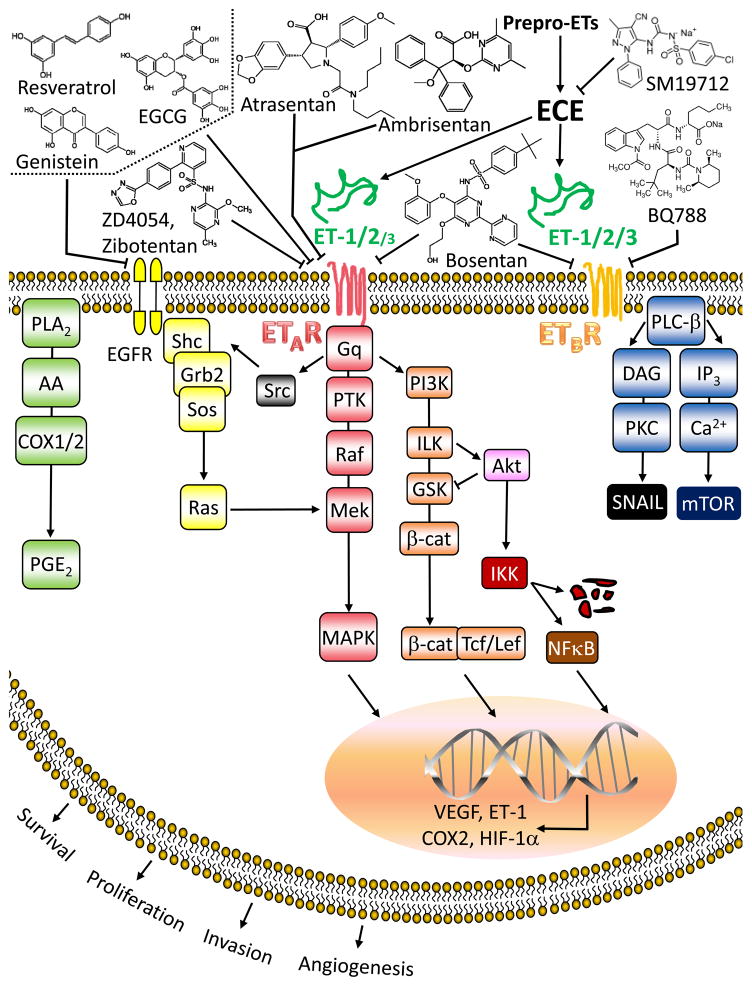
Endothelins and their receptors are important in normal physiology, but have been implicated in various pathophysiological conditions. Members of the so-called "endothelin axis" are dysregulated in a wide range of human cancers, opening the door for novel anticancer therapies. Established cancer chemotherapeutic agents and drugs that target specific components of the endothelin axis have been combined with promising results, but more work is needed in this area. The endothelin axis affects numerous signaling pathways, including Ras, mitogen activated protein kinases, β-catenin/T-cell factor/lymphoid enhancer factor, nuclear factor-κB (NFκB), SNAIL, and mammalian target of rapamycin (mTOR). There is much still to learn about optimizing drug specificity in this area, while minimizing off-target effects. Selective agonists and antagonists of endothelins, their receptors, and upstream processing enzymes, as well as knockdown strategies in vitro, are providing valuable leads for testing in the clinical setting. The endothelin axis continues to be an attractive avenue of scientific endeavor, both in the cancer arena and in other important health-related disciplines.
Copyright © 2011 Elsevier Ltd. All rights reserved.
Figures
References
-
- Khimji A, Rockey DC. Endothelin – biology and disease. Cell Signal. 2010;22:1615–25. - PubMed
-
- Good TJ, Kahook MY. The role of endothelin in the pathophysiology of glaucoma. Expert Opin Ther Targets. 2010;14:647–54. - PubMed
-
- Karkoulias K, Lykouras D, Sampsonas F, Drakatos P, Canova S, Tsoukalas G, Spiropoulos K. The role of endothelin-1 in obstructive sleep apnea syndrome and pulmonary arterial hypertension: pathogenesis and endothelin-1 antagonists. Curr Med Chem. 2010:1059–66. - PubMed
-
- Leonard MG, Gulati A. Repeated administration of ET(B) receptor agonist, IRL-1620, produces tachyphylaxis only to its hypotensive effect. Pharmacol Res. 2009;60:402–10. - PubMed
Publication types
MeSH terms
Substances
Grants and funding
LinkOut - more resources
Full Text Sources
Research Materials
Miscellaneous
