


Radionecrosis of the larynx: case report and review of the literature
- PMID: 21253286
- PMCID: PMC3008149
Radionecrosis of the larynx: case report and review of the literature
Abstract
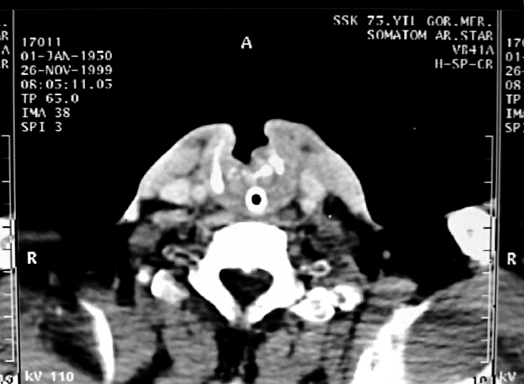
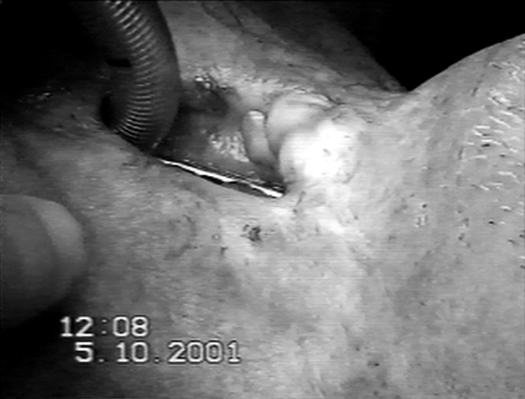
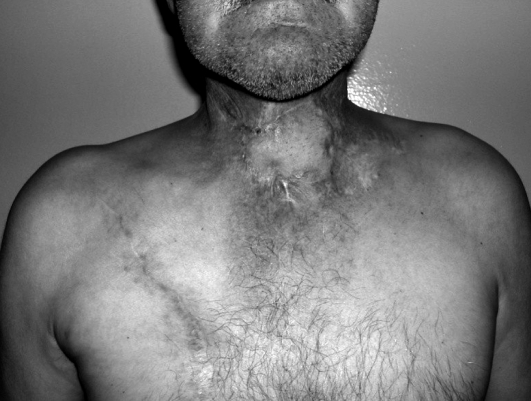
Aim of the present report is to describe a case of radionecrosis related to radiotherapy of the larynx and to review the literature. A review was made of the hospital chart, surgery report, imaging studies and pathological findings of a 51-year-old male patient came to our attention. Results indicated that radionecrosis often requires total laryngectomy. It is very rare, but morbidity and mortality rates are high. The interval between conclusion of radiation therapy and development of radionecrosis ranges from 3 to 12 months. In this report, a case of radionecrosis is presented which has been managed using the organ sparing strategy. In conclusion, the larynx may be spared when radionecrosis occurs but more investigations are required in order to define the most appropriate treatment.
Scopo di questo studio è la descrizione di un caso di radionecrosi della laringe conseguente a radioterapia ed una revisione della letteratura sull’argomento. A questo scopo è stata effettuata una revisione della cartella clinica, del report chirurgico, delle indagini strumentali e degli esami istologici di un uomo di 51 anni, giunto alla nostra attenzione. I risultati indicano che la radionecrosi della laringe spesso richiede la laringectomia totale, in quanto, pur essendo un evento raro, presenta elevata morbidità e mortalità. Il periodo intercorso tra la fine della radioterapia e lo sviluppo di radionecrosi è in genere variabile tra i 3 e i 12 mesi. In questo articolo viene riportato un caso di radionecrosi della laringe che è stato trattato utilizzando una strategia conservativa. In conclusione, è possibile risparmiare la laringe in caso di radionecrosi ma occorrono maggiori dati per la definizione del trattamento più appropriato.
Keywords: Laryngocutaneous fistula reconstruction; Larynx; Malignant tumours; Radionecrosis; Radiotherapy.
Figures
References
-
- Rowley H, Walsh M, McShane D, et al. Chondroradionecrosis of the larynx: Still a diagnostic dilemma. J Laryngol Otol. 1995;109:218–220. - PubMed
-
- Chandler JR. Radiation fibrosis and necrosis of the larynx. Ann Otol Rhinol Laryngol. 1979;88:509–514. - PubMed
-
- Oppenheimer RW, Krespi YP, Einhorn RK. Management of laryngeal radionecrosis: animal and clinical experience. Head Neck. 1989;11:252–256. - PubMed
-
- Perez CA, Thorstad WL. Unusual nonepithelial tumors of the head and the neck. In: Halperin EC, Perez CA, Brady LA, editors. Principles and practice of radiation oncology. 5th Edition. Philadelphia, PA: Lippincott Williams and Wilkins; 2008. pp. 996–1034.
-
- Stone RS. Neutron therapy and specific ionization. Am J Roentgenol. 1948;59:771–771. - PubMed
Publication types
MeSH terms
LinkOut - more resources
Full Text Sources