


Targeting polyamines and inflammation for cancer prevention
- PMID: 21253788
- PMCID: PMC3587145
- DOI: 10.1007/978-3-642-10858-7_4
Targeting polyamines and inflammation for cancer prevention
Abstract
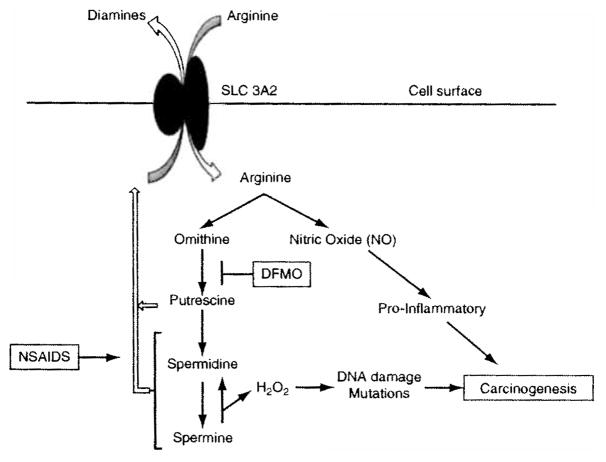
Increased polyamine synthesis and inflammation have long been associated with intraepithelial neoplasia, which are risk factors for cancer development in humans. Targeting polyamine metabolism (by use of polyamine synthesis inhibitors or polyamine catabolism activators) and inflammation (by use of nonsteroidal anti-inflammatory drugs) has been studied for many cancers, including colon, prostate, and skin. Genetic epidemiology results indicate that a genetic variant associated with the expression of a polyamine biosynthetic gene is associated with risk of colon and prostate cancers. A clinical trial of difluoromethylornithine (DFMO), a selective inhibitor of polyamine synthesis, showed that the 1 year treatment duration reduced prostate volume and serum prostate-specific antigen doubling time in men with a family history of prostate cancer. A second, clinical trial of DFMO in combination with sulindac, a NSAID in patients with prior colon polyps found that the 3-year treatment was associated with a 70% reduction of all, and over a 90% reduction of advanced and/or multiple metachronous colon adenomas. In this chapter, we discuss that similar combination prevention strategies of targeting polyamines and inflammation can be effective in reducing risk factors associated with the development of human cancers.
Figures
References
-
- Alberts DS, Martinez ME, Roe DJ, et al. Lack of effect of a high-fiber cereal supplement on the recurrence of colorectal adenomas. Phoenix Colon Cancer Prevention Physicians’ Network. N Engl J Med. 2000;342(16):1156–1162. - PubMed
-
- An KP, Athar M, Tang X, et al. Cyclooxygenase-2 expression in murine and human nonmelanoma skin cancers: implications for therapeutic approaches. Photochem Photobiol. 2002;76(1):73–80. - PubMed
-
- Arber N, Eagle CJ, Spicak J, et al. Celecoxib for the prevention of colorectal adenomatous polyps. N Engl J Med. 2006;355(9):885–895. - PubMed
-
- Athar M, An KP, Morel KD, et al. Ultraviolet B(UVB)-induced cox-2 expression in murine skin: an immunohistochemical study. Biochem Biophys Res Commun. 2001;280(4):1042–1047. - PubMed
Publication types
MeSH terms
Substances
Grants and funding
LinkOut - more resources
Full Text Sources
Other Literature Sources