


Obstructive sleep apnea and the risk for cardiovascular disease
- PMID: 21253882
- PMCID: PMC4332589
- DOI: 10.1007/s11883-011-0161-8
Obstructive sleep apnea and the risk for cardiovascular disease
Abstract
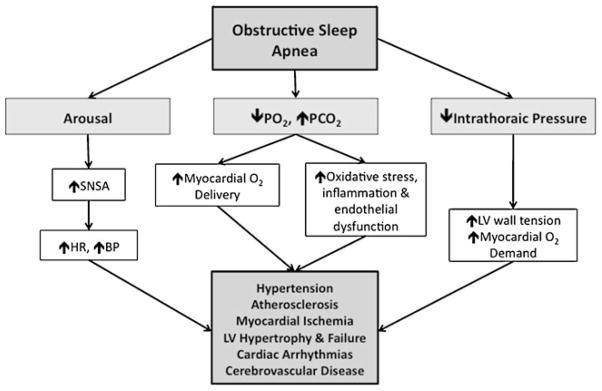
Obstructive sleep apnea (OSA) is a common disorder with major neurocognitive and cardiovascular sequelae. It is estimated that more than one quarter of the population is at risk for OSA, with increased prevalence noted in populations with hypertension, coronary artery disease, stroke, and atrial fibrillation. A number of epidemiologic and mechanistic studies have recently generated interest in the role of OSA in the pathophysiology of cardiovascular disease, a link that continues to require extensive investigation. This chapter reviews these epidemiologic studies, the current understanding of the mechanisms by which OSA may contribute to the progression of cardiovascular diseases, and the effects of OSA treatment on cardiovascular disease outcomes.
Conflict of interest statement
Figures
References
-
- Malhotra A, White DP. Obstructive sleep apnoea. Lancet. 2002;360(9328):237–245. - PubMed
-
- Caples SM, Gami AS, Somers VK. Obstructive sleep apnea. Annals of internal medicine. 2005;142(3):187–197. - PubMed
-
- Rosthchild, et al. Production of the anginal syndrome by induced general anoxemia. American heart journal. 1933;8:729–744.
-
- Barach, et al. The physiologic action of oxygen and carbon dioxide on the coronary circulation as shown by the blood gas and electrocardiogram studies. American heart journal. 1941;22:13–34.
-
- Khatri IM, Freis ED. Hemodynamic changes during sleep. J Appl Physiol. 1967;22(5):867–873. - PubMed
Publication types
MeSH terms
Grants and funding
LinkOut - more resources
Full Text Sources
Medical
