


Effect of nitric oxide on neointimal hyperplasia based on sex and hormone status
- PMID: 21256959
- PMCID: PMC3070831
- DOI: 10.1016/j.freeradbiomed.2011.01.016
Effect of nitric oxide on neointimal hyperplasia based on sex and hormone status
Abstract
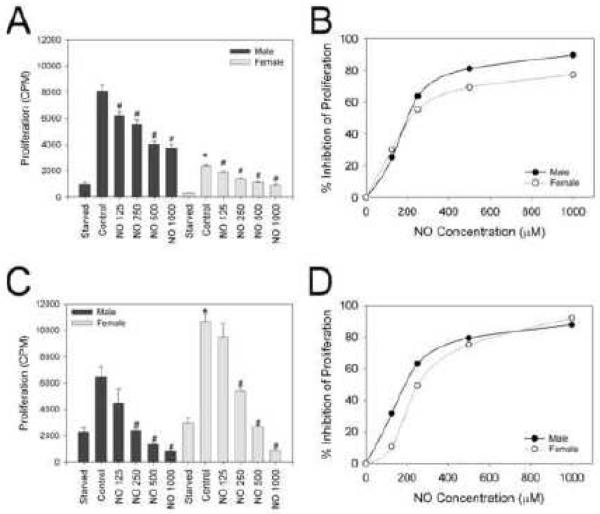
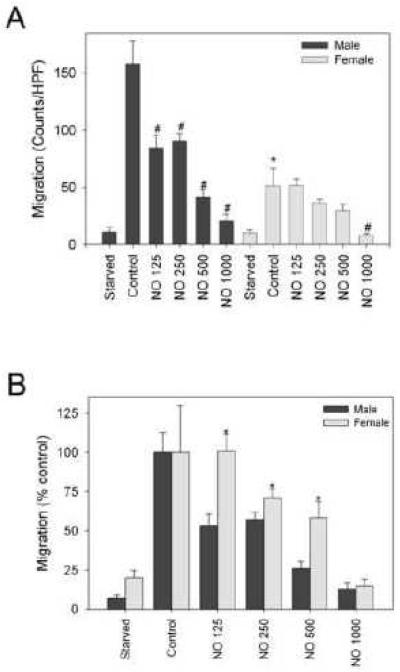
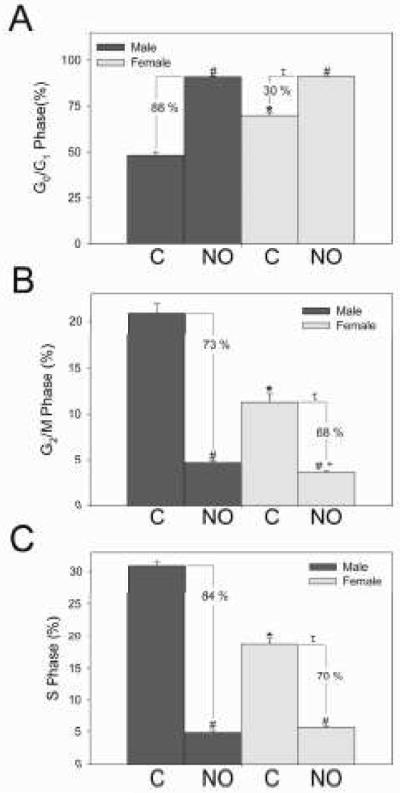
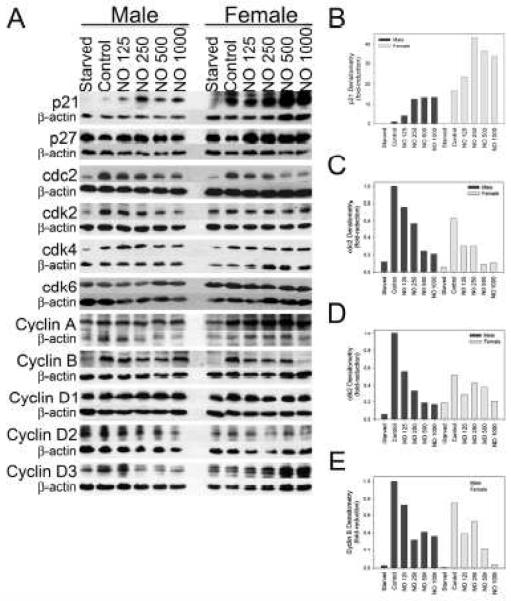
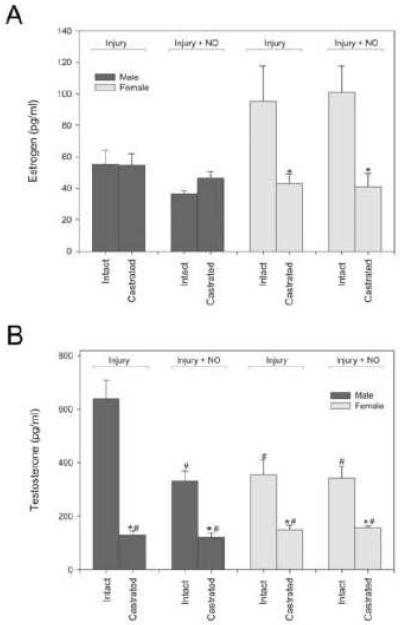
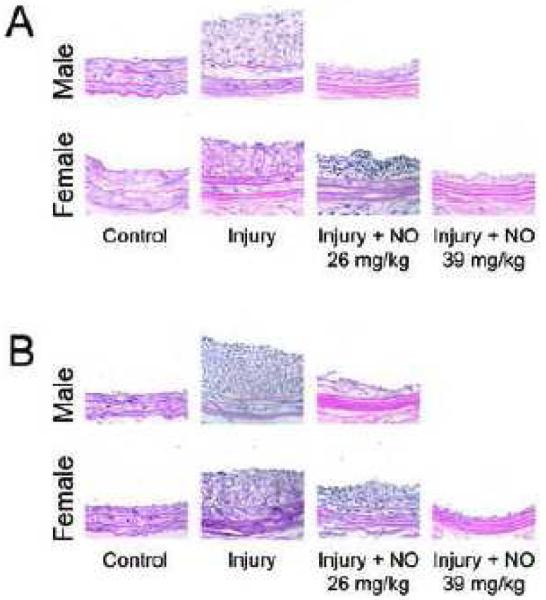
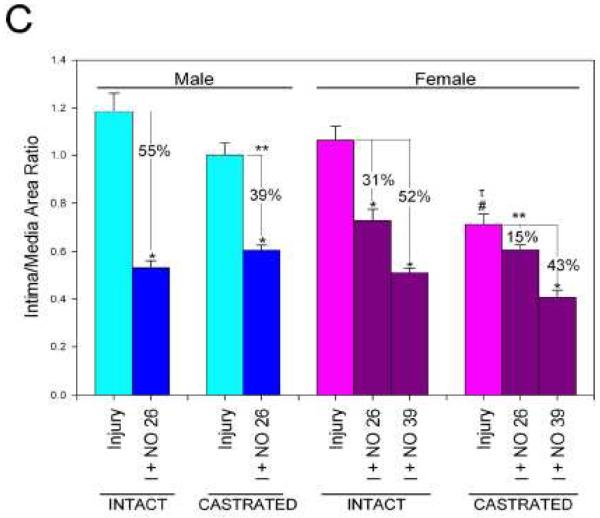
Nitric oxide (NO)-based therapies decrease neointimal hyperplasia; however, studies have been performed only in male animal models. Thus, we sought to evaluate the effect of NO on vascular smooth muscle cells (VSMC) in vitro and neointimal hyperplasia in vivo based on sex and hormone status. In hormone-replete medium, male VSMC proliferated at greater rates than female VSMC. In hormone-depleted medium, female VSMC proliferated at greater rates than male VSMC. However, in both hormone environments, NO inhibited proliferation and migration to a greater extent in male compared to female VSMC. These findings correlated with greater G₀/G₁ cell cycle arrest and changes in cell cycle protein expression in male compared to female VSMC after exposure to NO. Next, the rat carotid artery injury model was used to assess the effect of NO on neointimal hyperplasia in vivo. Consistent with the in vitro data, NO was significantly more effective at inhibiting neointimal hyperplasia in hormonally intact males compared to females using weight-based dosing. An increased weight-based dose of NO in females was able to achieve efficacy equal to that in males. Surprisingly, NO was less effective at inhibiting neointimal hyperplasia in castrated animals of both sexes. In conclusion, these data suggest that NO inhibits neointimal hyperplasia more effectively in males compared to females and in hormonally intact compared to castrated rats, indicating that the effects of NO in the vasculature may be sex- and hormone-dependent.
Published by Elsevier Inc.
Figures
References
-
- Kibbe M, Billiar T, Tzeng E. Inducible nitric oxide synthase and vascular injury. Cardiovasc Res. 1999 Aug 15;43(3):650–7. - PubMed
-
- Ahanchi SS, Tsihlis ND, Kibbe MR. The role of nitric oxide in the pathophysiology of intimal hyperplasia. J Vasc Surg. 2007 Jun;45(Suppl A):A64–A73. A64-73. - PubMed
-
- Kibbe MR, Li J, Nie S, Watkins SC, Lizonova A, Kovesdi I, et al. Inducible nitric oxide synthase (iNOS) expression upregulates p21 and inhibits vascular smooth muscle cell proliferation through p42/44 mitogen-activated protein kinase activation and independent of p53 and cyclic guanosine monophosphate. J Vasc Surg. 2000 Jun;31(6):1214–28. - PubMed
-
- Lloyd-Jones D, Adams R, Carnethon M, De SG, Ferguson TB, Flegal K, et al. Heart Disease and Stroke Statistics--2009 Update. A Report From the American Heart Association Statistics Committee and Stroke Statistics Subcommittee. Circulation. 2008 Dec 15; - PubMed
-
- Barrett-Connor E, Bush TL. Estrogen and coronary heart disease in women. JAMA. 1991 Apr 10;265(14):1861–7. - PubMed
Publication types
MeSH terms
Substances
Grants and funding
LinkOut - more resources
Full Text Sources
