


Selectin-mediated recruitment of bone marrow stromal cells in the postischemic cerebral microvasculature
- PMID: 21257828
- PMCID: PMC3042505
- DOI: 10.1161/STROKEAHA.110.597088
Selectin-mediated recruitment of bone marrow stromal cells in the postischemic cerebral microvasculature
Abstract
Background and purpose: The therapeutic potential of bone marrow stromal cells (BMSCs) has been demonstrated in different models of stroke. Although it is well established that BMSCs selectively migrate to the site of brain injury, the mechanisms underlying this process are poorly understood. This study addresses the hypothesis that selectins mediate the recruitment of BMSCs into the postischemic cerebral microvasculature.
Methods: Focal ischemic stroke was induced by middle cerebral artery occlusion and reperfusion. Cell recruitment was monitored using either fluorescent- or radiolabeled BMSCs detected by intravital microscopy or tissue radioactivity. Mice were treated with either a blocking antibody against P- or E-selectin or with the nonselective selectin antagonist, fucoidin. The role of CD44 in cell recruitment was evaluated using BMSCs from CD44 knockout mice.
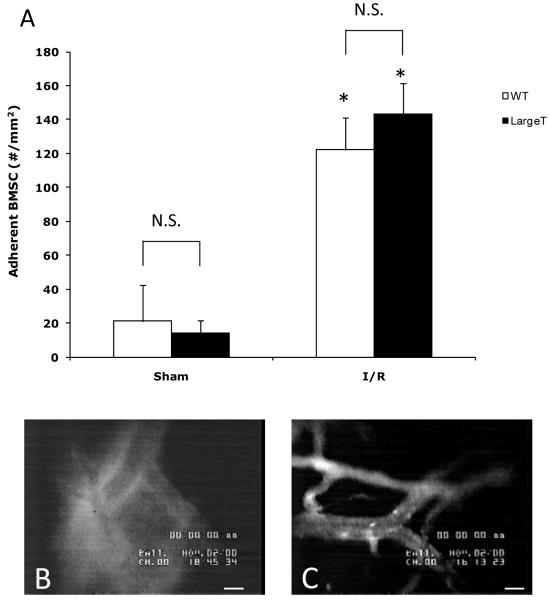
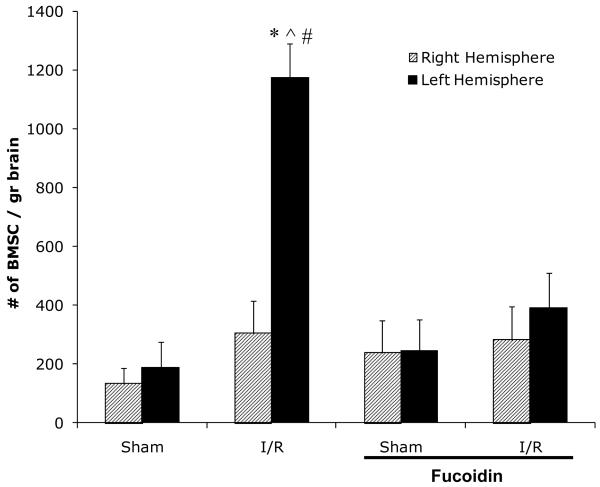
Results: Middle cerebral artery occlusion and reperfusion was associated with a significantly increased adhesion of BMSCs in cerebral venules compared with sham mice. Immunoneutralization of either E- or P-selectin blocked the middle cerebral artery occlusion and reperfusion-induced recruitment of adherent BMSCs. An attenuated recruitment response in the postischemic hemisphere was also noted after fucoidin treatment or administration of CD44-deficient BMSCs.
Conclusions: Cerebral vascular endothelium assume a proadhesive phenotype after ischemic stroke that favors the recruitment of BMSCs, which use both P- and E-selectin to home into the infarct site. CD44 may serve as the critical ligand for selectin-mediated BMSC recruitment.
Figures



References
-
- Chopp M, Li Y. Treatment of neural injury with marrow stromal cells. Lancet Neurol. 2002;1:92–100. - PubMed
-
- Li Y, Chopp M, Chen J, Wang L, Gautam SC, Xu YX, Zhang Z. Intrastriatal transplantation of bone marrow nonhematopoietic cells improves functional recovery after stroke in adult mice. J Cereb Blood Flow Metab. 2000;20:1311–1319. - PubMed
-
- Zhang J, Li Y, Chen J, Cui Y, Lu M, Elias SB, Mitchell JB, Hammill L, Vanguri P, Chopp M. Human bone marrow stromal cell treatment improves neurological functional recovery in eae mice. Exp Neurol. 2005;195:16–26. - PubMed
-
- Bang OY, Lee JS, Lee PH, Lee G. Autologous mesenchymal stem cell transplantation in stroke patients. Ann Neurol. 2005;57:874–882. - PubMed
-
- Devine SM, Bartholomew AM, Mahmud N, Nelson M, Patil S, Hardy W, Sturgeon C, Hewett T, Chung T, Stock W, Sher D, Weissman S, Ferrer K, Mosca J, Deans R, Moseley A, Hoffman R. Mesenchymal stem cells are capable of homing to the bone marrow of non-human primates following systemic infusion. Exp Hematol. 2001;29:244–255. - PubMed
Publication types
MeSH terms
Substances
Grants and funding
LinkOut - more resources
Full Text Sources
Other Literature Sources
Medical
Molecular Biology Databases
Miscellaneous
