


State of the APC/C: organization, function, and structure
- PMID: 21261459
- PMCID: PMC4856037
- DOI: 10.3109/10409238.2010.541420
State of the APC/C: organization, function, and structure
Abstract
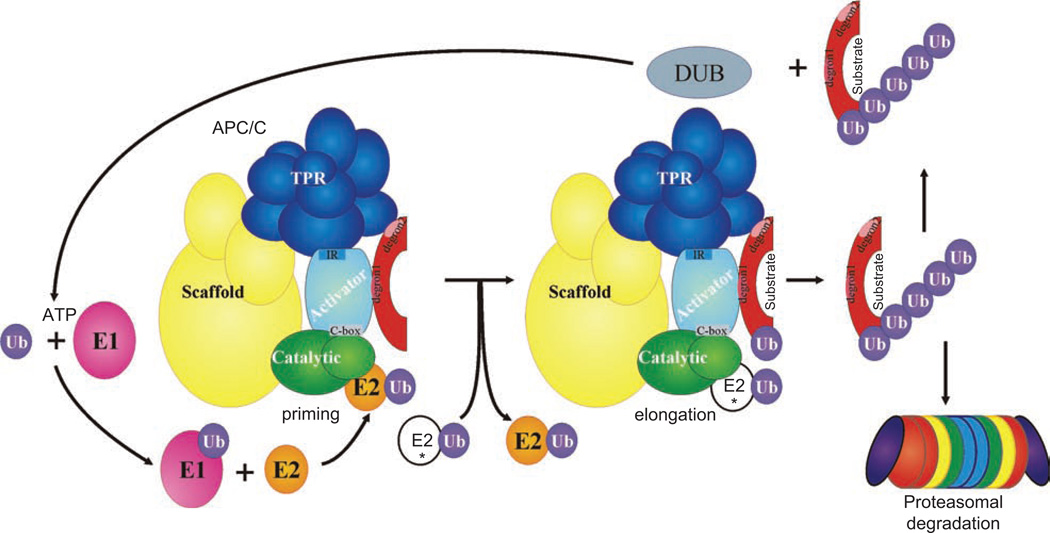
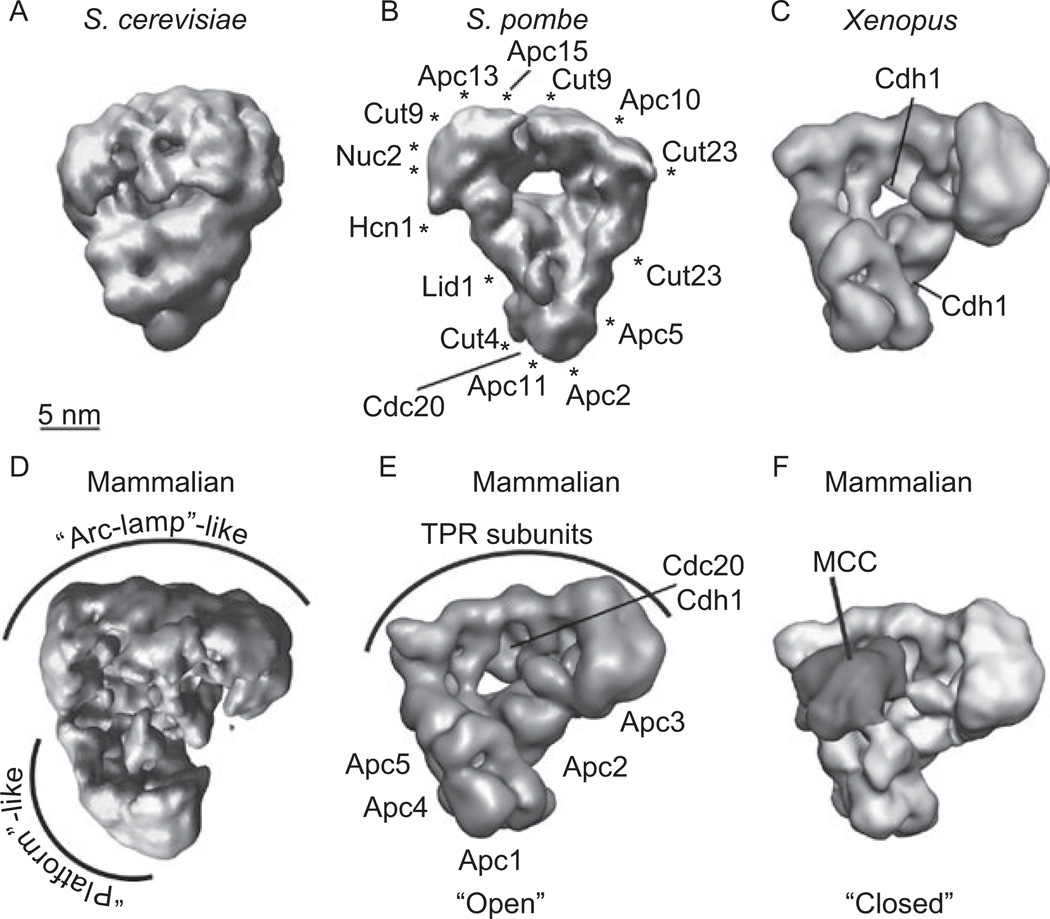
The ubiquitin-proteasome protein degradation system is involved in many essential cellular processes including cell cycle regulation, cell differentiation, and the unfolded protein response. The anaphase-promoting complex/cyclosome (APC/C), an evolutionarily conserved E3 ubiquitin ligase, was discovered 15 years ago because of its pivotal role in cyclin degradation and mitotic progression. Since then, we have learned that the APC/C is a very large, complex E3 ligase composed of 13 subunits, yielding a molecular machine of approximately 1 MDa. The intricate regulation of the APC/C is mediated by the Cdc20 family of activators, pseudosubstrate inhibitors, protein kinases and phosphatases and the spindle assembly checkpoint. The large size, complexity, and dynamic nature of the APC/C represent significant obstacles toward high-resolution structural techniques; however, over the last decade, there have been a number of lower resolution APC/C structures determined using single particle electron microscopy. These structures, when combined with data generated from numerous genetic and biochemical studies, have begun to shed light on how APC/C activity is regulated. Here, we discuss the most recent developments in the APC/C field concerning structure, substrate recognition, and catalysis.
Figures
References
-
- Ang XL, Harper JW. SCF-mediated protein degradation and cell cycle control. Oncogene. 2005;24:2860–2870. - PubMed
-
- Asakawa H, Kitamura K, Shimoda C. A novel Cdc20-related WD-repeat protein, Fzr1, is required for spore formation in Schizosaccharomyces pombe. Mol Genet Genomics. 2001;265:424–435. - PubMed
-
- Au SW, Leng X, Harper JW, Barford D. Implications for the ubiquitination reaction of the anaphase-promoting complex from the crystal structure of the Doc1/Apc10 subunit. J Mol Biol. 2002;316:955–968. - PubMed
Publication types
MeSH terms
Substances
Grants and funding
LinkOut - more resources
Full Text Sources
