


S-glutathionylation reshapes our understanding of endothelial nitric oxide synthase uncoupling and nitric oxide/reactive oxygen species-mediated signaling
- PMID: 21261471
- PMCID: PMC3078498
- DOI: 10.1089/ars.2011.3904
S-glutathionylation reshapes our understanding of endothelial nitric oxide synthase uncoupling and nitric oxide/reactive oxygen species-mediated signaling
Abstract
Oxidative stress has been shown to convert endothelial nitric oxide synthase (eNOS) from an NO-producing enzyme to an enzyme that generates superoxide, a process termed NOS uncoupling. This uncoupling of eNOS converts it to function as an NADPH oxidase with superoxide and hydrogen peroxide generation. eNOS uncoupling has been associated with many pathophysiologic conditions, such as heart failure, ischemia/reperfusion injury, hypertension, atherosclerosis, and diabetes. The mechanisms implicated in the uncoupling of eNOS include oxidation of the critical NOS cofactor tetrahydrobiopterin, depletion of L-arginine, and accumulation of methylarginines. All of these prior mechanisms of eNOS-derived reactive oxygen species formation occur primarily at the heme of the oxygenase domain and are blocked by heme blockers or the NOS inhibitor N-nitro-L-arginine methylester. Recently, we have identified another unique mechanism of redox regulation of eNOS through S-glutathionylation that was shown to be important in cell signaling and vascular disease. Herein, we briefly review the mechanisms of eNOS uncoupling as well as their interrelationships and the evidence for their importance in disease.
Figures

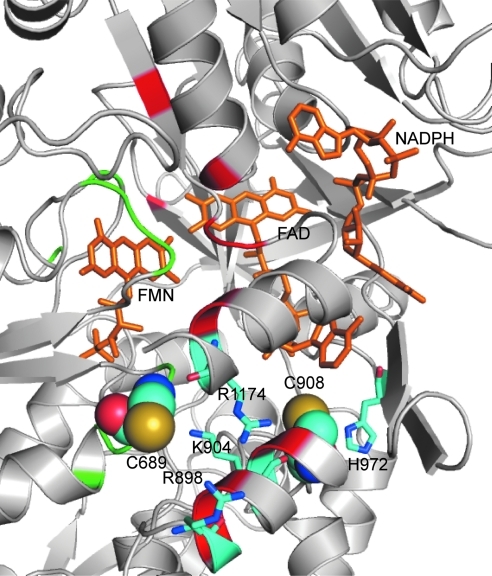
References
-
- Aota M. Matsuda K. Isowa N. Wada H. Yodoi J. Ban T. Protection against reperfusion-induced arrhythmias by human thioredoxin. J Cardiovasc Pharmacol. 1996;27:727–732. - PubMed
-
- Berry C. Brosnan MJ. Fennell J. Hamilton CA. Dominiczak AF. Oxidative stress and vascular damage in hypertension. Curr Opin Nephrol Hypertens. 2001;10:247–255. - PubMed
-
- Biswas S. Chida AS. Rahman I. Redox modifications of protein-thiols: emerging roles in cell signaling. Biochem Pharmacol. 2006;71:551–564. - PubMed
-
- Boger RH. Sydow K. Borlak J. Thum T. Lenzen H. Schubert B. Tsikas D. Bode-Boger SM. LDL cholesterol upregulates synthesis of asymmetrical dimethylarginine in human endothelial cells: involvement of S-adenosylmethionine-dependent methyltransferases. Circ Res. 2000;87:99–105. - PubMed
Publication types
MeSH terms
Substances
Grants and funding
LinkOut - more resources
Full Text Sources
