


A cohort study assessing difficult patient encounters in a walk-in primary care clinic, predictors and outcomes
- PMID: 21264521
- PMCID: PMC3101981
- DOI: 10.1007/s11606-010-1620-6
A cohort study assessing difficult patient encounters in a walk-in primary care clinic, predictors and outcomes
Abstract
Background: Previous studies have found that up to 15% of clinical encounters are experienced as difficult by clinicians.
Objectives: Explore patient and physician characteristics associated with being considered "difficult" and assess the impact on patient outcomes.
Design: Prospective cohort study.
Participants: Seven hundred fifty adults presenting to a primary care walk-in clinic with a physical symptom.
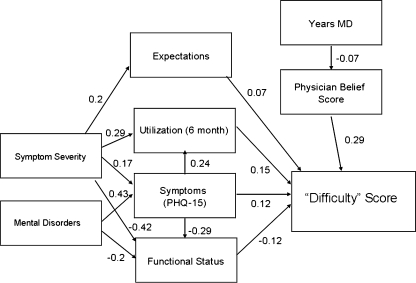
Main measures: Pre-visit surveys assessed symptom characteristics, expectations, functional status (Medical Outcome Study SF-6) and the presence of mental disorders [Primary Care Evaluation of Mental Disorders, (PRIME-MD)]. Post-visit surveys assessed satisfaction (Rand-9), unmet expectations and trust. Two-week assessment included symptom outcome (gone, better, same, worse), functional status and satisfaction. After each visit, clinicians rated encounter difficulty using the Difficult Doctor-Patient Relationship Questionnaire (DDPRQ). Clinicians also completed the Physician's Belief Scale, a measure of psychosocial orientation.
Key results: Among the 750 subjects, 133 (17.8%) were perceived as difficult. "Difficult" patients were less likely to fully trust (RR = 0.88, 95% CI: 0.77-0.99) or be fully satisfied (RR = 0.78, 95% CI: 0.62-0.98) with their clinician, and were more likely to have worsening of symptoms at 2 weeks (RR = 0.75, 95% CI: 0.57-0.97). Patients involved in "difficult encounters" had more than five symptoms (RR = 1.8, 95% CI: 1.3-2.3), endorsed recent stress (RR = 1.9, 95% CI: 1.4-3.2) and had a depressive or anxiety disorder (RR = 2.3, 95% CI: 1.3-4.2). Physicians involved in difficult encounters were less experienced (12 years vs. 9 years, p = 0.0002) and had worse psychosocial orientation scores (77 vs. 67, p < 0.005).
Conclusion: Both patient and physician characteristics are associated with "difficult" encounters, and patients involved in such encounters have worse short-term outcomes.
Figures
References
-
- Hahn SR KK, Spitzer RL, Brody D, Williams J, Linzer M, deGruy FV. "The difficult patient": prevalence, psychopathology, and functional impairment. J Gen Intern Med. 1996;11:1–8. - PubMed
Publication types
MeSH terms
LinkOut - more resources
Full Text Sources
Medical
