


Gender and treatment response in substance use treatment-mandated parolees
- PMID: 21266302
- PMCID: PMC3056944
- DOI: 10.1016/j.jsat.2010.11.013
Gender and treatment response in substance use treatment-mandated parolees
Abstract
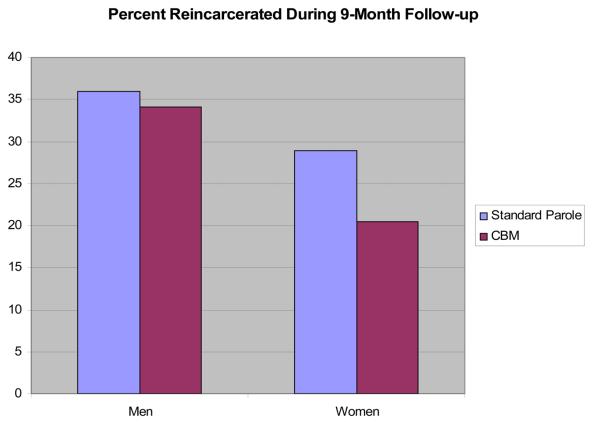
Well-controlled, randomized studies of correctional interventions examining gender effects are rare. This study examined gender main effects and gender × treatment interactions in a multisite randomized trial (N = 431) comparing a new form of correctional supervision for drug-involved offenders (collaborative behavioral management [CBM]) to standard parole. Outcomes included repeated measures of yes/no use of primary drug, alcohol use, and recidivism during 9 months postrelease. Generalized estimating equation analyses indicated that despite using harder drugs at baseline, women were less likely than men to use their primary drug and to use alcohol during the follow-up period. No gender-related differences in recidivism were found. Treatment interacted with gender to predict alcohol use, with women in CBM reporting the best alcohol outcomes (only 5% of women used alcohol during the follow-up period). The clear expectations, positive reinforcement, recognition of successes, fairness, and support present in CBM may be particularly important for women parolees.
Copyright © 2011 Elsevier Inc. All rights reserved.
Figures


References
-
- Adams S, Leukefeld CG, Peden AR. Substance abuse treatment for women offenders: A research review. Journal of Addictions Nursing. 2008;19:61–75.
-
- Bloom B, Owen B, Covington S. Gender-responsive strategies: Research, practice, and guiding principles for women offenders. 2003. (National Institutes of Corrections accession number 018017). Retrieved 05/21/2010, from http://nicic.org/downloads/pdf/2003/018017.pdf.
-
- Center for Substance Abuse Treatment (CSAT . Combining substance abuse treatment with intermediate sanctions for adults in the criminal justice system. Treatment improvement protocol (TIP) no. 12. Substance Abuse and Mental Health Services Administration; Rockville, MD: 1994. (DHHS Pub. no. (SMA) 94-3004 ed.). - PubMed
-
- CJ-DATS CJ-DATS Core Instruments. 2004. Retrieved June 12, 2007, from http://cjdats.org/ka/ka-2.cfm?folder/id=269.
-
- Comfort M, Loverro J, Kaltenbach K. A search for strategies to engage women in substance abuse treatment. Social Work in Health Care. 2000;31(4):59–70. - PubMed
