


Review
doi: 10.1038/nri2916.
Phenotypical and functional specialization of FOXP3+ regulatory T cells
Affiliations
- PMID: 21267013
- PMCID: PMC3289970
- DOI: 10.1038/nri2916
Item in Clipboard
Review
Phenotypical and functional specialization of FOXP3+ regulatory T cells
Nat Rev Immunol.
2011 Feb.
Abstract
Forkhead box P3 (FOXP3)(+) regulatory T (T(Reg)) cells prevent autoimmune disease, maintain immune homeostasis and modulate immune responses during infection. To accomplish these tasks, T(Reg) cell activity is precisely controlled, and this requires T(Reg) cells to alter their migratory, functional and homeostatic properties in response to specific cues in the immune environment. We review progress in understanding the diversity of T(Reg) cells, T(Reg) cell function in different anatomical and inflammatory settings, and the influence of the immune environment on T(Reg) cell activity. We also consider how these factors affect immune-mediated disease in the contexts of infection, autoimmunity, cancer and transplantation.
Figures
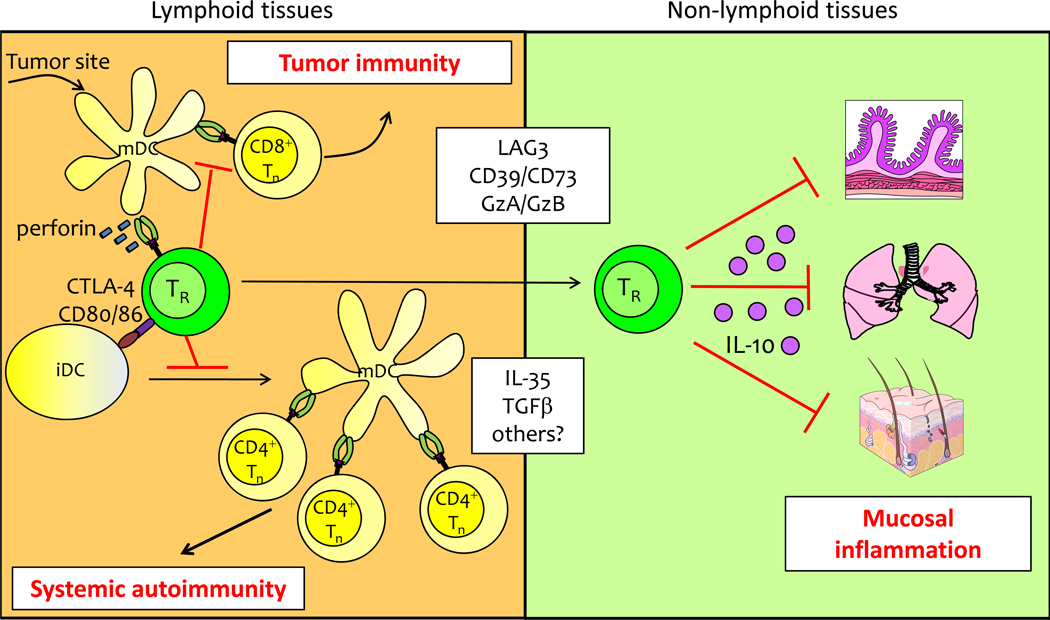
(Left) TReg cells in secondary lymphoid tissues use multiple mechanisms to inhibit DC function and block initiation of autoimmunity or prevent tumor clearance. (Right) TReg cell production of IL-10 is essential for immunoregulation at mucosal tissues such as the intestines, lungs and skin. The relative importance of other immunosuppressive mechanisms used by TReg cells (shown in white box) in lymphoid vs. non-lymphoid tissues remains to be established
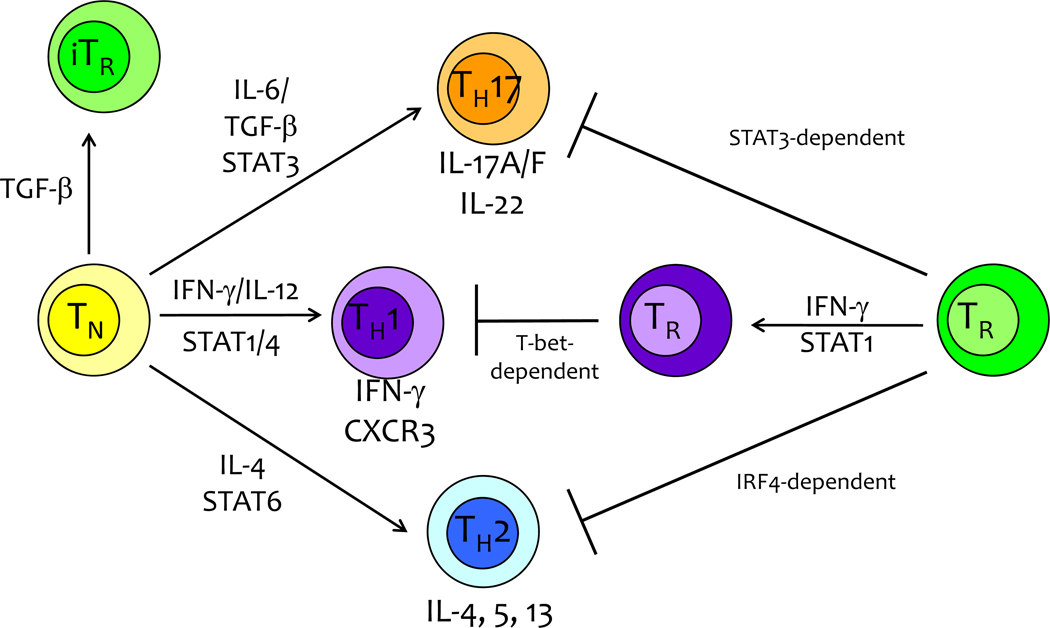
The differentiation of naive TH cells into functionally distinct effector subsets (TH17, TH1, TH2, induced TR) is dependent on the induction of key transcriptional regulators (RORγT, T-bet, GATA3, Foxp3) following TCR stimulation in conjunction with cytokine signaling/STAT activation. Comparably, thymic-derived Treg cells utilize specific molecular programs driven by STAT3, T-bet, or IRF4 to restrain particular types of immune responses orchestrated by distinct effector T cell subsets.
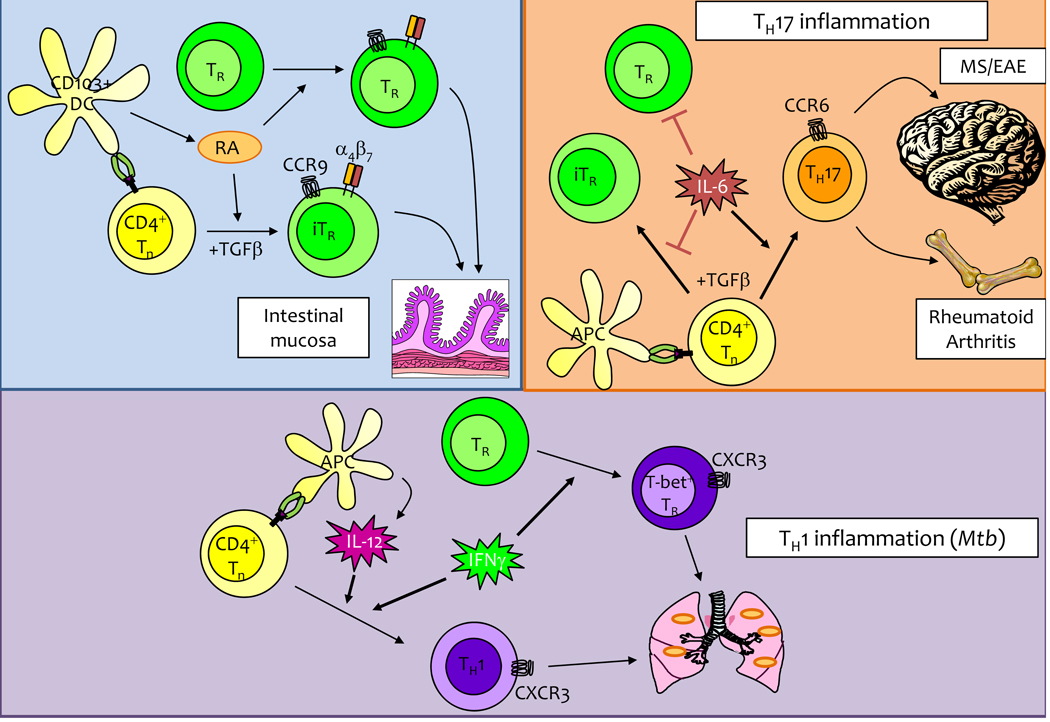
(Left) The vitamin-A metabolite retinoic acid (RA) can boost TReg cell activity within the intestine by inducing Foxp3 expression in naïve T cells and directing the expression of gut-homing receptors on both TReg and iTReg cells. (Right) During TH17-driven inflammation, IL-6 impairs TReg cell activity both by directly blocking TReg function as well as by promoting TH17 differentiation at the expense of iTReg generation. (Middle) During type-1 inflammatory responses, such as Mtb infection, IFNγ and IL-12 direct TH1 differentiation. Coordinately, IFNγ produced in response to infection directs the differentiation of T-bet+ TReg cells that are specialized to restrain pro-inflammatory TH1 cells.
References
Publication types
MeSH terms
Substances
Grants and funding
LinkOut - more resources
Full Text Sources
Other Literature Sources
