


Recognition of herpesviruses by the innate immune system
- PMID: 21267015
- PMCID: PMC3686362
- DOI: 10.1038/nri2937
Recognition of herpesviruses by the innate immune system
Erratum in
- Nat Rev Immunol. 2013 Aug;13(8):614
Abstract
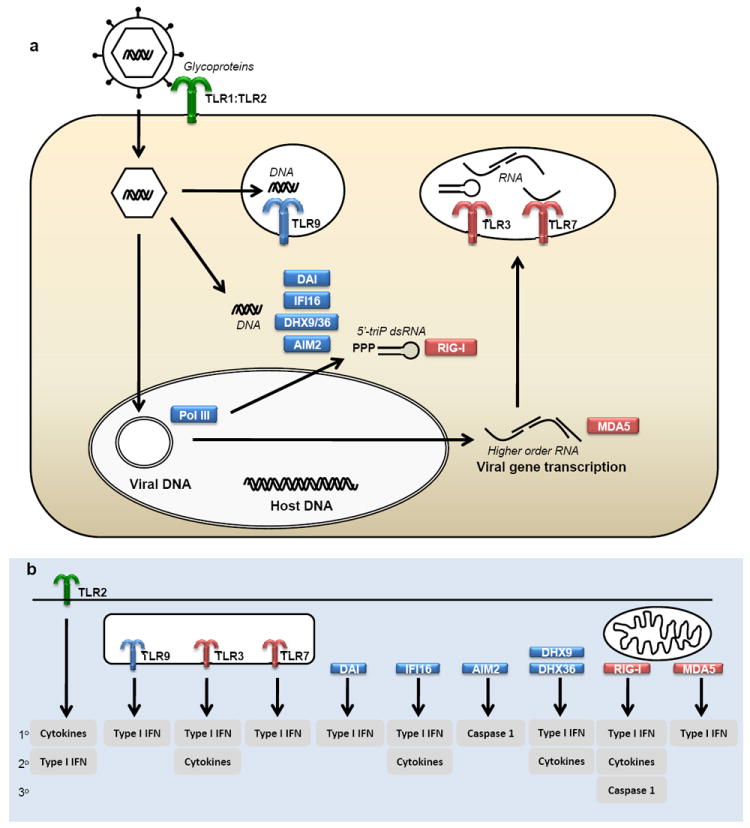
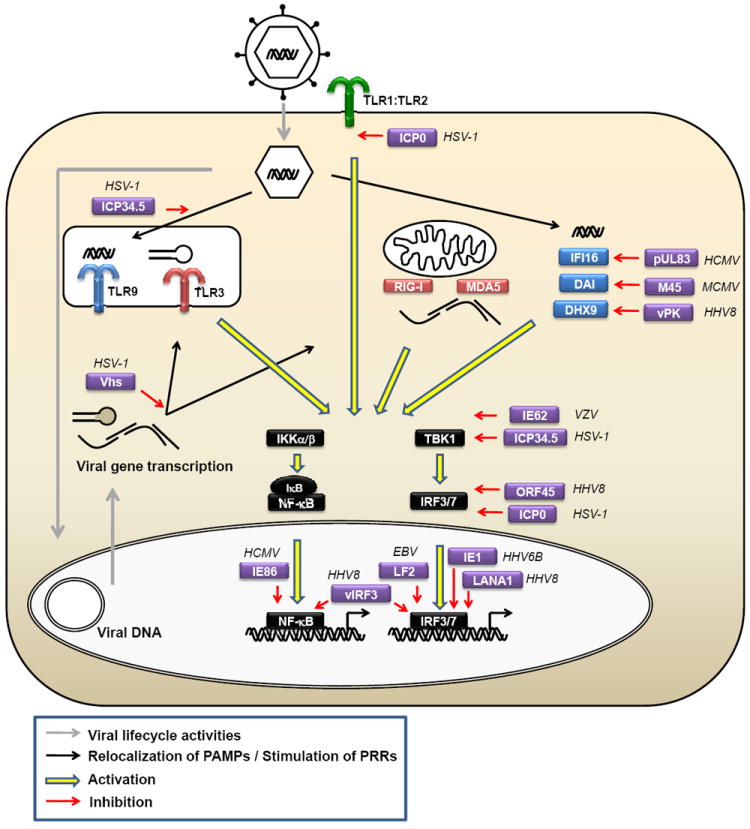
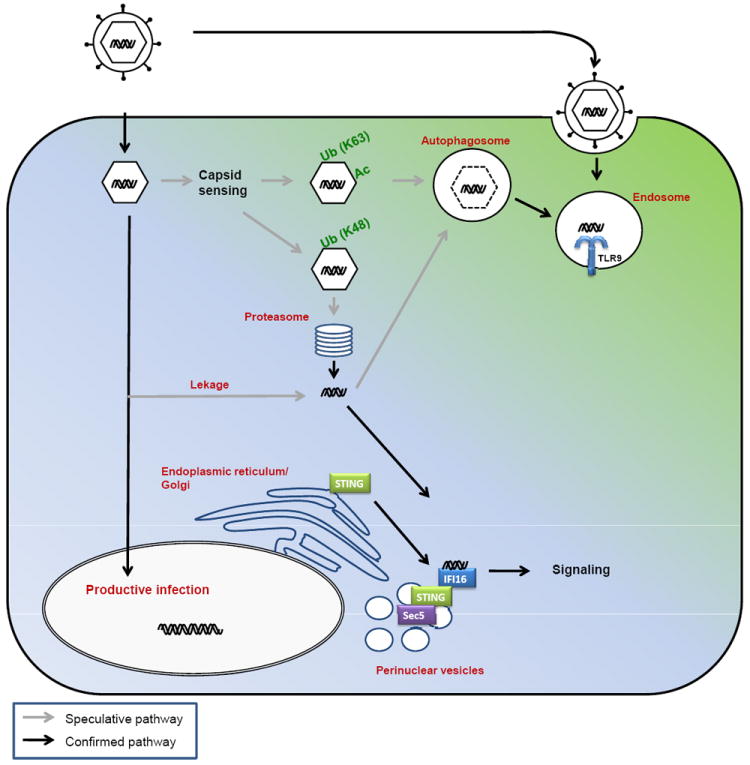
Advances in innate immunity over the past decade have revealed distinct classes of pattern recognition receptors (PRRs) that detect pathogens at the cell surface and in intracellular compartments. This has shed light on how herpesviruses, which are large disease-causing DNA viruses that replicate in the nucleus, are initially recognized during cellular infection. Surprisingly, this involves multiple PRRs both on the cell surface and within endosomes and the cytosol. In this article we describe recent advances in our understanding of innate detection of herpesviruses, how this innate detection translates into anti-herpesvirus host defence, and how the viruses seek to evade this innate detection to establish persistent infections.
Figures
References
-
- Pellett PE, Roizman B. Fields Virology. Lippincort, Williams, Wilkins; Philadelphia: 2007. The Family: Herpesviridae A brief introduction; pp. 2579–2500.
-
- Reusser P, Riddell SR, Meyers JD, Greenberg PD. Cytotoxic T-lymphocyte response to cytomegalovirus after human allogeneic bone marrow transplantation: pattern of recovery and correlation with cytomegalovirus infection and disease. Blood. 1991;78:1373–1380. - PubMed
Publication types
MeSH terms
Substances
Grants and funding
LinkOut - more resources
Full Text Sources
Other Literature Sources
Miscellaneous
