


Review
doi: 10.1042/CS20100385.
Healthy aging and disease: role for telomere biology?
Affiliations
- PMID: 21271986
- PMCID: PMC3035527
- DOI: 10.1042/CS20100385
Item in Clipboard
Review
Healthy aging and disease: role for telomere biology?
Clin Sci (Lond).
2011 May.
Abstract
Aging is a biological process that affects most cells, organisms and species. Human aging is associated with increased susceptibility to a variety of chronic diseases, including cardiovascular disease, Type 2 diabetes, neurological diseases and cancer. Despite the remarkable progress made during the last two decades, our understanding of the biology of aging remains incomplete. Telomere biology has recently emerged as an important player in the aging and disease process.
Figures
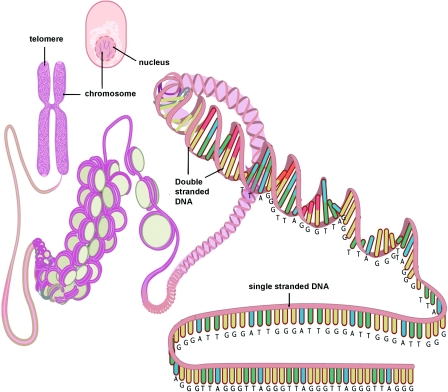
This Figure was reproduced from Huzen, J., van Veldhuisen, D.J., van Gilst, W.H. and van der Harst, P. (2008), Telomeres and biological ageing in cardiovascular disease, Ned. Tijdschr. Geneeskd., vol. 152, pp. 1265–1270, with permission from the Nederlands Tijdschrift voor Geneeskunde.
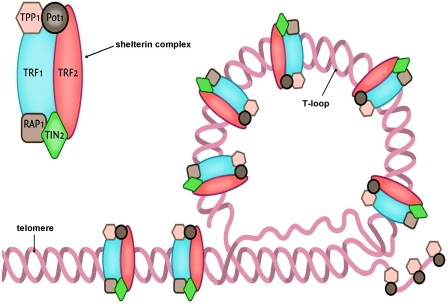
This Figure was reproduced from Huzen, J., van Veldhuisen, D.J., van Gilst, W.H. and van der Harst, P. (2008), Telomeres and biological ageing in cardiovascular disease, Ned. Tijdschr. Geneeskd., vol. 152, pp. 1265–1270, with permission from the Nederlands Tijdschrift voor Geneeskunde.

Active telomerase is composed from two RNA complexes (TERC; only one depicted) and two telomere reverse transcriptases (TERC; one depicted) stabilized by dyskerin. This Figure was reproduced from Huzen, J., van Veldhuisen, D.J., van Gilst, W.H. and van der Harst, P. (2008), Telomeres and biological ageing in cardiovascular disease, Ned. Tijdschr. Geneeskd., vol. 152, pp. 1265–1270, with permission from the Nederlands Tijdschrift voor Geneeskunde.
Comment in
-
From cell to cognition: can changes in telomere length indicate patterns of cognitive aging?Clin Sci (Lond). 2011 Oct;121(7):313-4. doi: 10.1042/CS20110227. Clin Sci (Lond). 2011. PMID: 21592086 No abstract available.
References
-
- Cesare A. J., Reddel R. R. Alternative lengthening of telomeres: models, mechanisms and implications. Nat. Rev. Genet. 2010;11:319–330. - PubMed
-
- Blasco M. A. Telomeres and human disease: ageing, cancer and beyond. Nat. Rev. Genet. 2005;6:611–622. - PubMed
-
- Perona R., Machado-Pinilla R., Manguan C., Carrillo J. Telomerase deficiency and cancer susceptibility syndromes. Clin. Transl. Oncol. 2009;11:711–714. - PubMed
-
- Blackburn E. H., Gall J. G. A tandemly repeated sequence at the termini of the extrachromosomal ribosomal RNA genes in Tetrahymena. J. Mol. Biol. 1978;120:33–53. - PubMed
Publication types
MeSH terms
Substances
Grants and funding
LinkOut - more resources
Full Text Sources
Other Literature Sources
Medical
