


Survival of atraumatic restorative treatment (ART) sealants and restorations: a meta-analysis
- PMID: 21274581
- PMCID: PMC3308010
- DOI: 10.1007/s00784-011-0513-3
Survival of atraumatic restorative treatment (ART) sealants and restorations: a meta-analysis
Abstract
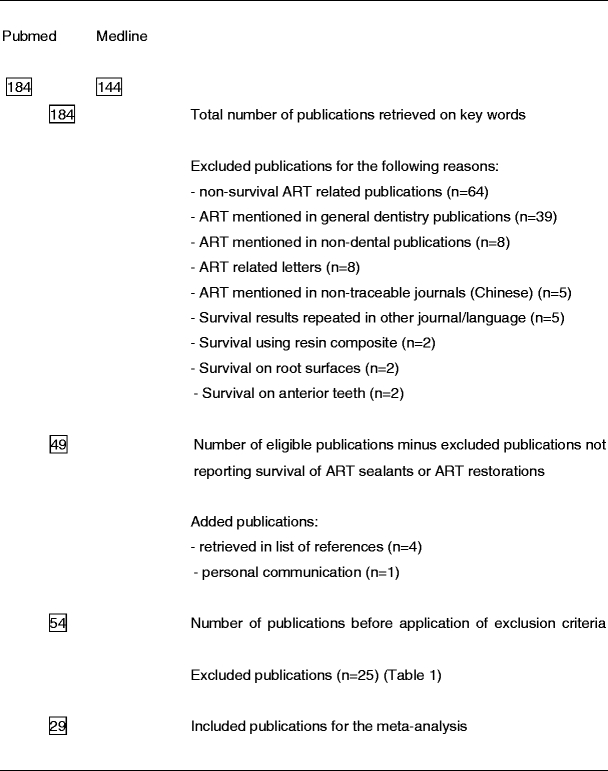
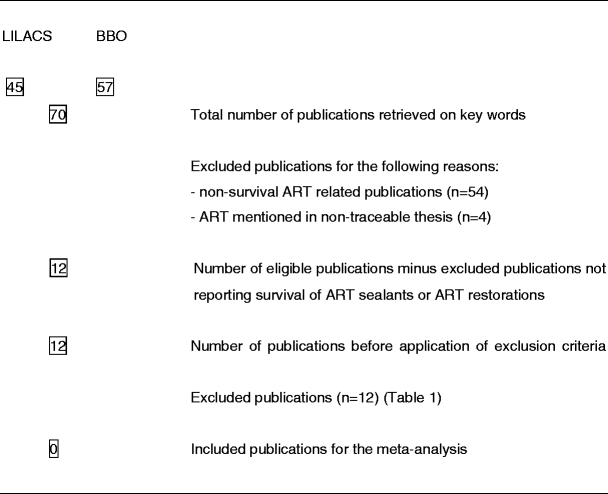
The purpose of this study is to perform a systematic investigation plus meta-analysis into survival of atraumatic restorative treatment (ART) sealants and restorations using high-viscosity glass ionomers and to compare the results with those from the 2005 ART meta-analysis. Until February 2010, four databases were searched. Two hundred four publications were found, and 66 reported on ART restorations or sealant survival. Based on five exclusion criteria, two independent reviewers selected the 29 publications that accounted for the meta-analysis. Confidence intervals (CI) and or standard errors were calculated and the heterogeneity variance of the survival rates was estimated. Location (school/clinic) was an independent variable. The survival rates of single-surface and multiple-surface ART restorations in primary teeth over the first 2 years were 93% (CI, 91-94%) and 62% (CI, 51-73%), respectively; for single-surface ART restorations in permanent teeth over the first 3 and 5 years it was 85% (CI, 77-91%) and 80% (CI, 76-83%), respectively and for multiple-surface ART restorations in permanent teeth over 1 year it was 86% (CI, 59-98%). The mean annual dentine lesion incidence rate, in pits and fissures previously sealed using ART, over the first 3 years was 1%. No location effect and no differences between the 2005 and 2010 survival rates of ART restorations and sealants were observed. The short-term survival rates of single-surface ART restorations in primary and permanent teeth, and the caries-preventive effect of ART sealants were high.
Clinical relevance: ART can safely be used in single-surface cavities in both primary and permanent teeth. ART sealants have a high caries preventive effect.
Figures
References
-
- Loh KH. An ART technique in the mobile dental squad in Malaysia: a four-year review. Malaysian Dent J. 2003;24:95–101.
-
- Pan American Health Organization . Oral health of low income children. Procedures for atraumatic restorative treatment. Final report. Washington: PAHO; 2006.
Publication types
MeSH terms
Substances
LinkOut - more resources
Full Text Sources
Medical
