


Low-intensity blue-enriched white light (750 lux) and standard bright light (10,000 lux) are equally effective in treating SAD. A randomized controlled study
- PMID: 21276222
- PMCID: PMC3042929
- DOI: 10.1186/1471-244X-11-17
Low-intensity blue-enriched white light (750 lux) and standard bright light (10,000 lux) are equally effective in treating SAD. A randomized controlled study
Abstract
Background: Photoreceptor cells containing melanopsin play a role in the phase-shifting effects of short-wavelength light. In a previous study, we compared the standard light treatment (SLT) of SAD with treatment using short-wavelength blue-enriched white light (BLT). Both treatments used the same illuminance (10,000 lux) and were equally highly effective. It is still possible, however, that neither the newly-discovered photoreceptor cells, nor the biological clock play a major role in the therapeutic effects of light on SAD. Alternatively, these effects may at least be partly mediated by these receptor cells, which may have become saturated as a result of the high illuminances used in the therapy. This randomized controlled study compares the effects of low-intensity BLT to those of high-intensity SLT.
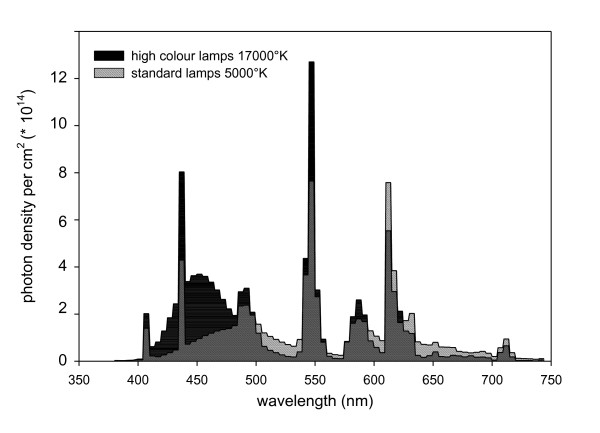
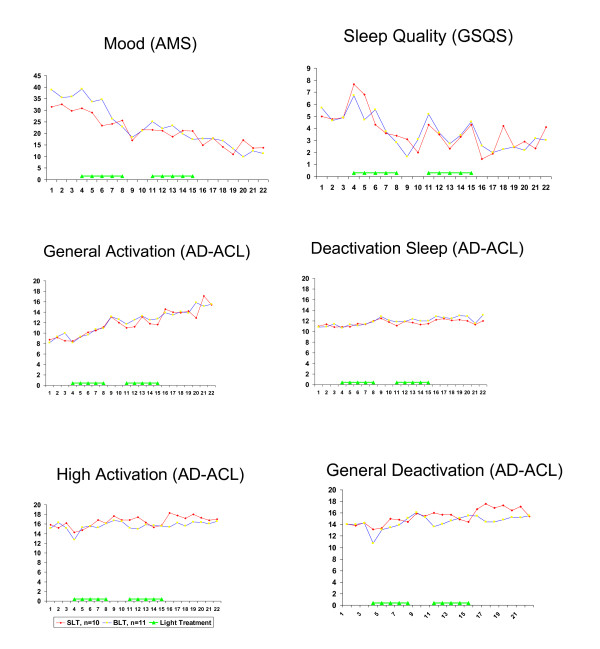
Method: In a 22-day design, 22 patients suffering from a major depression with a seasonal pattern (SAD) were given light treatment (10,000 lux) for two weeks on workdays. Subjects were randomly assigned to either of the two conditions, with gender and age evenly distributed over the groups. Light treatment either consisted of 30 minutes SLT (5000 °K) with the EnergyLight® (Philips, Consumer Lifestyle) with a vertical illuminance of 10,000 lux at eye position or BLT (17,000 °K) with a vertical illuminance of 750 lux using a prototype of the EnergyLight® which emitted a higher proportion of short-wavelengths. All participants completed questionnaires concerning mood, activation and sleep quality on a daily basis. Mood and energy levels were also assessed on a weekly basis by means of the SIGH-SAD and other assessment tools.
Results: On day 22, SIGH-SAD ratings were significantly lower than on day 1 (SLT 65.2% and BLT 76.4%). On the basis of all assessments no statistically significant differences were found between the two conditions.
Conclusion: With sample size being small, conclusions can only be preliminary. Both treatment conditions were found to be highly effective. The therapeutic effects of low-intensity blue-enriched light were comparable to those of the standard light treatment. Saturation effects may play a role, even with a light intensity of 750 lux. The therapeutic effects of blue-enriched white light in the treatment of SAD at illuminances as low as 750 lux help bring light treatment for SAD within reach of standard workplace and educational lighting systems.
Figures
References
-
- Rosenthal NE, Sack DA, Gillin JC, Lewy AJ, Goodwin FK, Davenport Y, Mueller PS, Newsome DA, Wehr TA. Seasonal affective disorder: a description of the syndrome and preliminary findings with light therapy. Arch Gen Psychiatry. 1984;41:72–80. - PubMed
Publication types
MeSH terms
LinkOut - more resources
Full Text Sources
Medical
