


Matrix metalloproteinases modulated by protein kinase Cε mediate resistin-induced migration of human coronary artery smooth muscle cells
- PMID: 21277149
- PMCID: PMC3538810
- DOI: 10.1016/j.jvs.2010.10.117
Matrix metalloproteinases modulated by protein kinase Cε mediate resistin-induced migration of human coronary artery smooth muscle cells
Abstract
Background: Emerging evidence showed that resistin induces vascular smooth muscle cell (VSMC) migration, a critical step in initiating vascular restenosis. Adhesion molecule expression and cytoskeletal rearrangement have been observed in this progress. Given that matrix metalloproteinases (MMPs) also regulate cell migration, we hypothesized that MMPs may mediate resistin-induced VSMC migration.
Methods: Human VSMCs were treated with recombinant human resistin at physiologic (10 ng/mL) and pathologic (40 ng/mL) concentrations for 24 hours. Cell migration was determined by the Boyden chamber assay. MMP and tissue inhibitor metalloproteinase (TIMP) mRNA and protein levels were measured with real-time PCR and ELISA. MMP enzymatic activity was measured by zymography. In another experiment, neutralizing antibodies against MMP-2 and MMP-9 were coincubated with resistin in cultured VSMCs. The regulation of MMP by protein kinase C (PKC) was determined by εV1-2, a selective PKCε inhibitor.
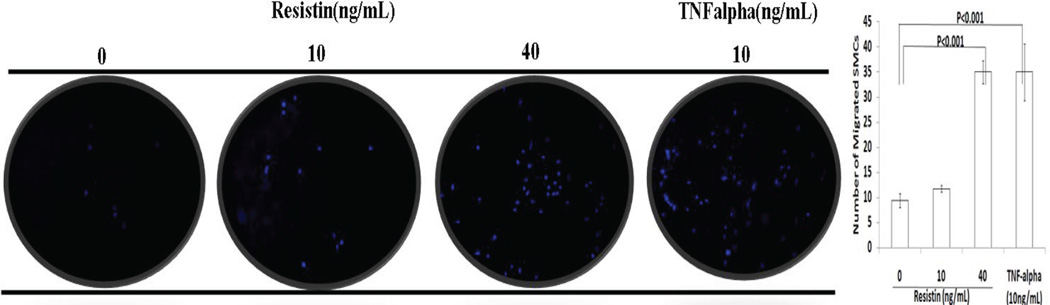
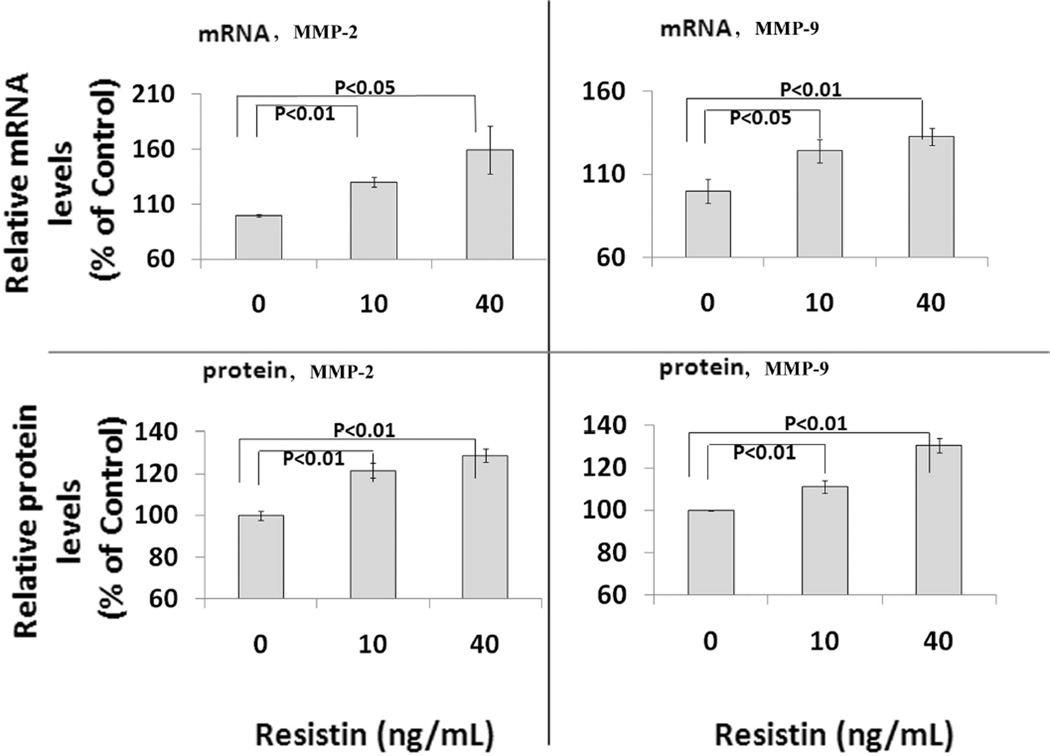
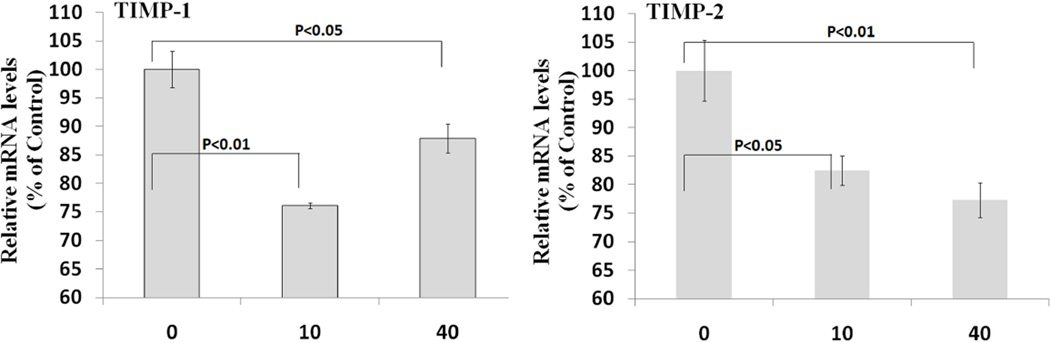
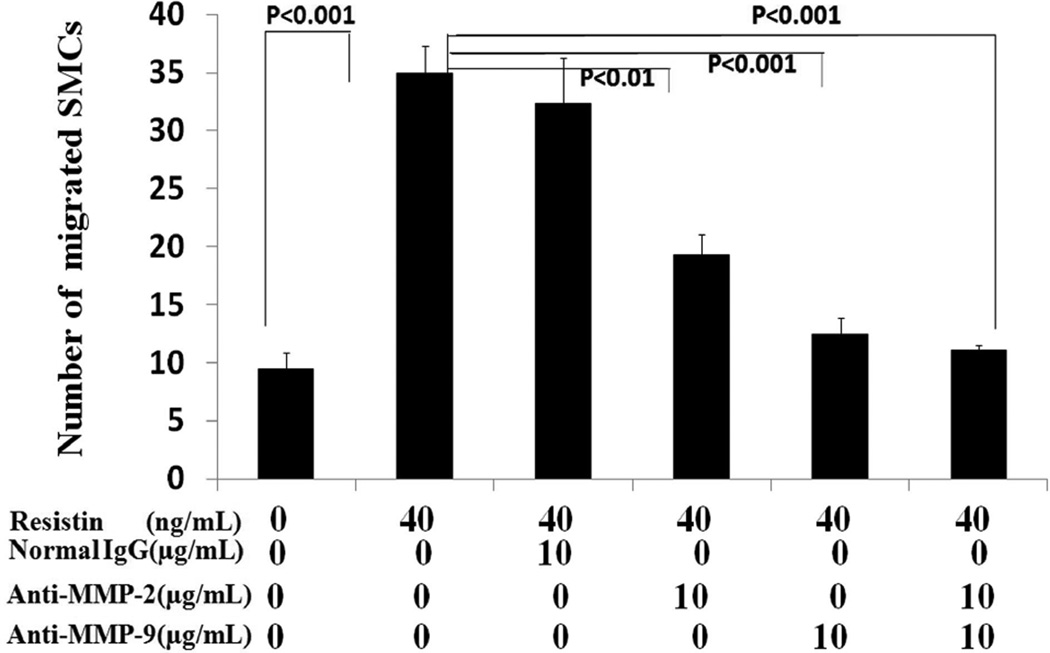
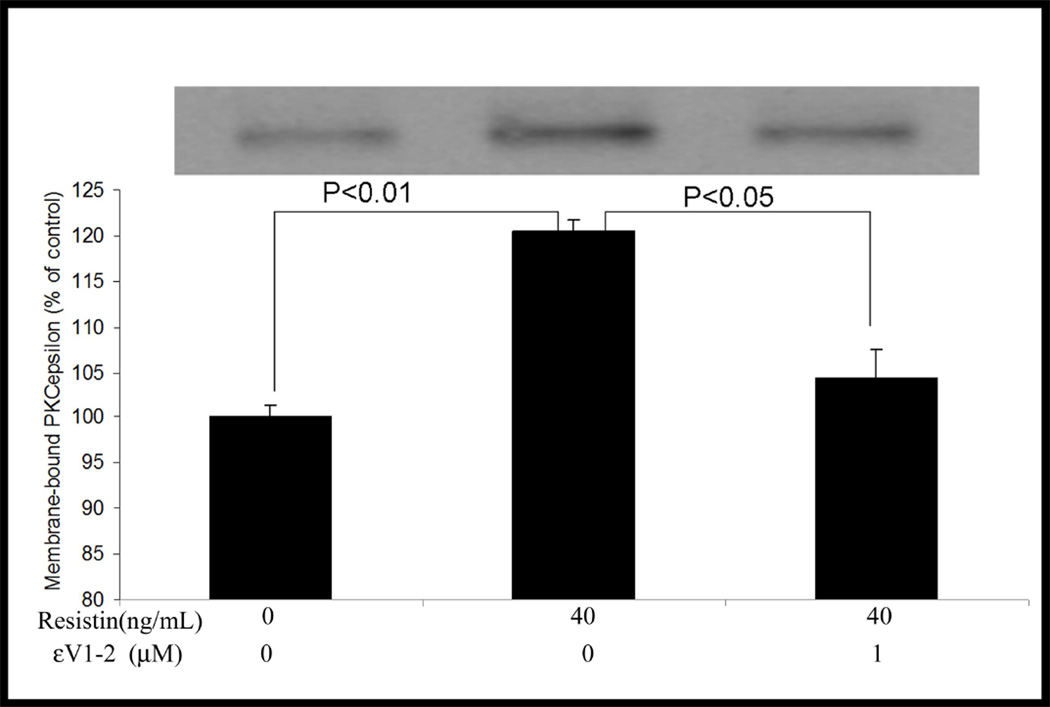
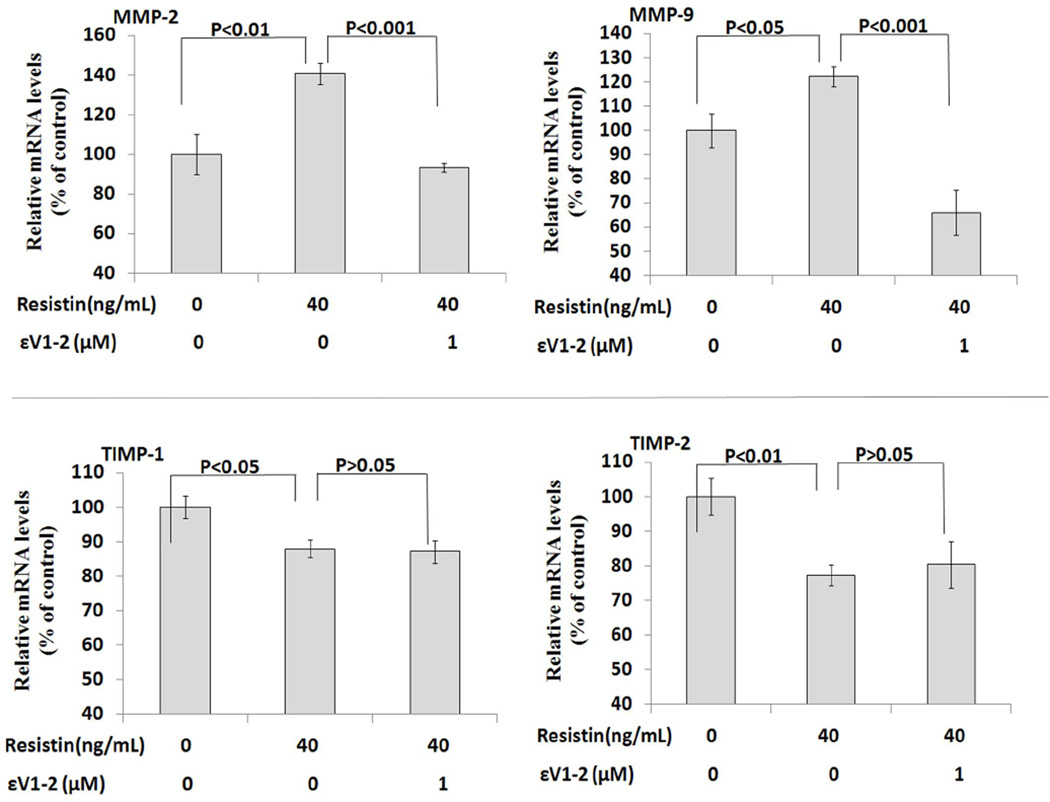
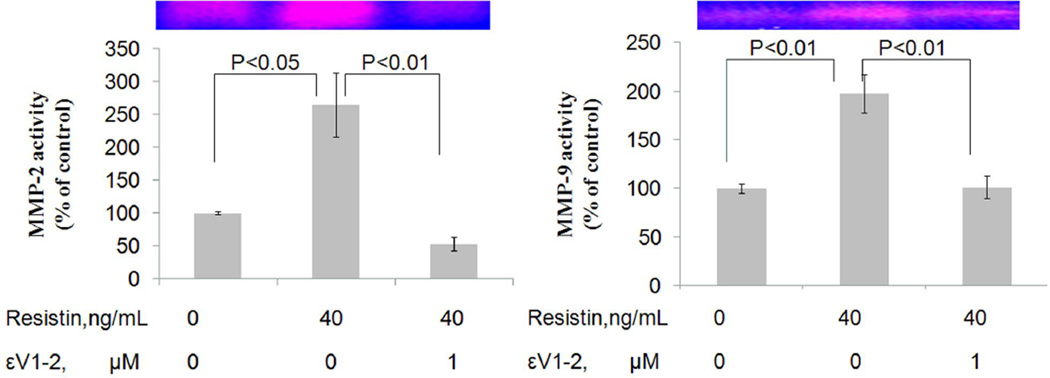
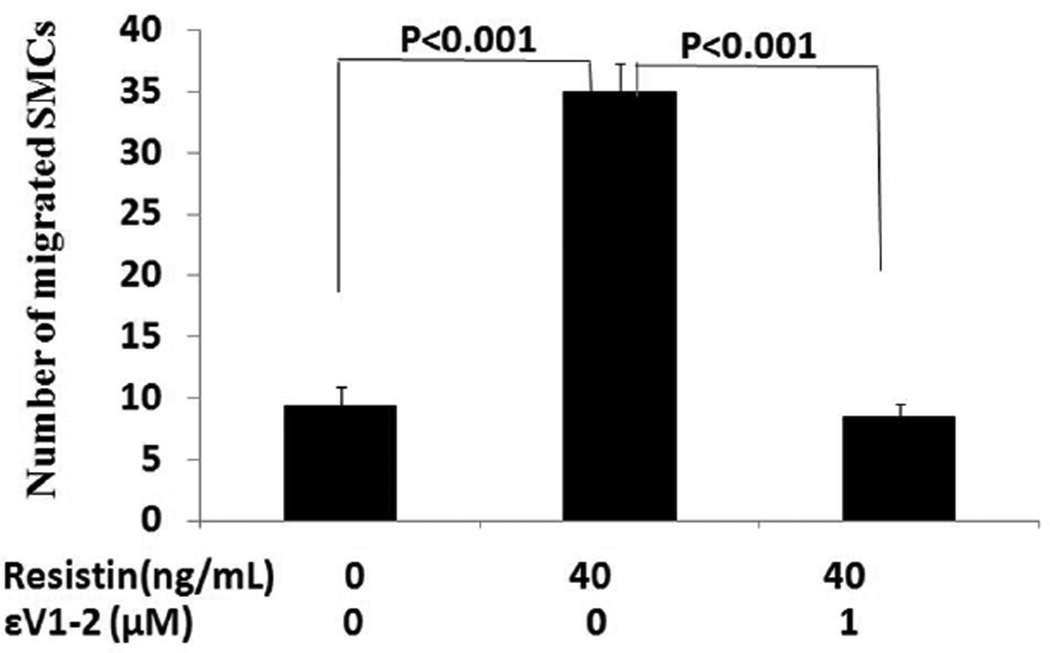
Results: Resistin-induced smooth muscle cell (SMC) migration was confirmed by the Boyden chamber assay. Forty nanograms/milliliter resistin increased SMC migration by 3.7 fold. Additionally, resistin stimulated MMP-2 and -MMP9 mRNA and protein expressions. In contrast, the TIMP-1 and TIMP-2 mRNA levels were inhibited by resistin. Neutralizing antibodies against MMP-2 and MMP-9 effectively reversed VSMC migration. Furthermore, resistin activated PKCε, but selective PKCε inhibitor suppressed resistin-induced MMP expression, activity, and cell migration.
Conclusions: Our study confirmed that resistin increased vascular smooth muscle cell migration in vitro. In terms of mechanism, resistin-stimulated cell migration was associated with increased MMP expression, which was dependent on PKCε activation.
Published by Mosby, Inc.
Figures
References
-
- Lavie CJ, Milani RV, Ventura HO. Obesity and cardiovascular disease: risk factor, paradox, and impact of weight loss. J Am Coll Cardiol. 2009;53:1925–1932. - PubMed
-
- Marinou K, Tousoulis D, Antonopoulos AS, Stefanadi E, Stefanadis C. Obesity and cardiovascular disease: from pathophysiology to risk stratification. Int J Cardiol. 2010;138:3–8. - PubMed
-
- Lakka TA, Lakka HM, Salonen R, Kaplan GA, Salonen JT. Abdominal obesity is associated with accelerated progression of carotid atherosclerosis in men. Atherosclerosis. 2001;154:497–504. - PubMed
-
- Degawa-Yamauchi M, Bovenkerk JE, Juliar BE, Watson W, Kerr K, Jones R, et al. Serum resistin (FIZZ3) protein is increased in obese humans. J Clin Endocrinol Metab. 2003;88(11):5452–5455. - PubMed
-
- Rana JS, Mittleman MA, Ho KK, Cutlip DE. Obesity and clinical restenosis after coronary stent placement. Am Heart J. 2005;150:821–826. - PubMed
MeSH terms
Substances
Grants and funding
LinkOut - more resources
Full Text Sources
Research Materials
Miscellaneous
