


When pigs fly: immunomagnetic separation facilitates rapid determination of Pig-a mutant frequency by flow cytometric analysis
- PMID: 21277384
- PMCID: PMC3064711
- DOI: 10.1016/j.mrgentox.2011.01.009
When pigs fly: immunomagnetic separation facilitates rapid determination of Pig-a mutant frequency by flow cytometric analysis
Abstract
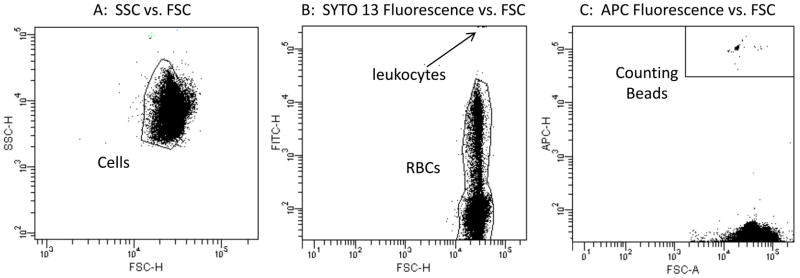
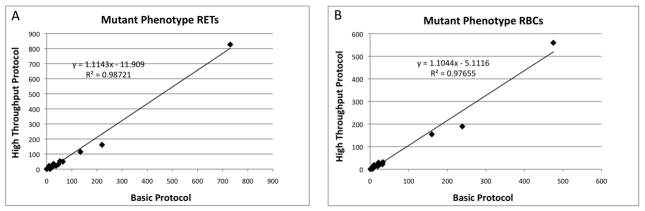
In vivo mutation assays based on the Pig-a null phenotype, that is, the absence of cell surface glycosylphosphatidylinositol (GPI) anchored proteins such as CD59, have been described. This work has been accomplished with hematopoietic cells, most often rat peripheral blood erythrocytes (RBCs) and reticulocytes (RETs). The current report describes new sample processing procedures that dramatically increase the rate at which cells can be evaluated for GPI anchor deficiency. This new method was applied to blood specimens from vehicle, 1,3-propane sultone, melphalan, and N-ethyl-N-nitrosourea treated Sprague Dawley rats. Leukocyte- and platelet-depleted blood samples were incubated with anti-CD59-phycoerythrin (PE) and anti-CD61-PE, and then mixed with anti-PE paramagnetic particles and Counting Beads (i.e., fluorescent microspheres). An aliquot of each specimen was stained with SYTO 13 and flow cytometric analysis was performed to determine RET percentage, RET:Counting Bead ratio, and RBC:Counting Bead ratio. The major portion of these specimens were passed through ferromagnetic columns that were suspended in a magnetic field, thereby depleting each specimen of wild-type RBCs (and platelets) based on their association with anti-PE paramagnetic particles. The eluates were concentrated via centrifugation and the resulting suspensions were stained with SYTO 13 and analyzed on the flow cytometer to determine mutant phenotype RET:Counting Bead and mutant phenotype RBC:Counting Bead ratios. The ratios obtained from pre- and post-column analyses were used to derive mutant phenotype RET and mutant phenotype RBC frequencies. Results from vehicle control and genotoxicant-treated rats are presented that indicate the scoring system is capable of returning reliable mutant phenotype cell frequencies. Using this wild-type cell depletion strategy, it was possible to interrogate ≥ 3 million RETs and ≥ 100 million RBCs per rat in approximately 7 min. Beyond considerably enhancing the throughput capacity of the analytical platform, these blood-processing procedures were also shown to enhance the precision of the measurements.
Copyright © 2011 Elsevier B.V. All rights reserved.
Figures




References
-
- Takahashi M, Takeda J, Hirose S, Hyman R, Inoue N, Miyata T, Ueda E, Kitani T, Medof ME, Kinoshita T. Deficient biosynthesis of N-acetylglucosaminyl-phosphatidylinositol, the first intermediate of glycosyl phosphatidylinositol anchor biosynthesis, in cell lines established from patients with paroxysmal nocturnal hemoglobinuria. J Exp Med. 1993;177:517–512. - PMC - PubMed
-
- Kawagoe K, Takeda J, Endo Y, Kinoshita T. Molecular cloning of murine Pig-a, a gene for GPI-anchor biosynthesis, and demonstration of interspecies conservation of its structure, function, and genetic locus. Genomics. 1994;23:566–574. - PubMed
-
- Hernandez-Campo PM, Almeida J, Matarraz S, de Santiago M, Luz Sanchez M, Orfao A. Quantitative Analysis of the Expression of Glycosylphosphatidylinositol-Anchored Proteins During the Maturation of Different Hematopoietic Cell Compartments of Normal Bone Marrow. Cytometry. 2007;72B:34–42. - PubMed
-
- Bryce SM, Bemis JC, Dertinger SD. In Vivo Mutation Assay Based on the Endogenous Pig-a Locus. Environ Mol Mutagen. 2008;49:256–264. - PubMed
-
- Miura D, Dobrovolsky V, Kasahara Y, Katsuura Y, Heflich R. Development of an In Vivo Gene Mutation Assay Using the Endogenous Pig-A Gene: I. Flow Cytometric Detection of CD59-negative Peripheral Red Blood Cells and CD48-negative Spleen T-cells from the Rat. Environ Mol Mutagen. 2008;49:614–621. - PubMed
Publication types
MeSH terms
Substances
Grants and funding
LinkOut - more resources
Full Text Sources
Other Literature Sources
Miscellaneous
