


Sulforaphane-mediated reduction of aflatoxin B₁-N⁷-guanine in rat liver DNA: impacts of strain and sex
- PMID: 21278056
- PMCID: PMC3080186
- DOI: 10.1093/toxsci/kfr026
Sulforaphane-mediated reduction of aflatoxin B₁-N⁷-guanine in rat liver DNA: impacts of strain and sex
Abstract
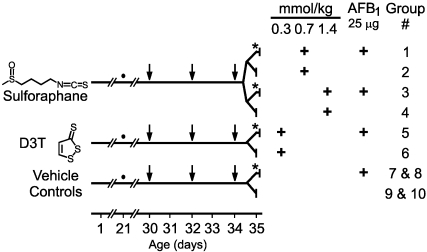
Aflatoxin B₁ (AFB₁) is a DNA-binding toxin that contributes to the burden of liver cancer in tropical areas. AFB₁-DNA adducts are powerful biomarkers that discern individual and population risk from exposure to this carcinogen. The discovery of concordance between the metabolic pathways of the male Fischer rat and humans allowed data from rats to guide the development of chemoprevention strategies employed in clinical trials in high-risk regions. In this study, the variables of strain and sex are studied in the rat model, as a step toward understanding how ethnic differences and sex influence DNA adduct formation and the induction of enzymes by chemoprotective agents. Sulforaphane (SF), which induces phase II enzymes including glutathione S-transferases (GSTs), was evaluated for its ability to induce GST activity and reduce the AFB₁-DNA adducts in livers of both sexes of two rat strains that differ in susceptibility to AFB₁ hepatocarcinogenesis. A dose-dependent relationship was found for SF for both induction of GST and reduction in of AFB₁-N⁷-guanine in both Fischer (sensitive to AFB₁) and Sprague-Dawley rats (relatively resistant). Sprague-Dawley rats exhibited the greatest increase in GST levels and the largest reduction in AFB₁-N⁷-guanine in liver DNA. Males and females of each strain were also compared to determine if the ability of SF to induce GST and reduce AFB₁-N⁷-guanine correlated with gender differences in sensitivity to AFB₁ carcinogenesis. No gender-specific responses to SF were observed. These results support the view that SF induction of liver GST activity may play a role in its chemoprotective activity.
Figures


References
-
- Busby WF, Wogan GN. Aflatoxins. In: Searle CD, editor. Chemical Carcinogens. Washington, DC: American Chemical Society; 1984. pp. 945–1136.
-
- Dinkova-Kostova AT, Holtzclaw WD, Kensler TW. The role of Keap1 in cellular protective responses. Chem. Res. Toxicol. 2005;18:1779–1791. - PubMed
-
- Egner PA, Gange SJ, Dolan PM, Groopman JD, Muñoz A, Kensler TW. Levels of aflatoxin-albumin biomarkers in rat plasma are modulated by both long-term and transient interventions with oltipraz. Carcinogenesis. 1995;16:1769–1773. - PubMed
-
- Egner PA, Groopman JD, Wang JS, Kensler TW, Friesen MD. Quantification of aflatoxin-B1-N7-Guanine in human urine by high-performance liquid chromatography and isotope dilution tandem mass spectrometry. Chem. Res. Toxicol. 2006;19:1191–1195. - PubMed
-
- Fahey JW, Haristoy X, Dolan PM, Kensler TW, Scholtus I, Stephenson KK, Talalay P, Lozniewski A. Sulforaphane inhibits extracellular, intracellular, and antibiotic-resistant strains of Helicobacter pylori and prevents benzo[a]pyrene-induced stomach tumors. Proc. Natl. Acad. Sci. U.S.A. 2002;99:7610–7615. - PMC - PubMed
Publication types
MeSH terms
Substances
Grants and funding
LinkOut - more resources
Full Text Sources
Research Materials
