


Effect of methamphetamine dependence on inhibitory deficits in a novel human open-field paradigm
- PMID: 21279333
- PMCID: PMC3102201
- DOI: 10.1007/s00213-011-2170-2
Effect of methamphetamine dependence on inhibitory deficits in a novel human open-field paradigm
Abstract
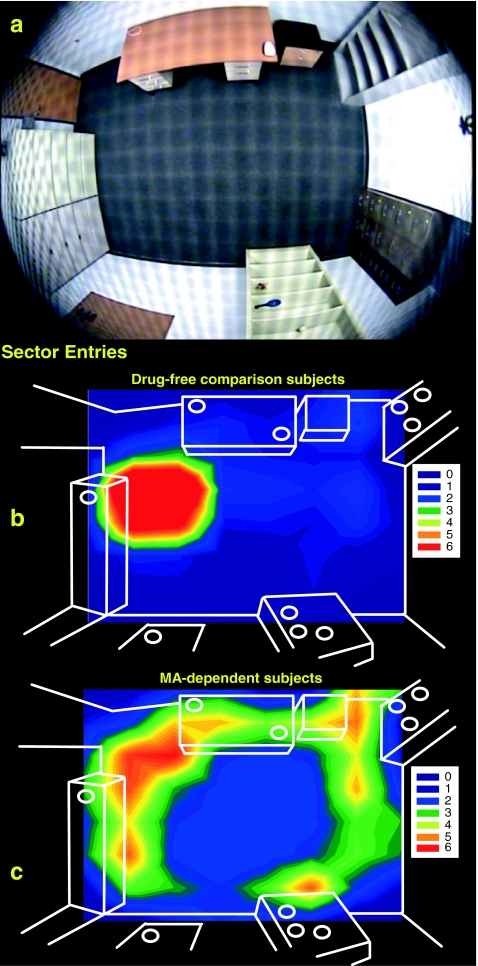
Rationale: Methamphetamine (MA) is an addictive psychostimulant associated with neurocognitive impairment, including inhibitory deficits characterized by a reduced ability to control responses to stimuli. While various domains of inhibition such as exaggerated novelty seeking and perseveration have been assessed in rodents by quantifying activity in open-field tests, similar models have not been utilized in human substance abusers. We recently developed a cross-species translational human open-field paradigm, the human behavior pattern monitor (hBPM), consisting of an unfamiliar room containing novel and engaging objects. Previous work demonstrated that manic bipolar subjects exhibit a disinhibited pattern of behavior in the hBPM characterized by increased object interactions.
Objectives: In the current study, we examined the effect of MA dependence on inhibitory deficits using this paradigm. hBPM activity and object interactions were quantified in 16 abstinent MA-dependent individuals and 18 matched drug-free comparison subjects. The Wisconsin card sorting task (WCST) and the positive and negative syndrome scale (PANSS) were administered to assess executive function and psychopathology.
Results: MA-dependent participants exhibited a significant increase in total object interactions, time spent with objects, and perseverative object interactions relative to comparison subjects. Greater object interaction was associated with impaired performance on the WCST, higher PANSS scores, and more frequent MA use in the past year.
Conclusions: Abstinent MA-dependent individuals exhibited impaired inhibition in the hBPM, displaying increased interaction with novel stimuli. Utilization of this measure may enable assessment of inhibitory deficits relevant to drug-seeking behavior and facilitate development of intervention methods to reduce high-risk conduct in this population.
Figures
References
-
- Bing EG, Burnam MA, Longshore D, Fleishman JA, Sherbourne CD, London AS, Turner BJ, Eggan F, Beckman R, Vitiello B, Morton SC, Orlando M, Bozzette SA, Ortiz-Barron L, Shapiro M. Psychiatric disorders and drug use among human immunodeficiency virus-infected adults in the United States. Arch Gen Psychiatry. 2001;58:721–728. doi: 10.1001/archpsyc.58.8.721. - DOI - PubMed
-
- Carver CS, White TL. Behavioral inhibition, behavioral activation, and affective responses to impending reward and punishment: the BIS/BAS Scales. J Pers Soc Psychol. 1994;67:319–333. doi: 10.1037/0022-3514.67.2.319. - DOI
-
- Cherner M, Suarez P, Casey C, Deiss R, Letendre S, Marcotte T, Vaida F, Atkinson JH, Grant I, Heaton RK. Methamphetamine use parameters do not predict neuropsychological impairment in currently abstinent dependent adults. Drug Alcohol Depend. 2010;106:154–163. doi: 10.1016/j.drugalcdep.2009.08.010. - DOI - PMC - PubMed
Publication types
MeSH terms
Substances
Grants and funding
LinkOut - more resources
Full Text Sources
Medical
Miscellaneous
