. 2011 Jan 31;3(1):1.
doi: 10.1186/1757-4749-3-1.

Acne vulgaris, probiotics and the gut-brain-skin axis - back to the future?

Affiliations

Acne vulgaris, probiotics and the gut-brain-skin axis - back to the future?

Whitney P Bowe et al. Gut Pathog. .

Abstract

Over 70 years have passed since dermatologists John H. Stokes and Donald M. Pillsbury first proposed a gastrointestinal mechanism for the overlap between depression, anxiety and skin conditions such as acne. Stokes and Pillsbury hypothesized that emotional states might alter the normal intestinal microflora, increase intestinal permeability and contribute to systemic inflammation. Among the remedies advocated by Stokes and Pillsbury were Lactobacillus acidophilus cultures. Many aspects of this gut-brain-skin unifying theory have recently been validated. The ability of the gut microbiota and oral probiotics to influence systemic inflammation, oxidative stress, glycemic control, tissue lipid content and even mood itself, may have important implications in acne. The intestinal microflora may also provide a twist to the developing diet and acne research. Here we provide a historical perspective to the contemporary investigations and clinical implications of the gut-brain-skin connection in acne.


Figures
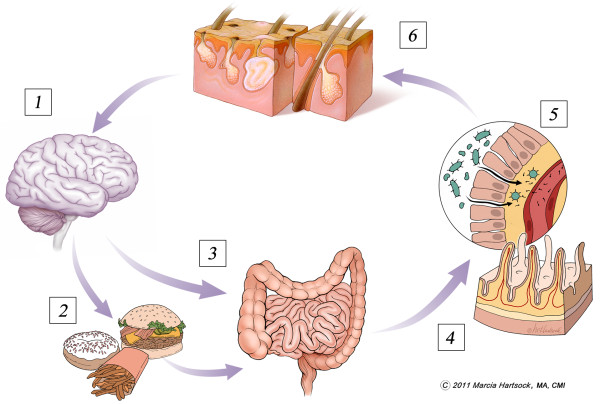
Figure 1
Figure 1
Potential Pathways of the Gut-Brain-Skin Axis in Acne Vulgaris: [1] Psychological distress alone or in combination with [2] high fat diet, processed comfort foods devoid of fiber, cause alterations to [3] gut motility and microbiota profile [4]. Loss of normal microbial biofilm (Bifidobacterium in particular) causes intestinal permeability and endotoxins gain systemic access [5]. Burden of inflammation and oxidative stress is increased, substance P is elevated, insulin sensitivity is decreased due to endotoxemia [6]. In those genetically susceptible to acne vulgaris, this cascade increases the likelihood of excess sebum production, exacerbations in acne and additional psychological distress. Both probiotics and antimicrobials may play a role in cutting off this cycle at the gut level.

References

    1. Uhlenhake E, Yentzer BA, Feldman SR. Acne vulgaris and depression: a retrospective examination. J Cosmet Dermatol. 2010;9:59–63. doi: 10.1111/j.1473-2165.2010.00478.x. - DOI - PubMed
    1. Loney T, Standage M, Lewis S. Not just 'skin deep': psychosocial effects of dermatological-related social anxiety in a sample of acne patients. J Health Psychol. 2008;13:47–54. doi: 10.1177/1359105307084311. - DOI - PubMed
    1. Magin P, Adams J, Heading G, Pond D, Smith W. Psychological sequelae of acne vulgaris: results of a qualitative study. Can Fam Phys. 2006;52:978–9. - PMC - PubMed
    1. Purvis D, Robinson E, Merry S, Watson P. Acne, anxiety, depression and suicide in teenagers: a cross-sectional survey of New Zealand secondary school students. J Paediat Child Health. 2006;42:793–6. doi: 10.1111/j.1440-1754.2006.00979.x. - DOI - PubMed
    1. Rapp DA, Brenes GA, Feldman SR, Fleischer AB, Graham GF, Daily M, Rapp SR. Anger and acne: implications for quality of life, patient satisfaction and clinical care. Br J Dermatol. 2004;151:183–9. doi: 10.1111/j.1365-2133.2004.06078.x. - DOI - PubMed

LinkOut - more resources
