. 2011 Jan 25;6(1):e16143.
doi: 10.1371/journal.pone.0016143.

The functional consequences of mutualistic network architecture

Affiliations

The functional consequences of mutualistic network architecture

José M Gómez et al. PLoS One. .

Abstract

The architecture and properties of many complex networks play a significant role in the functioning of the systems they describe. Recently, complex network theory has been applied to ecological entities, like food webs or mutualistic plant-animal interactions. Unfortunately, we still lack an accurate view of the relationship between the architecture and functioning of ecological networks. In this study we explore this link by building individual-based pollination networks from eight Erysimum mediohispanicum (Brassicaceae) populations. In these individual-based networks, each individual plant in a population was considered a node, and was connected by means of undirected links to conspecifics sharing pollinators. The architecture of these unipartite networks was described by means of nestedness, connectivity and transitivity. Network functioning was estimated by quantifying the performance of the population described by each network as the number of per-capita juvenile plants produced per population. We found a consistent relationship between the topology of the networks and their functioning, since variation across populations in the average per-capita production of juvenile plants was positively and significantly related with network nestedness, connectivity and clustering. Subtle changes in the composition of diverse pollinator assemblages can drive major consequences for plant population performance and local persistence through modifications in the structure of the inter-plant pollination networks.


Conflict of interest statement

Competing Interests: The authors have declared that no competing interests exist.

Figures

Figure 1
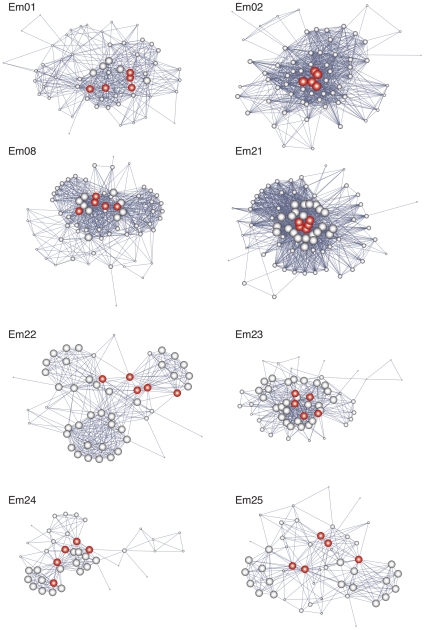
Figure 1. The topology of individual-based ecological networks.
Unipartite networks depicting the pattern of shared pollinators by individual plants (nodes) in each population studied (Em01 to Em25). The links among nodes depict the pattern of shared pollinator species (described in Fig. S1); i.e., two nodes are linked whenever they share a pollinator species. The network representation (layout) was generated with the Kamada-Kawai energy-minimization algorithm . Each node represents an individual plant. In green, the most connected plants ( = hubs) in each population. The size of the node refers to the overall flower number displayed by that individual.
Figure 2
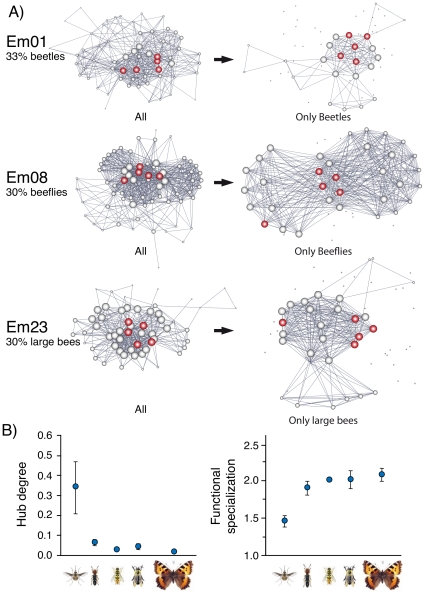
Figure 2. Pollinator effects on network topology.
a) Expected changes in network connectivity due to different functional groups of pollinators. Network graphs are depicted for three example populations, illustrating the relationships among individual plants when all pollinator species are included (left) and when only specific subsets are considered (right). Note how the “hub” plants spread all over the partial networks. b) Differences among pollinator type (from left to right, beeflies, beetles, hoverflies, bees and butterflies) in hub degree (F4,16 = 21.83, P = 0.0001) and functional specialization (F4,16 = 4.13, P = 0.036).
Figure 3
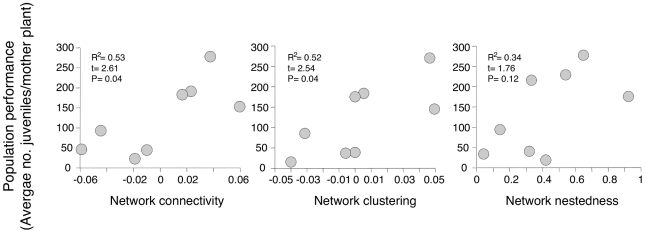
Figure 3. Relationship between network architecture and function.
The complex networks of pollinator-mediated interactions among individual plants (e.g., mating events) benefit E. mediohispanicum population performance. Populations organized around a core of highly interactive plants (high nestedness) with individuals tightly connected through shared pollinators (high connectivity) within distinct groups exhibiting similar pattern of interactions (high clustering) have high performance (number of juveniles produced per plant).

References

    1. Vitkup D, Kharchenko P, Wagner A. Influence of metabolic network structure and function on enzyme evolution. . Genom Biol. 2006;7:R39. - PMC - PubMed
    1. Greenberg AJ, Stockwell SR, Clark AG. Evolutionary Constraint and Adaptation in the Metabolic Network of Drosophila. . Mol Biol Evol. 2008;25:2537–2546. - PMC - PubMed
    1. Parker D. Complexities and uncertainties of neuronal function. . Philos Trans R Soc Lond B Biol Sci. 2006;361:81–99. - PMC - PubMed
    1. Fu BY, et al. Complex genetic networks underlying the defensive system of rice (Oryza sativa L.) to Xanthomonas oryzae pv. Oryzae Proc Natl Acad Sci. 2006;103:7994–7999. - PMC - PubMed
    1. Leclerc RT. Survival of the sparsest: robust gene networks are parsimonious. . Mol Syst Biol. 2008;4:213–218. - PMC - PubMed

Publication types