


Isolation and genetic characteristics of human genotype 1 Japanese encephalitis virus, China, 2009
- PMID: 21283590
- PMCID: PMC3026811
- DOI: 10.1371/journal.pone.0016418
Isolation and genetic characteristics of human genotype 1 Japanese encephalitis virus, China, 2009
Abstract
Background: Several studies have shown that the predominant genotype of Chinese Japanese encephalitis virus (JEV) is evolving from genotype 3 to genotype 1. However, in recent years, almost all genotype 1 isolates were from mosquitoes, and genotype 1 has been less associated with human disease than genotype 3. This study reports the isolation of human genotype 1 JEV and its genetic characteristics to provide additional insights into human JE pathogens that are currently circulating in China.
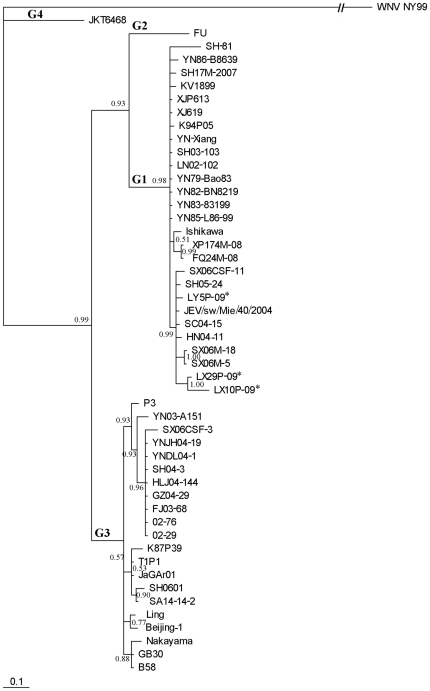
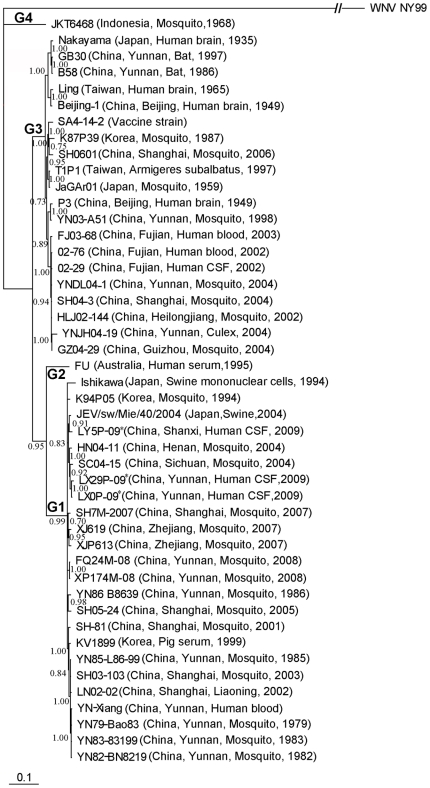
Methods and results: In 2009, 31 cerebrospinal fluid samples were collected from patients living in Yunnan and Shanxi provinces and were used to inoculate Aedes albopictus C6/36 cells for virus isolation. The JEV strains were identified using immunofluorescent assays and the reverse transcription-polymerase chain reaction. Phylogenetic analyses based on the partial capsid/pre-membrane and full envelope (E) sequences were performed using Clustalx 1.8 software. Three JEV isolates were obtained from a 4-year-old girl and a 2-year-old boy living in Yunnan and an 82-year-old woman in Shanxi. The boy had been immunized with one dose of JE live attenuated vaccine. New isolates were grouped into genotype 1. Amino acid sequence for the viral E protein indicated 95% to 100% identity with each other and with other JEV strains. When compared with a consensus sequence of E protein, two amino acid substitutions were found: Ser(E-123)-Asn in the two Yunnan isolates and Lys(E-166)-Arg in the Shanxi isolate.
Conclusions: Our findings indicate that the genotype 1 of JEV is causing human infections in China. Our observation of a previously vaccinated boy developing JE from genotype 1 virus infection also calls for more detailed studies, both in vitro and in vivo neutralization tests as well as active surveillance, to examine the possibility of a lack of complete protection conferred by the live attenuated JE vaccine against genotype 1 virus.
Conflict of interest statement
Figures
References
Publication types
MeSH terms
Substances
LinkOut - more resources
Full Text Sources
