


Transgenic biofortification of the starchy staple cassava (Manihot esculenta) generates a novel sink for protein
- PMID: 21283593
- PMCID: PMC3026814
- DOI: 10.1371/journal.pone.0016256
Transgenic biofortification of the starchy staple cassava (Manihot esculenta) generates a novel sink for protein
Retraction in
-
Retraction: Transgenic biofortification of the starchy staple cassava (Manihot esculenta) generates a novel sink for protein.PLoS One. 2012;7(9):10.1371/annotation/9081d3ad-e74f-47f1-a722-cf02048a14c5. doi: 10.1371/annotation/9081d3ad-e74f-47f1-a722-cf02048a14c5. Epub 2012 Sep 7. PLoS One. 2012. PMID: 22970110 Free PMC article. No abstract available.
Abstract
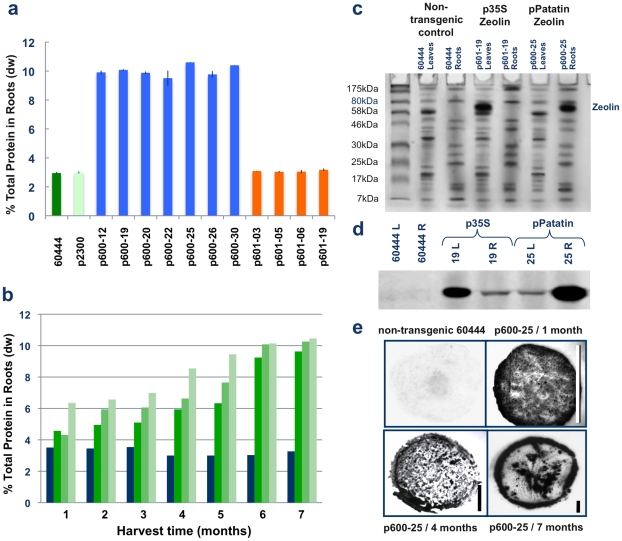
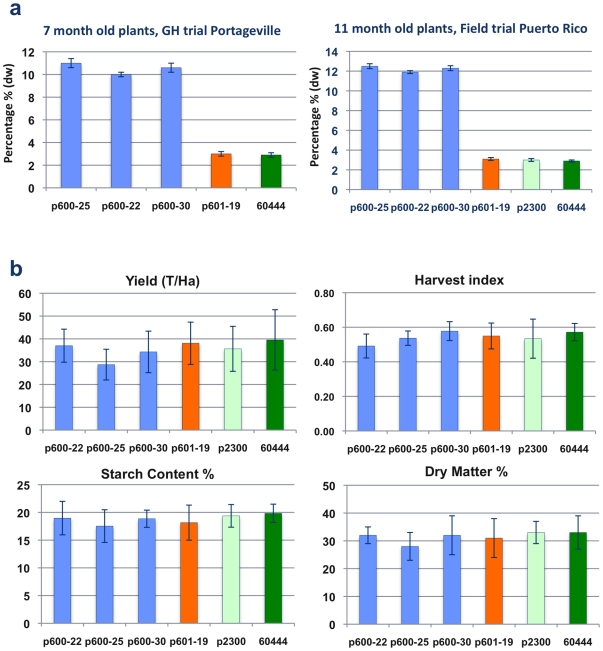
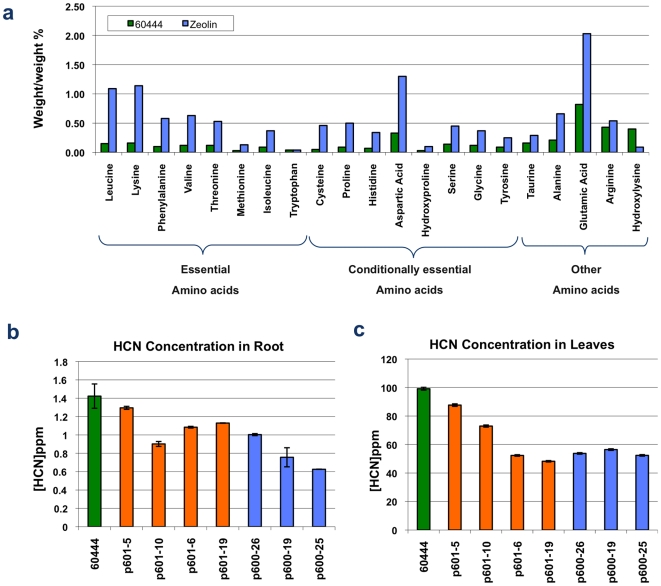
Although calorie dense, the starchy, tuberous roots of cassava provide the lowest sources of dietary protein within the major staple food crops (Manihot esculenta Crantz). (Montagnac JA, Davis CR, Tanumihardjo SA. (2009) Compr Rev Food Sci Food Saf 8:181-194). Cassava was genetically modified to express zeolin, a nutritionally balanced storage protein under control of the patatin promoter. Transgenic plants accumulated zeolin within de novo protein bodies localized within the root storage tissues, resulting in total protein levels of 12.5% dry weight within this tissue, a fourfold increase compared to non-transgenic controls. No significant differences were seen for morphological or agronomic characteristics of transgenic and wild type plants in the greenhouse and field trials, but relative to controls, levels of cyanogenic compounds were reduced by up to 55% in both leaf and root tissues of transgenic plants. Data described here represent a proof of concept towards the potential transformation of cassava from a starchy staple, devoid of storage protein, to one capable of supplying inexpensive, plant-based proteins for food, feed and industrial applications.
Conflict of interest statement
Figures
References
-
- FAO. FAOSTAT. 2010. ( http://faostat.fao.org/)
-
- Sheffield J, Taylor N, Fauquet C, Chen S. The cassava (Manihot esculenta Crantz) root proteome: protein identification and differential expression. Proteomics. 2006;6:1588–1598. - PubMed
-
- Young VR, Pellett PL. Plant proteins in relation to human protein and amino acid nutrition. Am J Clin Nutr. 1994;59(5 Suppl):1203S–1212S. - PubMed
-
- Montagnac JA, Davis CR, Tanumihardjo SA. Nutritional value of cassava for use as a staple food and recent advances for improvement. Compr Rev Food Sci Food Saf. 2009;8:181–194. - PubMed
-
- Omole T. Cassava in the nutrition of layers. Nastle B, Graham M, editors. Cassava as Animal Feed Workshop. 1977;51–55 (University of Guelph, Ottawa, Canada), Vol IDRC-095e.
Publication types
MeSH terms
Substances
LinkOut - more resources
Full Text Sources
Medical
