. 2011 Jan 20;6(1):e16404.
doi: 10.1371/journal.pone.0016404.

The mitochondrial genome of the legume Vigna radiata and the analysis of recombination across short mitochondrial repeats

Affiliations

The mitochondrial genome of the legume Vigna radiata and the analysis of recombination across short mitochondrial repeats

Andrew J Alverson et al. PLoS One. .

Abstract

The mitochondrial genomes of seed plants are exceptionally fluid in size, structure, and sequence content, with the accumulation and activity of repetitive sequences underlying much of this variation. We report the first fully sequenced mitochondrial genome of a legume, Vigna radiata (mung bean), and show that despite its unexceptional size (401,262 nt), the genome is unusually depauperate in repetitive DNA and "promiscuous" sequences from the chloroplast and nuclear genomes. Although Vigna lacks the large, recombinationally active repeats typical of most other seed plants, a PCR survey of its modest repertoire of short (38-297 nt) repeats nevertheless revealed evidence for recombination across all of them. A set of novel control assays showed, however, that these results could instead reflect, in part or entirely, artifacts of PCR-mediated recombination. Consequently, we recommend that other methods, especially high-depth genome sequencing, be used instead of PCR to infer patterns of plant mitochondrial recombination. The average-sized but repeat- and feature-poor mitochondrial genome of Vigna makes it ever more difficult to generalize about the factors shaping the size and sequence content of plant mitochondrial genomes.


Conflict of interest statement

Competing Interests: The authors have declared that no competing interests exist.

Figures

Figure 1
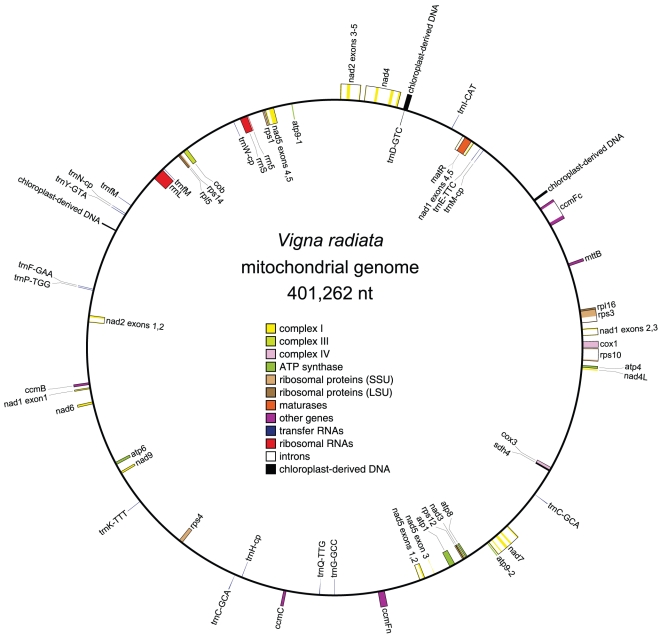
Figure 1. The circular-mapping mitochondrial genome of Vigna radiata.
Features on transcriptionally clockwise and counter-clockwise strands are drawn on the inside and outside of the circle, respectively.
Figure 2
Figure 2. Coverage by repetitive and non-repetitive sequences in fully sequenced seed plant mitochondrial genomes.
Genome coverage by repeats <1 kb in length is shown in blue, and coverage by repeats ≥1 kb in length is shown in red. Short repeats are sometimes contained, either partly or entirely, within large repeats; genome coverage by these sites is shown in green. Coverage by non-repetitive portions of the genome is shown in white, so the repetitive and non-repetitive fractions sum to the entire size of the genome. The number of repeats <1 kb and ≥1 kb is indicated directly above each bar. These numbers over-estimate the number of unique repeat coordinates in the genome (see Materials and Methods for details). The four Zea genomes are: 1, Zea mays subsp. mays; 2, Zea mays subsp. parviglumis; 3, Zea perennis; and 4, Zea luxurians.
Figure 3
Figure 3. Frequency distribution of repeat lengths in the mitochondrial genome of Vigna radiata.
Figure 4
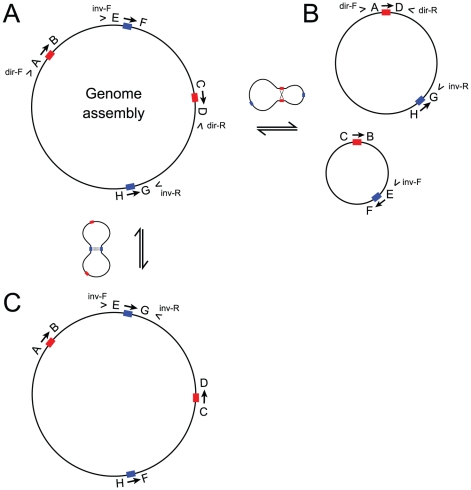
Figure 4. PCR strategy for detecting intramolecular recombination across mitochondrial repeats.
Arrows show the orientations of one direct (red) and one inverted (blue) repeat. Arrowheads show the locations and orientations of PCR primers used to detect mitochondrial recombination, relative to the main genome assembly (A). Recombination across a direct repeat (red) divides the genome into two circular subgenomic molecules. The altered arrangement of primers dir-F and dir-R permits PCR-based detection of recombinant product A→D (B). Recombination across an inverted repeat (blue) inverts the intervening sequences, enabling PCR amplification of recombinant product E→G with primers inv-F and inv-R (C).

References

    1. Alverson AJ, Wei XX, Rice DW, Stern DB, Barry K, et al. Insights into the evolution of mitochondrial genome size from complete sequences of Citrullus lanatus and Cucurbita pepo (Cucurbitaceae). Molecular Biology and Evolution. 2010;27:1436–1448. - PMC - PubMed
    1. Allen JO, Fauron CM, Minx P, Roark L, Oddiraju S, et al. Comparisons among two fertile and three male-sterile mitochondrial genomes of maize. Genetics. 2007;177:1173–1192. - PMC - PubMed
    1. Lonsdale DM, Hodge TP, Fauron CM. The physical map and organisation of the mitochondrial genome from the fertile cytoplasm of maize. Nucleic Acids Res. 1984;12:9249–9261. - PMC - PubMed
    1. Palmer JD, Shields CR. Tripartite structure of the Brassica campestris mitochondrial genome. Nature. 1984;307:437–440.
    1. Palmer JD, Herbon LA. Plant mitochondrial DNA evolves rapidly in structure, but slowly in sequence. Journal of Molecular Evolution. 1989;28:87–97. - PubMed

Publication types

LinkOut - more resources