. 2011 Jan 20;7(1):e1001259.
doi: 10.1371/journal.ppat.1001259.

Selective C-Rel activation via Malt1 controls anti-fungal T(H)-17 immunity by dectin-1 and dectin-2

Affiliations

Selective C-Rel activation via Malt1 controls anti-fungal T(H)-17 immunity by dectin-1 and dectin-2

Sonja I Gringhuis et al. PLoS Pathog. .

Abstract

C-type lectins dectin-1 and dectin-2 on dendritic cells elicit protective immunity against fungal infections through induction of T(H)1 and T(H)-17 cellular responses. Fungal recognition by dectin-1 on human dendritic cells engages the CARD9-Bcl10-Malt1 module to activate NF-κB. Here we demonstrate that Malt1 recruitment is pivotal to T(H)-17 immunity by selective activation of NF-κB subunit c-Rel, which induces expression of T(H)-17-polarizing cytokines IL-1β and IL-23p19. Malt1 inhibition abrogates c-Rel activation and T(H)-17 immunity to Candida species. We found that Malt1-mediated activation of c-Rel is similarly essential to induction of T(H)-17-polarizing cytokines by dectin-2. Whereas dectin-1 activates all NF-κB subunits, dectin-2 selectively activates c-Rel, signifying a specialized T(H)-17-enhancing function for dectin-2 in anti-fungal immunity by human dendritic cells. Thus, dectin-1 and dectin-2 control adaptive T(H)-17 immunity to fungi via Malt1-dependent activation of c-Rel.


Conflict of interest statement

The authors have declared that no competing interests exist.

Figures
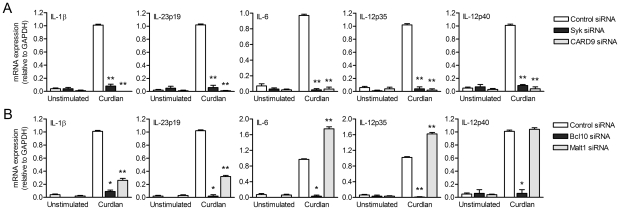
Figure 1
Figure 1. Dectin-1-induced cytokine expression requires Syk, CARD9 and Bcl10, whereas Malt1-mediated signaling enhances IL-1β and IL-23p19, but decreases IL-6 and IL-12p35 expression.
(A and B) Quantitative real-time PCR for indicated mRNAs in curdlan-stimulated DCs after Syk, CARD9 (A), Bcl10 and Malt1 (B) silencing by RNA interference (siRNA). Expression is normalized to GAPDH and set at 1 in curdlan-stimulated cells. Data are mean ± s.d. of four independent experiments, *p<0.05 and **p<0.01 (Student's t-test).
Figure 2
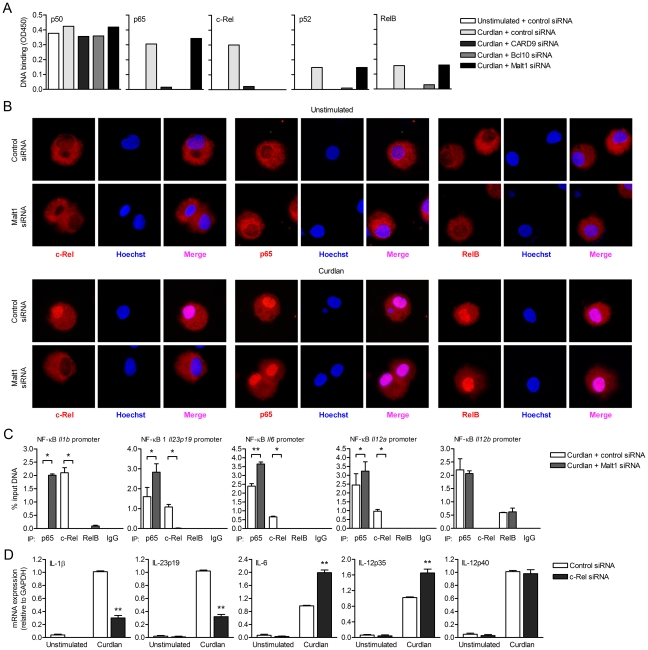
Figure 2. Malt1 signaling by dectin-1 is specifically required for c-Rel-dependent cytokine expression.
(A) DNA binding of NF-κB subunits in nuclear extracts of curdlan-stimulated DCs after Malt1 silencing by RNA interference (siRNA). Graphs are representative of three independent experiments. (B) Translocation of c-Rel, p65 or RelB (red) into the nucleus (Hoechst staining, blue; colocalization (Merge, pink)) in curdlan-stimulated DCs after Malt1 silencing. Stainings are representative of two independent experiments. (C) ChIP assays were performed to determine binding of p65, c-Rel and RelB to NF-κB binding motifs of the Il1b, Il23p19, Il12a, Il12b and Il6 promoters. Protein-DNA complexes were immunoprecipitated from sheared chromatin isolated from para-formaldehyde-fixed curdlan-stimulated DCs after Malt1 silencing by RNA interference (siRNA). Immunoprecipitation with mouse IgG served as a negative control. Quantitative real-time PCR reactions for indicated regions were performed. Levels are normalized with respect to the ‘input DNA’ sample, which had not undergone immunoprecipitation; results are expressed as the % input DNA. Data are mean ± s.d. of two independent experiments, *p<0.05 and **p<0.01 (Student's t-test). (D) Quantitative real-time PCR for indicated mRNAs in curdlan-stimulated DCs after c-Rel silencing by RNA interference (siRNA). Expression is normalized to GAPDH and set at 1 in curdlan-stimulated cells. Data are mean ± s.d. of four independent experiments, **p<0.01 (Student's t-test).
Figure 3
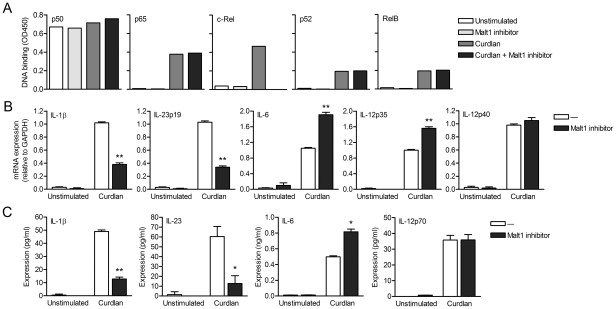
Figure 3. Malt1 paracaspase activity is required for c-Rel activation and cytokine induction by dectin-1.
(A) DNA binding of NF-κB subunits in nuclear extracts of curdlan-stimulated DCs after inhibition of Malt1 paracaspase activity by z-VRPR-FMK. Data are representative of three independent experiments. (B) Quantitative real-time PCR for indicated mRNAs in curdlan-stimulated DCs after Malt1 paracaspase inhibition. Expression is normalized to GAPDH and set at 1 in curdlan-stimulated cells. Data are mean ± s.d. of three independent experiments, **p<0.01 (Student's t-test). (C) Cytokine production was determined by ELISA in supernatants of DCs stimulated with curdlan in the absence or presence of Malt1 paracaspase inhibitor. Data are mean ± s.d. of duplicate cultures, and are representative of five independent experiments, *p<0.05 and **p<0.01 (Student's t-test).
Figure 4
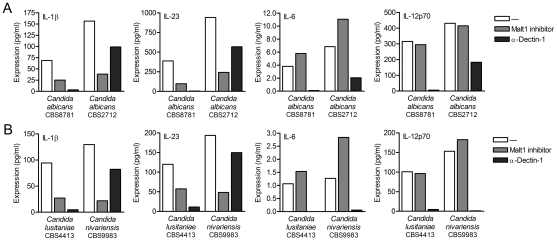
Figure 4. Malt activation controls IL-1β and IL-23 production in response to Candida spp.
(A and B) Cytokine production was determined by ELISA in supernatants of DCs stimulated with Candida albicans spp. (A), C. nivariensis or C. lusitaniae (B) in the absence or presence of Malt1 paracaspase inhibitor z-VRPR-FMK or blocking dectin-1 antibodies. Data are representative of three independent experiments.
Figure 5
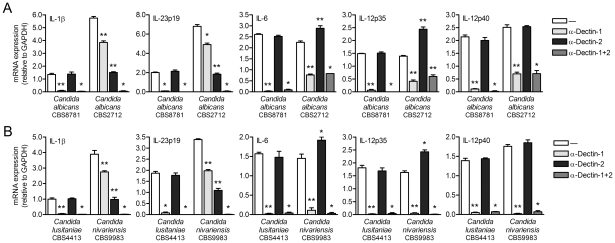
Figure 5. Dectin-1 and dectin-2 contribute to Candida spp.-induced cytokine expression.
(A and B) Quantitative real-time PCR for indicated mRNAs in DCs stimulated with Candida albicans spp. (A), C. nivariensis or C. lusitaniae (B) in the absence or presence of blocking antibodies against dectin-1 and/or dectin-2. Expression is normalized to GAPDH and set at 1 in curdlan-stimulated cells. Data are mean ± s.d. of four independent experiments, *p<0.05 and **p<0.01 (Student's t-test).
Figure 6
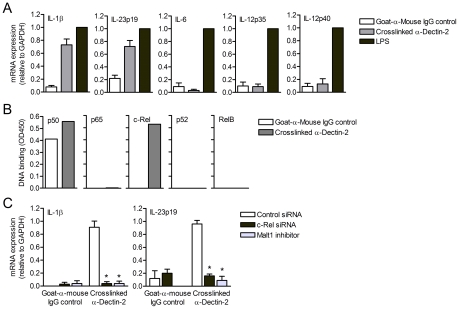
Figure 6. Dectin-2 signaling induces Malt1- and c-Rel-dependent IL-1β and IL-23p19 expression.
(A) Quantitative real-time PCR for indicated mRNAs in DCs stimulated with crosslinked dectin-2 antibodies or LPS. In (A–C), goat-anti-mouse IgG was coated as a control for aspecific activation. Expression is normalized to GAPDH and set at 1 in LPS-stimulated cells. Data are mean ± s.d. of at least four independent experiments. (B) DNA binding of NF-κB subunits in nuclear extracts of dectin-2-triggered DCs. Data are representative of two independent experiments. (C) Quantitative real-time PCR for indicated mRNAs in DCs stimulated with crosslinked dectin-2 antibodies after c-Rel silencing or Malt1 inhibition with paracaspase inhibitor z-VRPR-FMK. Goat-anti-mouse IgG was coated as a control for non-specific activation. Expression is normalized to GAPDH and set at 1 in LPS-stimulated cells. Data are mean ± s.d. of two independent experiments, *p<0.05 (Student's t-test).
Figure 7
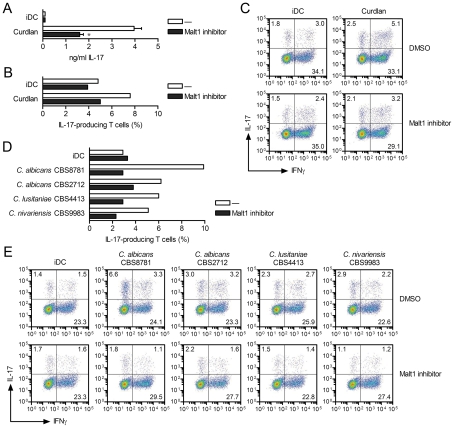
Figure 7. Malt1 signaling skews T helper cell polarization towards TH-17.
(A–E) T helper cell polarization was assessed by ELISA by measuring IL-17 production in supernatants at day 5 (A) or by flow cytometry by staining for intracellular IL-17 or IFNγ expression at day 12 after PMA plus ionomycin restimulation (B–E), after co-culture of memory CD4+ T cells with DCs left unstimulated (iDC) or primed with curdlan (A–C) or Candida spp. (D and E) in the absence or presence of Malt1 paracaspase inhibitor z-VRPR-FMK. In (B) and (D) the percentage of IL-17-producing T cells are shown, corresponding to the upper left and right quadrants of (C) and (E), respectively. Data are mean ± s.d. of duplicate cultures, *p<0.05 (Student's t-test), and are representative of three (A) or two (B–E) independent experiments.

References

    1. Romani L. Cell mediated immunity to fungi: a reassessment. Med Mycol. 2008;46:515–529. - PubMed
    1. Ouyang W, Kolls JK, Zheng Y. The biological functions of T helper 17 cell effector cytokines in inflammation. Immunity. 2008;28:454–467. - PMC - PubMed
    1. Louten J, Boniface K, de Waal Malefyt R. Development and function of TH17 cells in health and disease. J Allergy Clin Immunol. 2009;123:1004–1011. - PubMed
    1. Romani L. Immunity to fungal infections. Nat Rev Immunol. 2004;4:11–23. - PubMed
    1. Geijtenbeek TBH, Gringhuis SI. Signalling through C-type lectin receptors: shaping immune responses. Nat Rev Immunol. 2009;9:465–479. - PMC - PubMed

Publication types

MeSH terms