


Role of intestinal hydrolase in the absorption of prenylated flavonoids present in Yinyanghuo
- PMID: 21285919
- PMCID: PMC6259646
- DOI: 10.3390/molecules16021336
Role of intestinal hydrolase in the absorption of prenylated flavonoids present in Yinyanghuo
Abstract
Purpose: Yinyanghuo (Herba Epimdii) is a traditional Chinese herb containing prenylated flavonoids as its active constituents. The aim of this study was to examine the significance of the intestinal hydrolysis of prenylated flavonoids by lactase phlorizin hydrolase (LPH), an enzyme at the brush border membrane of intestinal cells.
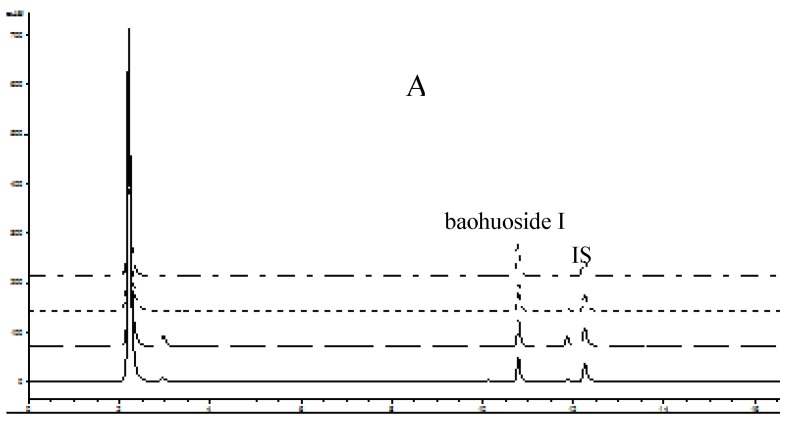
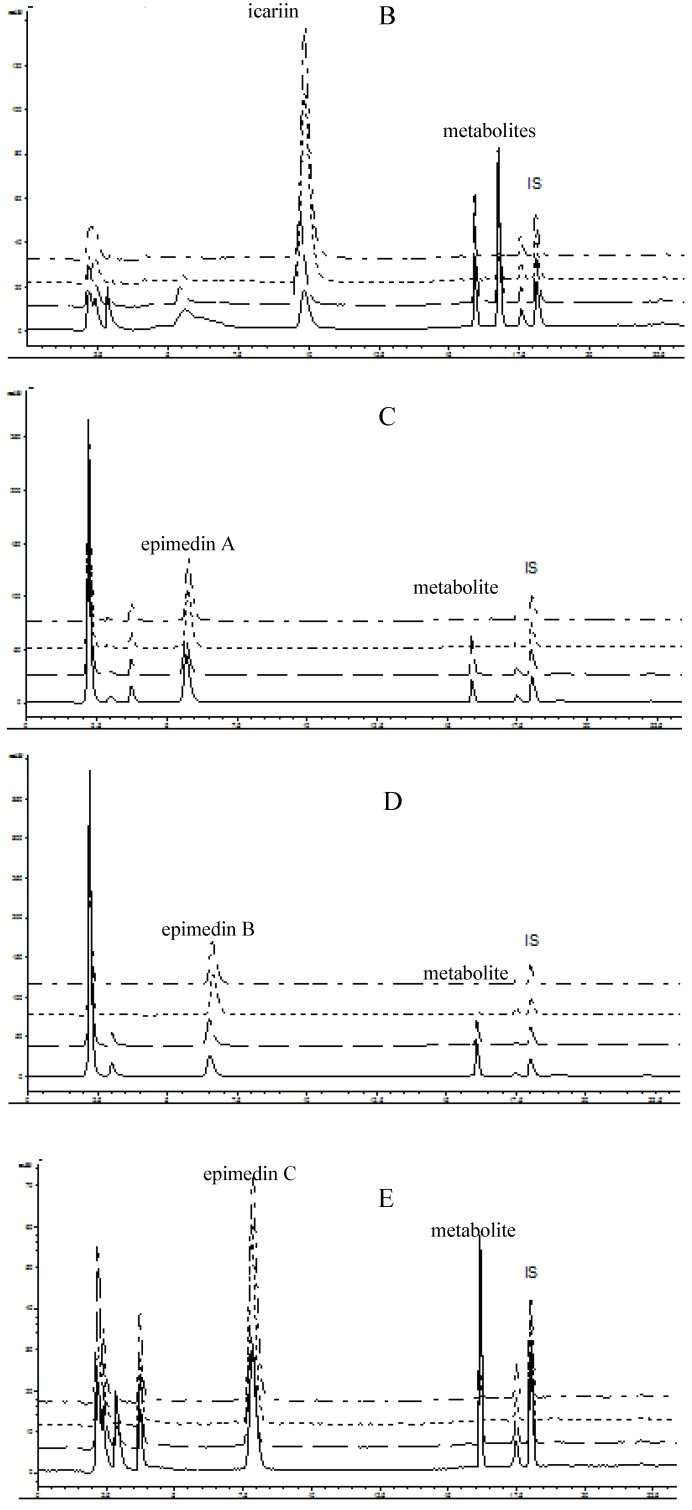
Methods: A four-site perfused rat intestinal model was used. The concentration of the flavonoids of interest and their metabolites in different intestinal segements were analyzed by HPLC, and the apparent permeabilities were calculated. A lactase phlorizin hydrolase inhibitor (gluconolactone) was employed to investigate the mechanism of the intestinal absorption, and the metabolites of the four flavonoids were identified using LC/MS/MS.
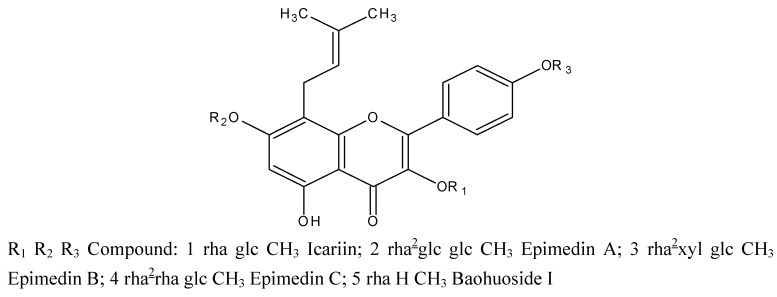
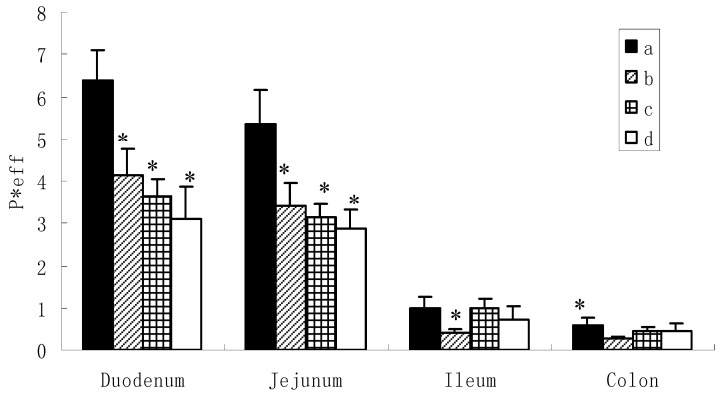
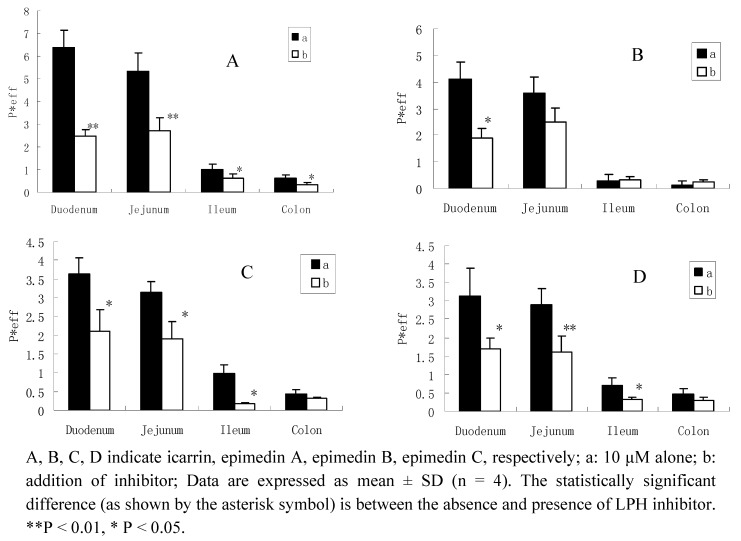
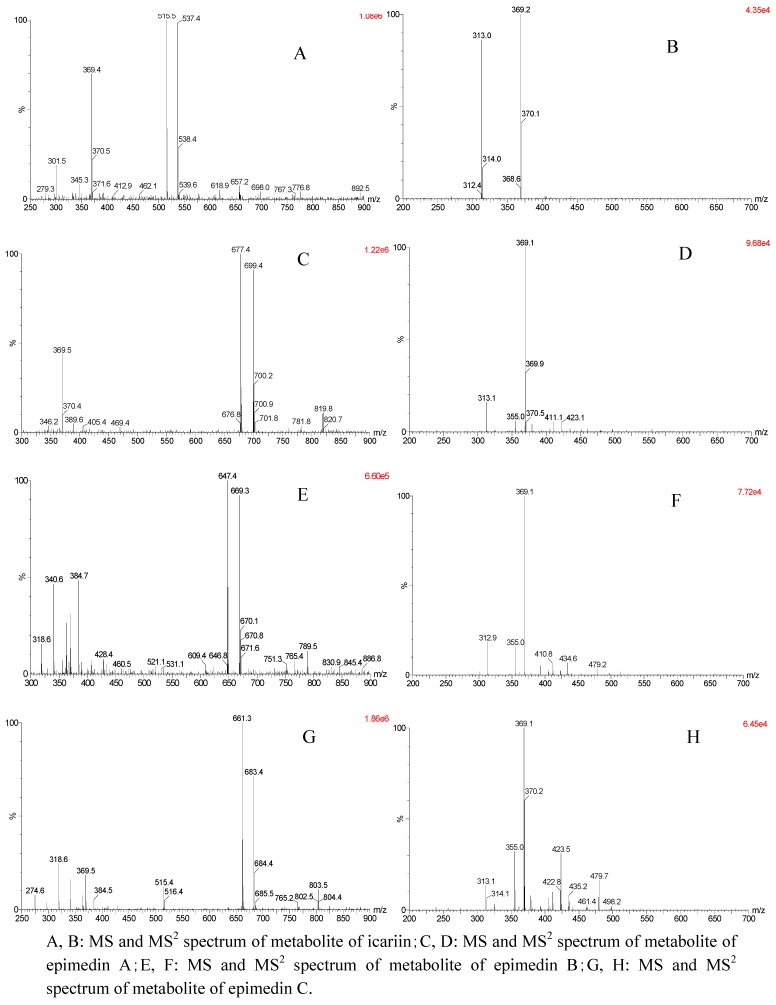
Results: Diglycosides (icariin) or triglycosides (epimedin A, epimedin B, and epimedin C) were hydrolyzed rapidly in duodenum and jejunum producing one or two metabolites, while a monoglycoside (baohuoside I) was absorbed directly. When co-perfused with glucono-lactone, both the hydrolysis of diglycosides and triglycosides were significantly inhibited, with inhibition rates for icariin (62%, 50%, 40%, 46%), epimedin A, (55%, 26%, 21%, 14%); epimedin B (42%, 40%, 74%, 22%), and epimedin C (42%, 40%, 52%, 35%) in duodenum, jejunum, ileum, and colon, respectively. Also the metabolites of icariin, epimedin A, epimedin B, and epimedin C were identified as baohuoside I (one of two), sagittatoside A, sagittatoside B, and 2"-O-rhamnosylicariside II, respectively.
Conclusions: The results showed that lactase phlorizin hydrolase was a major determinant of the intestinal absorption of prenylated flavonoids present in Yinyanghuo.
Figures
References
-
- National Commission of Chinese Pharmacopoeia . Pharmacopoeia of the Peoples Republic of China. Chemical Industry Press; Beijing, China: 2005. p. 229.
-
- Guo B.L., Xiao P.G. Comment on main species of Herba Epimedii. Chin. J. Chin. Mater. Med. 2003;28:303–307. - PubMed
-
- Zhao H.Y., Sun J.H., Fan M.X., Fan L., Zhou L., Li Z., Han J., Wang B.R., Guo D.A. Analysis of phenolic compounds in Epimedium plants using liquid chromatography coupled with electrospray ionization mass spectrometry. J. Chromatogr. A. 2008;1190:157–181. doi: 10.1016/j.chroma.2008.02.109. - DOI - PubMed
Publication types
MeSH terms
Substances
Grants and funding
LinkOut - more resources
Full Text Sources
