


Targeted inhibition of mitochondrial Hsp90 suppresses localised and metastatic prostate cancer growth in a genetic mouse model of disease
- PMID: 21285984
- PMCID: PMC3049604
- DOI: 10.1038/bjc.2011.9
Targeted inhibition of mitochondrial Hsp90 suppresses localised and metastatic prostate cancer growth in a genetic mouse model of disease
Abstract
Background: The molecular chaperone heat shock protein-90 (Hsp90) is a promising cancer drug target, but current Hsp90-based therapy has so far shown limited activity in the clinic.
Methods: We tested the efficacy of a novel mitochondrial-targeted, small-molecule Hsp90 inhibitor, Gamitrinib (GA mitochondrial matrix inhibitor), in the Transgenic Adenocarcinoma of the Mouse Prostate (TRAMP) model. The TRAMP mice receiving 3-week or 5-week systemic treatment with Gamitrinib were evaluated for localised or metastatic prostate cancer, prostatic intraepithelial neoplasia (PIN) or localised inflammation using magnetic resonance imaging, histology and immunohistochemistry. Treatment safety was assessed histologically in organs collected at the end of treatment. The effect of Gamitrinib on mitochondrial dysfunction was studied in RM1 cells isolated from TRAMP tumours.
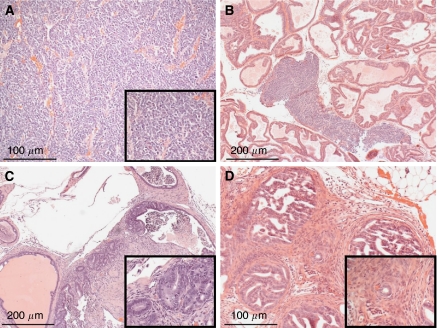
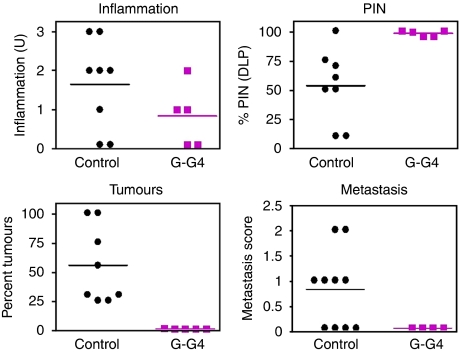
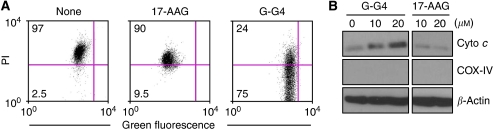
Results: Systemic administration of Gamitrinib to TRAMP mice inhibited the formation of localised prostate tumours of neuroendocrine or adenocarcinoma origin, as well as metastatic prostate cancer to abdominal lymph nodes and liver. The Gamitrinib treatment had no effect on PIN or prostatic inflammation, and caused no significant animal weight loss or organ toxicity. Mechanistically, Gamitrinib triggered acute mitochondrial dysfunction in RM1 cells, with loss of organelle inner membrane potential and release of cytochrome-c in the cytosol.
Conclusions: The Gamitrinib has pre-clinical activity and favourable tolerability in a genetic model of localised and metastatic prostate cancer in immunocompetent mice. Selective targeting of mitochondrial Hsp90 could provide novel molecular therapy for patients with advanced prostate cancer.
Conflict of interest statement
The authors declare no conflict of interest.
Figures
References
-
- Baines CP, Kaiser RA, Purcell NH, Blair NS, Osinska H, Hambleton MA, Brunskill EW, Sayen MR, Gottlieb RA, Dorn GW, Robbins J, Molkentin JD (2005) Loss of cyclophilin D reveals a critical role for mitochondrial permeability transition in cell death. Nature 434: 658–662 - PubMed
-
- Butcher EC (2005) Can cell systems biology rescue drug discovery? Nat Rev Drug Discov 4: 461–467 - PubMed
-
- Drysdale MJ, Brough PA (2008) Medicinal chemistry of Hsp90 inhibitors. Curr Top Med Chem 8: 859–868 - PubMed
Publication types
MeSH terms
Substances
Grants and funding
- R01 CA078810/CA/NCI NIH HHS/United States
- R01 CA089720/CA/NCI NIH HHS/United States
- CA78810/CA/NCI NIH HHS/United States
- R37 HL054131/HL/NHLBI NIH HHS/United States
- R37 DE012528/DE/NIDCR NIH HHS/United States
- CA140043/CA/NCI NIH HHS/United States
- R01 CA109874/CA/NCI NIH HHS/United States
- R01 CA118005/CA/NCI NIH HHS/United States
- CA118005/CA/NCI NIH HHS/United States
- P01 CA140043/CA/NCI NIH HHS/United States
- HL54131/HL/NHLBI NIH HHS/United States
- P01 CA082834/CA/NCI NIH HHS/United States
- R01 HL054131/HL/NHLBI NIH HHS/United States
LinkOut - more resources
Full Text Sources
Medical
