


Peripheral blood leukocyte gene expression patterns and metabolic parameters in habitually snoring and non-snoring children with normal polysomnographic findings
- PMID: 21286499
- PMCID: PMC3022934
- DOI: 10.1093/sleep/34.2.153
Peripheral blood leukocyte gene expression patterns and metabolic parameters in habitually snoring and non-snoring children with normal polysomnographic findings
Abstract
Background: Children who snore but do not have gas exchange abnormalities or alterations of sleep architecture have primary snoring (PS). Since increasing evidence suggest that PS may be associated with morbidity, we hypothesized that assessing genome-wide gene expression in peripheral blood leukocytes (PBL) will identify a distinct signature in PS children.
Methods: Children (aged 4-9 years) with and without habitual snoring and a normal PSG were designated as either PS or controls. Whole genome expression profiles of PBL and metabolic parameters in 30 children with PS and 30 age-, gender-, ethnicity-, and BMI-matched controls were compared. Pathway-focused gene network analysis of the PBL transcriptome was performed. Metabolic parameters were measured in an independent follow-up cohort of 98 children (64 PS and 34 controls) to evaluate the computationally derived findings.
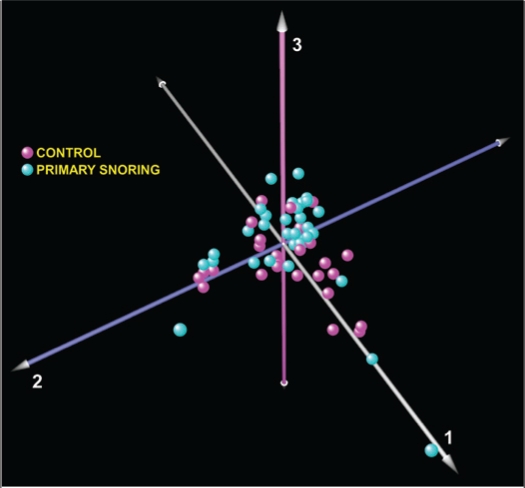
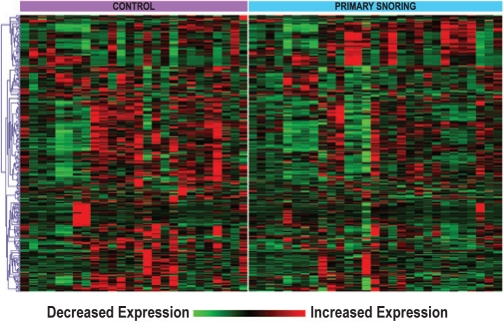
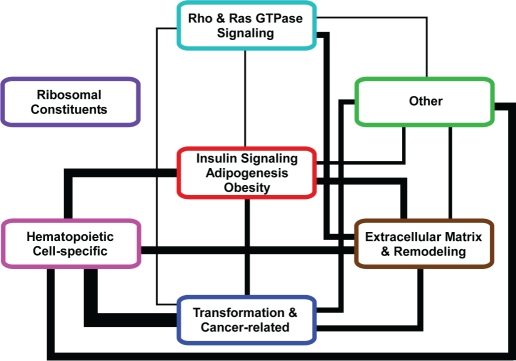
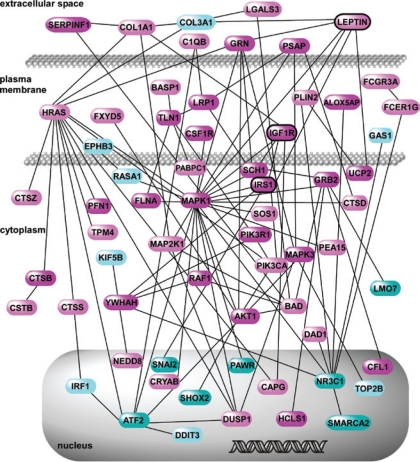
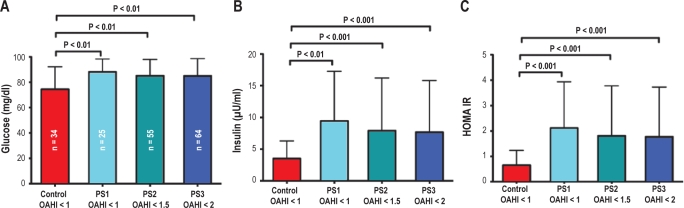
Results: PS was not associated with a distinct transcriptional signature in PBL. Exploratory functional network analysis of enriched gene sets identified a number of putative pathways-including those mapping to insulin signaling, adipocyte differentiation, and obesity-with significant alterations in glucose metabolism and insulin sensitivity emerging in the follow-up cohort of children with PS, but no differences in lipid profiles.
Conclusions: PS children do not exhibit global perturbations in their PBL transcriptional response, suggesting that current normative PSG criteria are overall valid. However, subtle differences in functionally coherent pathways involved in glycemic homeostasis were detected and confirmed in a larger independent pediatric cohort indicating that PS may carry increased risk for end-organ morbidity in susceptible children.
Keywords: Snoring; children; inflammation; insulin resistance; sleep apnea.
Figures
Comment in
-
The search on an ideal disease marker for childhood obstructive sleep apnea syndrome.Sleep. 2011 Feb 1;34(2):133-4. doi: 10.1093/sleep/34.2.133. Sleep. 2011. PMID: 21286229 Free PMC article. Review. No abstract available.
References
-
- Montgomery-Downs HE, O'Brien LM, Gulliver TE, Gozal D. Polysomnographic characteristics in normal preschool and early school-aged children. Pediatrics. 2006;117:741–53. - PubMed
-
- Uliel S, Tauman R, Greenfeld M, Sivan Y. Normal polysomnographic respiratory values in children and adolescents. Chest. 2004;125:872–8. - PubMed
-
- Redline S, Budhiraja R, Kapur V, et al. The scoring of respiratory events in sleep: reliability and validity. J Clin Sleep Med. 2007;3:169–200. - PubMed
-
- Grigg-Damberger M, Gozal D, Marcus CL, et al. The visual scoring of sleep and arousal in infants and children. J Clin Sleep Med. 2007;3:201–40. - PubMed
-
- Witmans MB, Keens TG, Davidson Ward SL, Marcus CL. Obstructive hypopneas in children and adolescents: normal values. Am J Respir Crit Care Med. 2003;168:1540. - PubMed
Publication types
MeSH terms
Substances
Grants and funding
LinkOut - more resources
Full Text Sources
Medical
