Resident perceptions of palliative care training in the emergency department
- PMID: 21291326
- PMCID: PMC3089743
- DOI: 10.1089/jpm.2010.0343
Resident perceptions of palliative care training in the emergency department
Abstract
Objectives: To characterize the level of formal training and perceived educational needs in palliative care of emergency medicine (EM) residents.
Methods: This descriptive study used a 16-question survey administered at weekly resident didactic sessions in 2008 to EM residency programs in New York City. Survey items asked residents to: (1) respond to Likert-scaled statements about the role of palliative care in the emergency department (ED); (2) quantify their level of formal training and personal comfort in symptom management, discussion of bad news and prognosis, legal issues, and withdrawing/withholding therapy; and (3) express their interest in future palliative care training.
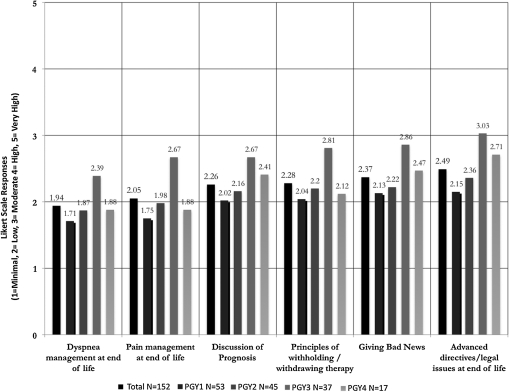
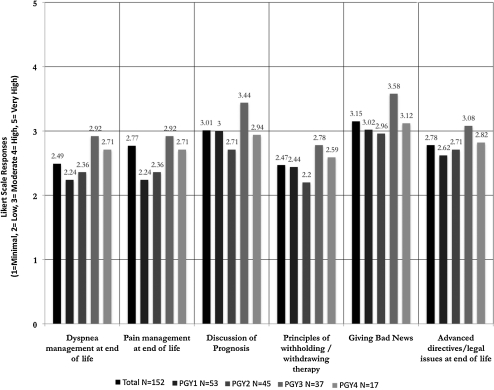
Results: Of 228 total residents, 159 (70%) completed the survey. Of those surveyed, 50% completed some palliative care training before residency; 71.1% agreed or strongly agreed that palliative care was an important competence for an EM physician. However, only 24.3% reported having a "clear idea of the role of palliative care in EM." The highest self-reported level of formal training was in the area of advanced directives or legal issues at the end of life; the lowest levels were in areas of patient management at the end of life. The highest level of self-reported comfort was in giving bad news and the lowest was in withholding/withdrawing therapy. A slight majority of residents (54%) showed positive interest in receiving future training in palliative care.
Conclusions: New York City EM residents reported palliative care as an important competency for emergency medicine physicians, yet also reported low levels of formal training in palliative care. The majority of residents surveyed favored additional training.
Figures
References
-
- 2002 Annual Report and Reference Handbook. Evanston, IL: American Board of Medical Specialties–Research and Education Foundation; 2002. p. 75.
-
- Emanuel LL, editor; Quest T, editor. The Education in Palliative and End-of-life Care for Emergency Medicine [CD-ROM] 2008. ©.
-
- Meier DE. Beresford L. Fast response is key to partnering with the emergency department. J Palliat Med. 2007;10:641–645. - PubMed
-
- Lamba S. Mosenthal AC. Hospice, Palliative Medicine: A novel subspecialty of emergency medicine. J Emerg Med. 2010 May 22; [E-pub ahead of print]. - PubMed
-
- LeConte P. Riochet D. Batard E. Volteau C. Giraudeau B. Arnaudet I. Labastire L. Levraut J. Thys F. Lauque D. Piva C. Schmidt J. Trewick D. Potel G. Death in emergency departments: A multicenter cross-sectional survey with analysis of withholding and withdrawing support. Intensive Care Med. 2010;36:765–772. - PubMed
Publication types
MeSH terms
Grants and funding
LinkOut - more resources
Full Text Sources
Medical
Research Materials