


CSRP's Impact on low-income preschoolers' preacademic skills: self-regulation as a mediating mechanism
- PMID: 21291447
- PMCID: PMC3682645
- DOI: 10.1111/j.1467-8624.2010.01561.x
CSRP's Impact on low-income preschoolers' preacademic skills: self-regulation as a mediating mechanism
Abstract
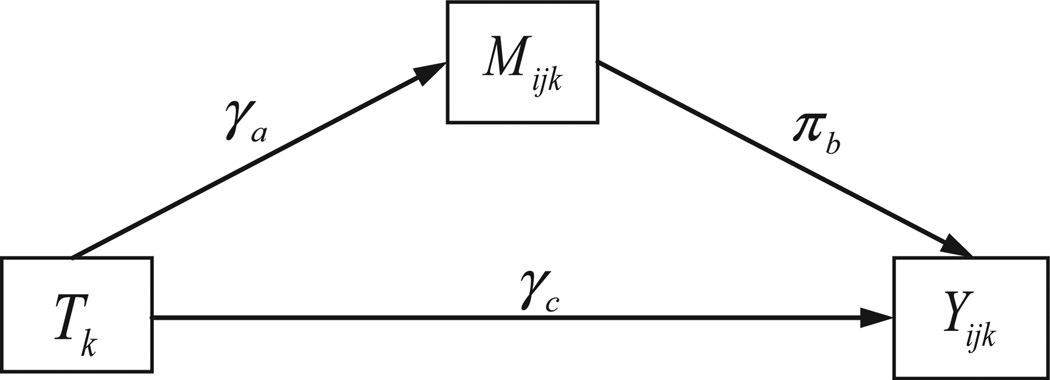
Based on theoretically driven models, the Chicago School Readiness Project (CSRP) targeted low-income children's school readiness through the mediating mechanism of self-regulation. The CSRP is a multicomponent, cluster-randomized efficacy trial implemented in 35 Head Start-funded classrooms (N = 602 children). The analyses confirm that the CSRP improved low-income children's self-regulation skills (as indexed by attention/impulse control and executive function) from fall to spring of the Head Start year. Analyses also suggest significant benefits of CSRP for children's preacademic skills, as measured by vocabulary, letter-naming, and math skills. Partial support was found for improvement in children's self-regulation as a hypothesized mediator for children's gains in academic readiness. Implications for programs and policies that support young children's behavioral health and academic success are discussed.
© 2011 The Authors. Child Development © 2011 Society for Research in Child Development, Inc.
Figures
References
-
- Aber JL, Jones SM, Cohen J. The impact of poverty on the mental health and development of very young children. In: Zeanah CH, editor. Handbook of infant mental health. 2nd ed. New York: Guilford; 2000. pp. 113–128.
-
- Anthony B, Anthony LG, Morrel TM, Acosta M. Evidence for social and behavioral problems in low-income, urban preschoolers: Effects of site, classroom, and teacher. Journal of Youth and Adolescence. 2005;34:31–39.
-
- Arnold DH, Brown SA, Meagher S, Baker CN, Dobbs J, Doctoroff GL. Preschool-based programs for externalizing problems. Education & Treatment of Children. 2006;29:311–339.
-
- Arnold DH, McWilliams L, Arnold EH. Teacher discipline and child misbehavior in day care: Untangling causality with correlational data. Developmental Psychology. 1998;34:276–287. - PubMed
-
- Bauer DJ, Preacher KJ, Gil KM. Conceptualizing and testing random indirect effects and moderated mediation in multilevel models: New procedures and recommendations. Psychological Methods. 2006;11:142–163. - PubMed
Publication types
MeSH terms
Grants and funding
LinkOut - more resources
Full Text Sources
Medical
Miscellaneous
